

-

Low Starting Quantity
-

Digital Proof Included
-

Design Support Available
-
In-House Production
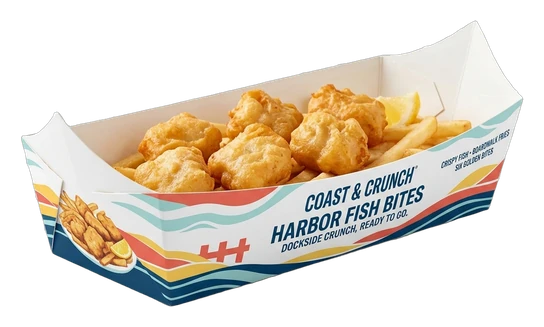
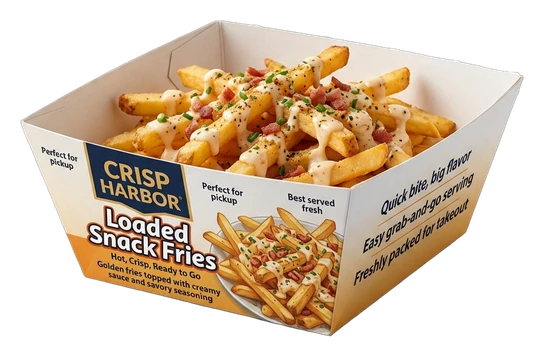
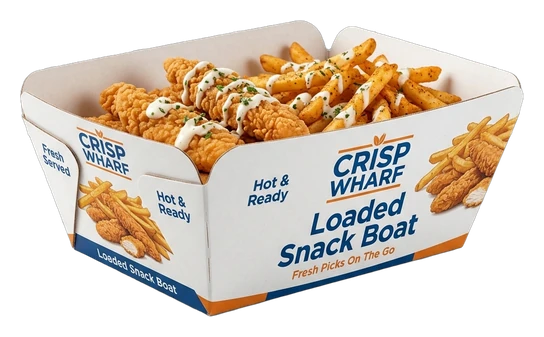
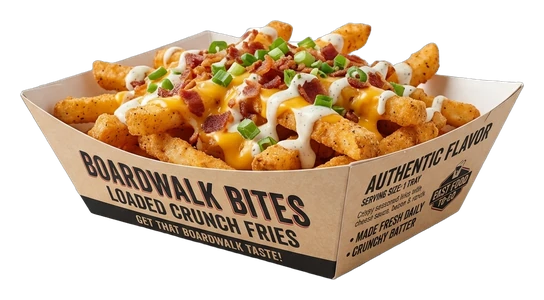
Turn a simple serving tray into a deliberate brand touchpoint that makes food look considered, keeps your identity visible, and supports a more polished handoff. Paper boat trays often appear in a fast, crowded service moment, where customers notice the food and the pack together. Custom sizing, paperboard character, color, and visible panel design can turn that brief encounter into a clearer expression of your brand. The tray can frame the serving, carry recognizable brand cues across its sides, and help the whole order feel more intentional at the counter, during handoff, or while the food is being enjoyed. We build custom paper boat trays around the impression and service outcome you need. Whether your priority is a clean modern look, a natural kraft character, a campaign-ready design, or a more substantial feel, the tray can be planned as part of the customer experience rather than treated as a generic food container. Your result is supported by practical production decisions: custom proportions, paperboard selected for the intended use, full-color or spot-color printing, white ink on kraft, relevant coatings, and artwork support. A digital proof lets you review the approved design before production, while low starting quantities make it possible to develop a distinctive tray without committing to an unnecessarily large first run. Every choice should connect back to how the food is presented, how the brand is recognized, and how the serving feels in the customer’s hands.

Get Custom Quote
TRAYS FOR EACH SERVE
Choose a Paper Boat Tray That Fits the Moment
The right paper boat tray depends on what you serve, how the portion should sit, and what customers need to see during handoff. A compact tray can keep a smaller serving visually focused, while a wider or deeper format can give a larger portion the space it needs. Base dimensions, sidewall height, board choice, coating, and print area should work together rather than being selected separately. These four routes give you a practical starting point. Each can be custom sized and branded, so the final tray supports the food, the service moment, and the impression you want the customer to take away.
➜
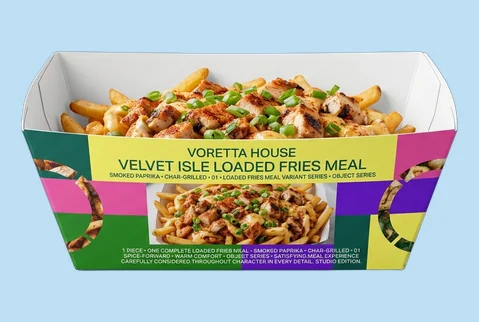
Compact Portion Trays
A smaller custom footprint can give samples, sides, and lighter portions a more deliberate frame without allowing the packaging to dominate the serving. Branding remains visible across the outer panels during pickup and handoff.
- Smaller serving footprint
- Custom base and sidewalls
- Full-color exterior branding
- Clear handoff visibility
A focused format helps smaller servings feel considered while keeping the brand present throughout the customer interaction.
Customize Now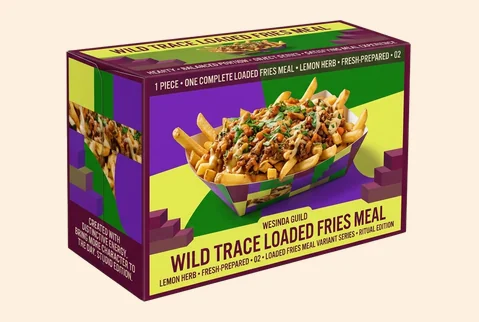
➜
Classic Open Boat Trays
This familiar open-top route can be proportioned around the intended serving instead of forcing the food into a generic stock format. Paperboard character, color, and side-panel artwork can work as one coordinated system.
- Balanced everyday proportions
- Custom paperboard thickness
- CMYK or PMS printing
- Open-top product view
The result is a practical serving tray that feels visibly connected to the business behind the food.
Customize Now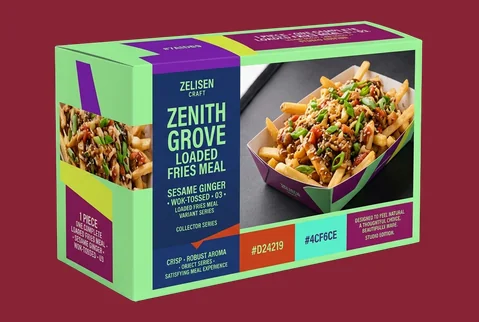
➜
Deep-Side Food Trays
A deeper sidewall route gives fuller servings additional vertical coverage and creates more visible space for branded color, patterns, product messaging, or campaign artwork around the tray.
- Greater sidewall coverage
- Proportions matched to serving
- More visible brand area
- Planned for fuller portions
Greater depth can support a more contained visual arrangement while giving the brand a stronger role in the handoff.
Customize Now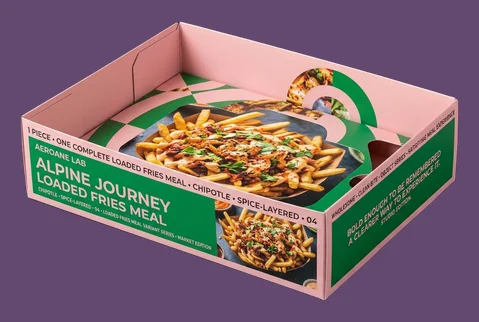
➜
Wide Serving Trays
A wider custom tray can be planned around larger portions or a broader food arrangement. The extended footprint also creates additional opportunities to coordinate the base, side panels, and visible graphics.
- Larger custom footprint
- Wider product arrangement
- Multi-panel graphic coverage
- Suited to shared service
A wider format helps the serving and the packaging read as one intentional, brand-led customer experience.
Customize NowMATERIAL THAT SETS THE TONE
Give Every Serving the Right Physical Character
The material determines how crisp, natural, substantial, or service-ready a paper boat tray feels before customers study the printed design. A bright paperboard surface can give detailed graphics and controlled brand colors clearer definition, while kraft can support a more natural or craft-led identity. Board thickness also affects how physically substantial the tray feels in the hand. Available options should be selected around the serving, handling conditions, coating needs, and intended brand character—not thickness alone. The strongest choice is the one that makes the food and brand feel deliberately connected.
Clean, Bright SBS Paperboard

SBS paperboard provides a smooth, light-colored surface for detailed graphics, full-color artwork, and clearly defined brand elements. It suits businesses that want the serving tray to feel clean, controlled, and visually consistent with other printed packaging.

Natural Kraft Paperboard

Kraft paperboard gives the tray a warmer, more natural physical character. Full-color design can be adapted to the kraft surface, while white ink can create stronger contrast for logos, type, patterns, or selected product cues.
More Substantial Paperboard Builds

Paperboard options are available from 14 pt to 24 pt. The appropriate thickness should be chosen around the tray dimensions, intended portion, handling, coating, and desired physical impression rather than assuming the thickest board is automatically the best solution.
BRAND IN EVERY HANDOFF
Make the Tray Recognizable Before the First Bite
Customers may see the tray for only a few moments before focusing on the food, so the design must communicate quickly. Custom printing can make the business name easier to find, establish a recognizable color system, distinguish serving formats, or connect a limited campaign to the wider brand. CMYK, PMS and spot-color printing provide different routes for controlling the visual result, while white ink can create strong definition on kraft. The purpose is not to fill every panel. It is to make the tray feel unmistakably connected to the food business that prepared and served it.
- Make the brand name easy to find
- Use controlled colors across the design
- Distinguish serving formats more clearly
- Carry graphics across visible side panels
- Build campaign or event-led editions
- Create defined white artwork on kraft
SURFACE CHOICES WITH PURPOSE
Guide Attention Without Overdesigning the Tray
A paper boat tray does not become more effective simply because more finishing techniques are added. Each surface choice should support a clear customer impression, emphasize an important brand element, or suit the intended food-service use. Matte and gloss treatments can influence the overall visual tone. Selective effects can give a logo or campaign message more importance on suitable areas. Aqueous and grease-resistant coatings may also be considered where the approved tray specification calls for them. The objective is a controlled, intentional surface—not decoration that competes with the food.
-
 Set the Overall Tone
Matte treatment can support a calmer, more understated identity, while gloss can give brighter graphics additional surface clarity. The choice should follow the established brand character and the way the tray will be seen.
-
Give Key Brand Elements More Weight
Spot UV, foil, embossing, or debossing can be considered for suitable non-food-contact areas when a logo or selected message needs greater visual or tactile importance. These effects should direct attention rather than cover every available panel.
-
Match the Surface to the Service Need
Aqueous or grease-resistant coatings are available where relevant to the approved material and food-use specification. The coating decision should be made alongside board selection, printing, direct-contact needs, and the intended serving conditions.


DESIGNED FOR THE HANDOFF
Make the First Look Part of the Serving Experience
A paper boat tray does not create a traditional closed-box unboxing moment. Its reveal happens immediately, when the food is placed in view and handed to the customer. That makes proportion, arrangement, sidewall height, and visible branding especially important. A tray that feels disconnected from the serving can make the experience appear unfinished, even when the artwork is attractive. A well-planned format can frame the food, keep relevant brand cues visible, and support a clearer visual relationship between the product and the business behind it.
-
Frame Give the Food a Deliberate Setting
Plan the base and sidewall proportions around how the food should sit and what should remain visible. The tray should support the intended arrangement rather than making the serving appear accidental or crowded.
-
Continue Keep the Brand in View
Use the outer panels, rim areas, and other approved visible surfaces to continue the identity established across menus, boxes, carriers, or other packaging. The brand remains present after the initial handoff.
-
Guide Plan for Comfortable Product Access
Consider how customers will reach, lift, or select the food from the open tray. The correct proportions should support the intended serving experience while allowing the food and the printed tray to remain visually connected.


EXPERT-GUIDED FOOD TRAY PACKAGING
Paper Boat Tray Customization Made Easy & Fast — Built to Hold, Serve & Showcase Food
Our paper boat tray packaging experts, structural designers, print specialists, consultants, and project managers make custom paper boat tray ordering easy and fast by bringing your food type, portion size, serving temperature, grease or moisture risk, tray capacity, selected tray style, artwork, and brand direction into one production-ready structure. We guide tray length, width, depth, side-wall angle, base stability, fold-lock behavior, nesting and stacking needs, food-contact stock options, grease-resistant or moisture-resistant coating options, print-safe exterior panels, logo placement, QR or barcode spacing, dieline setup, bleed and safe-zone review, cost calculation, timeline planning, prepress preparation, and 3D proof review. The result is a custom paper boat tray built to hold portions properly, support smoother service, showcase food and branding cleanly, and move to production with fewer sizing, print, coating, structure, or approval risks.
-
Fast
Portion-to-Quote Alignment
Experts align food type, portion size, tray dimensions, stock, coating options, print coverage, artwork, cost, timeline, prepress setup, and 3D proof early — helping reduce quote delays and approval back-and-forth.
-
Stable
Tray Shape & Serving Strength Review
We check tray base width, side-wall height, fold-lock behavior, stackability, nesting, serving weight, and food placement so the paper boat tray supports easier filling, holding, and serving.
-
Print-Ready
Logo, Panel & Coating Check
Print specialists review dieline alignment, exterior logo placement, print-safe panels, bleed, safe zones, QR or barcode spacing, coating compatibility, and ink coverage so your branded tray can print more cleanly on the selected stock.
Plan Paper Boat Trays With Fewer Surprises
Paper boat trays look simple, but the right result depends on several connected decisions. Fit, sidewall depth, board character, coating, print placement, quantity, and schedule all influence how the tray performs and how the brand appears. Use the steps below to prepare a clearer specification, reduce avoidable artwork changes, and request a quote that reflects the tray you actually need.
-
Start With the Food and Serving Footprint
Begin with the item or portion the tray must hold. Share the product’s length, width, height, overall shape, expected portion, and any wrapping or inner liner that changes the fit. Also explain whether the food should sit in one layer, rise above the sidewalls, or leave room for toppings and handling. Exact tray dimensions should be developed from those inputs rather than copied from an unrelated standard size.The goal is not simply to make the food fit. The proportions should help the serving look deliberate, keep the printed panels visible, and support the way the tray will be picked up, handed over, or placed with the rest of the order.
-
Choose the Format Around the Service Moment
Describe where the tray will be seen and used. A compact serving, a standard open boat, a deeper tray, and a wider sharing format create different visual and handling conditions. The tray may need to work at a counter, during handoff, as part of a takeout order, or within a larger coordinated food-packaging program.This context helps determine base dimensions, sidewall height, visible print area, and board weight. It also helps avoid a common problem: choosing a tray that technically holds the food but does not support the intended brand impression or service flow.
-
Match the Board and Coating to the Use
SBS paperboard can support a clean, bright print surface, while kraft paperboard can create a more natural, craft-led character. Available board thicknesses range from 14 pt to 24 pt, but the right choice should be confirmed against the portion, structure, handling, and coating plan rather than selected by thickness alone.Tell the packaging team whether food will touch the tray directly and whether grease resistance is needed. Direct-contact material options and grease-resistant coatings are available. However, the approved business proof does not support an FDA-approved, FDA-compliant, or certified food-packaging claim, so those descriptions should not be used without separate documentation.
-
Plan Artwork on the Approved Dieline
Use the final dieline to decide what customers should notice first and which panels remain visible during handoff and use. Place the logo, product name, campaign message, or brand pattern according to the actual viewing angles instead of treating every panel as equal.Artwork and dieline support are available, including resizing, bleed and safe-zone assistance, and file checking. AI, PDF, PSD, and EPS files are accepted. Full-color CMYK, PMS or spot colors, digital, offset, and flexographic printing are supported, along with white ink on kraft. No die or plate fee applies to supported production.
-
Review the Proof Before Production
A digital proof is available for every approved order. Use it to check artwork placement, copy, color references, panel orientation, and the relationship between the design and the final tray structure. A digital proof confirms the approved production artwork; it is not a physical prototype.hysical prototypes may be available for qualifying bulk or wholesale projects. Where approved, the prototype cost may be adjusted into the resulting order. Do not assume that a free sample or unconditional prototype is included. Production should begin only after payment, final artwork approval, and structure confirmation.
-
Plan Quantity, Pricing, and Delivery Together
Paperboard and kraft paper boat tray orders may start from 50 units. Relevant custom sizing, material, printing, coating, and finish choices can still be considered at that starting quantity, subject to the approved structure and production specification. Per-unit pricing generally improves as quantity increases, with more visible price differences often appearing around 500 units.Production normally takes 4–6 business days after payment, final artwork approval and structure confirmation. Production-ready jobs are generally planned to print and ship within 7 business days. Shipping transit time is separate, while complex multi-design orders may require a separately confirmed schedule.For larger programs, orders can be handled in bulk and shipped to multiple addresses. Design firms and white-label partners are also supported, which can help when one approved tray system must serve several locations, clients, or coordinated campaigns.
-
Closing
A useful quote begins with the serving, not a generic tray size. Share the food dimensions, portion plan, preferred material character, artwork, quantity, coating needs, destination, and required date. The production team can then help connect those inputs to an approved structure and a clearer path from proof to production.

PAPER BOAT TRAY QUESTIONS
Answers Before You Size, Print and Order
Yes. Your tray can be planned around the food, portion, arrangement, and intended handling rather than forcing the serving into an unrelated stock size. Share the product’s length, width, height, shape, expected portion, and any liner or wrapping that affects the fit. These inputs help determine the base dimensions, sidewall height, board thickness, and visible print area. Exact measurements should be confirmed through the approved structure and dieline before production.
SBS and kraft paperboard can create distinctly different customer impressions. SBS offers a clean, bright surface for detailed graphics and controlled colors, while kraft supports a warmer, more natural or craft-led character. White ink is available when stronger definition is needed on kraft. Board thicknesses from 14 pt to 24 pt are available, but the final choice should also consider the serving, tray dimensions, handling, coating, and desired physical feel.
Yes. Full-color CMYK, PMS and spot-color printing are available, along with digital, offset, and flexographic production routes. You can use the visible tray panels for logos, color systems, patterns, serving identifiers, campaign artwork, or short customer-facing messages. White ink is also available for kraft paperboard. The final artwork should be placed on the approved dieline so every element appears in the correct orientation after the tray is formed.
Yes. Grease-resistant coating options and materials intended for direct food contact are available. Tell the packaging team what food will be served, whether it will touch the tray directly, and what handling conditions the packaging must support so the material and coating can be reviewed together. The available proof does not support describing the trays as FDA-approved, FDA-compliant, or certified, so those claims should not be printed or published without separate supporting documentation.
Yes. Paperboard and kraft paper boat trays may start from 50 units, allowing a smaller business to develop packaging around its own serving and brand without committing to a large first run. Relevant custom sizing, material, full-color printing, white ink, coating, and finishing choices can still be considered at that quantity, subject to the approved structure and production specification. This gives you room to prepare a launch, promotion, event, or initial branded food-service program without relying on a generic tray.
Yes. A digital proof is available for every approved order and should be reviewed before production begins. It allows you to check artwork placement, text, panel orientation, color references, and the relationship between the graphics and the tray structure. The proof represents the approved production artwork, but it is not a physical prototype. Qualifying bulk or wholesale projects may be eligible for a physical prototype under separately approved terms.
Production normally takes 4–6 business days after payment, final artwork approval, and structure confirmation. Production-ready jobs are generally planned to print and ship within 7 business days. Shipping transit time is separate from production. Orders involving many separate designs or additional setup requirements may need a separately confirmed schedule, so share the required date and complete artwork early enough for review, proofing, and approval.
Yes. Dieline and artwork support are available, including file checking, resizing, bleed and safe-zone assistance, and preparation around the approved tray dimensions. AI, PDF, PSD, and EPS files are accepted. A digital proof is provided for the approved order before production. Design support should help make supplied artwork production-ready, but it should not be presented as unlimited revision work or a replacement for a complete brand-development agency.
CUSTOMER SUCCESS STORIES
Hear What Our Customers Say

As a small business, finding premium finishes in lower quantities was always difficult. Global Custom Packaging gave us the freedom to customize our boxes and create the distinctive, polished look we wanted without committing to a large order. We still work with them today and have expanded into multiple product variants, each with the same impressive presentation.
Jordan Blake
We sell online and in stores while regularly promoting at major events, running influencer campaigns, and launching seasonal collections. Global Custom Packaging has become our dependable source for everything—from premium mailer and product boxes to sturdy influencer kits, rigid packaging, kraft boxes, and limited-edition Christmas designs. Whatever structure, material, or branded look we need, we no longer have to go anywhere else.
Avery Quinn

I never worry about how my packaging will look or whether my artwork contains typos, incorrect bleed areas, or other design errors. Their 3D previews and helpful design support give me confidence before printing. If the team notices a problem, they contact me, correct it quickly, and never charge extra for the assistance.
Cameron Reese
I’m really impressed with Global Custom Packaging’s precise, richly saturated printing and the accuracy of their die-cutting. The boxes were produced in exactly the right size, with a clean, well-formed structure and no fitting or construction issues. The finished packaging looked polished, consistent, and ready to represent our products professionally.
Morgan Taylor
I received my quote within a few hours, and once we agreed on the price, the designer responded quickly, completed the required changes, and prepared my artwork for printing. The 3D proof arrived promptly, allowing me to review everything and place my order that same day. My packaging was delivered on time, exactly as Global Custom Packaging had committed.
Harper Lane
