



-

Low Starting Quantity
-

Digital Proof Included
-

Design Support Available
-
In-House Production
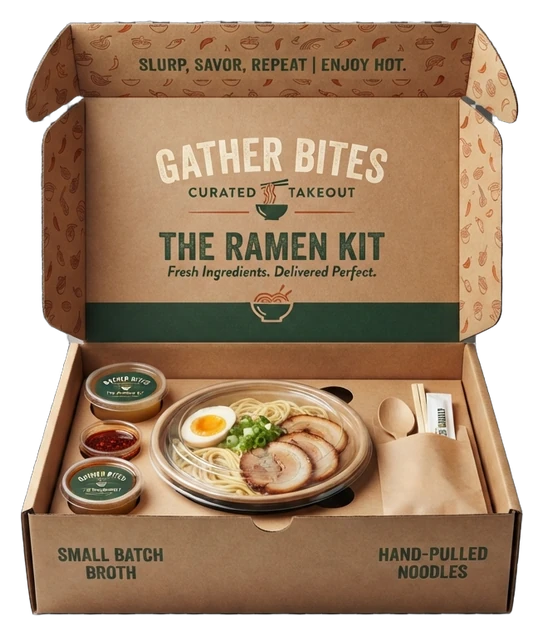
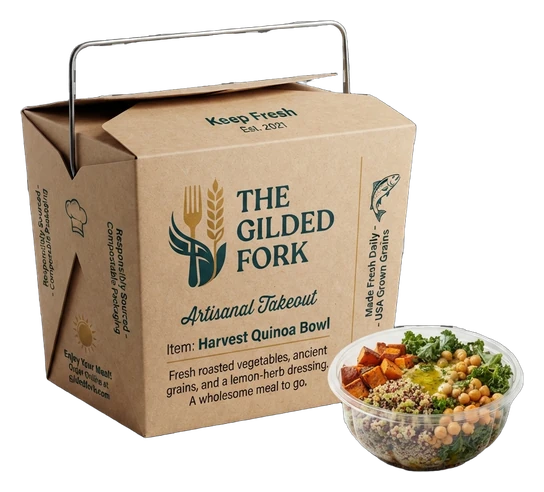
Custom kraft takeout boxes turn an everyday meal handoff into a coordinated brand moment, helping food businesses present orders with natural character, clear identity, and deliberate care. Takeout customers often judge an order before they taste it—at the counter, during pickup, on a delivery doorstep, or when the box first opens. Custom sizing, purposeful structure, and printed brand cues transform plain kraft packaging into a recognizable part of the meal experience. The box can help customers identify the business, understand the order, and receive food in packaging that feels considered rather than generic. We build custom kraft takeout boxes around the meal, the service channel, and the impression you want customers to carry forward. Whether the priority is a cleaner pickup handoff, a coordinated catering set, or a more distinctive delivery arrival, the result is packaging shaped around your operation and brand. Structure, board choice, printing, finishes, windows, inserts, and interior details work together to support that result. Your team can receive help with sizing, dielines, artwork preparation, and proofing before production. Supported kraft formats may start at 50 boxes, with relevant customization retained at that quantity, while a digital proof gives you a clear review point before the job moves forward.

Get Custom Quote
TAKEOUT FORMAT CHOICES
Choose a Box That Fits the Meal and Moment
The right takeout format depends on more than the food category. Portion size, inner containers, order weight, pickup handling, delivery movement, catering setup, and the way customers first access the meal all affect the decision. A tuck-top carton may suit a compact order, while a gable carrier can give a multi-item handoff a clearer shape. Windows can support quick product recognition, and dividers can keep coordinated items easier to understand. We help you compare structures around the meal, channel, and customer moment so the box works as one connected brand and service solution.

➜
Tuck-Top Meal Cartons
A clean folding format for compact meals, sides, bakery ite ms, or packaged foods that need a simple top-opening structure and a broad surface for visible brand communication.
- Compact meal configuration
- Top-opening access
- Front-to-back custom printing
- Pickup or counter handoff
A practical route when you want straightforward packing, clear brand visibility, and familiar customer access.
Customize Now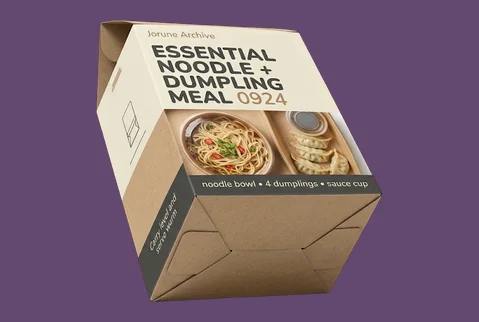
➜
Auto-Bottom Takeout Boxes
A pre-glued base helps the carton take shape during packing, making this route useful for busy counters and repeat meal configurations that need a stable paperboard form.
- Pre-glued base setup
- Consistent meal configuration
- Full-panel brand artwork
- Busy pickup counters
Choose it when packing flow and a composed branded handoff need to work together.
Customize Now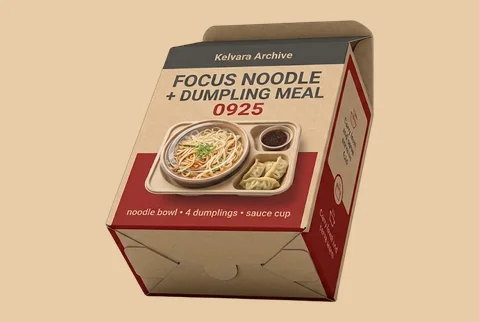
➜
Lock-Bottom Food Boxes
A locking base creates a more deliberate lower structure for meals or grouped items that need added support within the approved size and board specification.
- Heavier meal arrangements
- Locking base structure
- Exterior and inside print
- Pickup, delivery, or catering
It gives substantial orders a more considered form without losing the natural kraft character.
Customize Now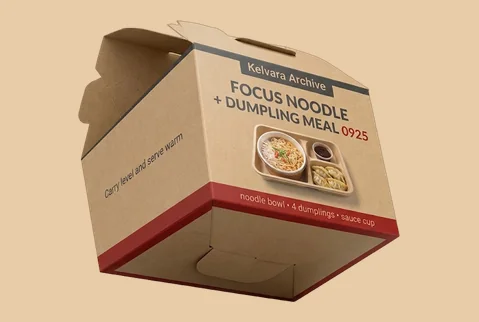
➜
Gable Takeout Carriers
A built-in handle turns the box into a recognizable carry format for meal bundles, party orders, and gift-like food selections that benefit from a clear handoff presence.
- Multi-item meal bundles
- Integrated carrying handle
- Large branded display panels
- Events and takeaway gifting
The shape presents the order as one coordinated branded package at handoff.
Customize Now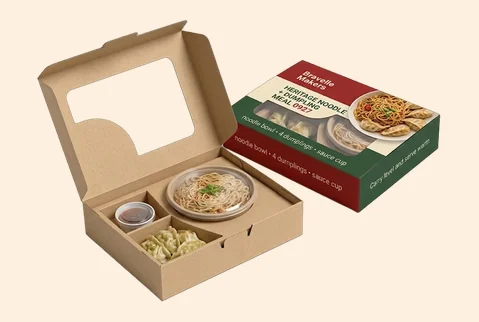
➜
Windowed Kraft Food Boxes
A die-cut window can reveal part of the food or inner pack while the surrounding kraft surface carries the brand, menu cue, or occasion message.
- Selective product visibility
- Custom window shapes
- Printed kraft frame
- Counter display and pickup
Use visibility with purpose, helping customers connect the product and brand before opening.
Customize Now
➜
Sleeve-and-Tray Meal Packs
A sliding sleeve and inner tray create a layered reveal for curated meals, tasting sets, or coordinated food selections where sequence and arrangement matter.
- Curated meal configuration
- Tray-and-sleeve structure
- Wraparound brand artwork
- Guided first reveal
This route suits food programs that need a more deliberate introduction and organized access.
Customize Now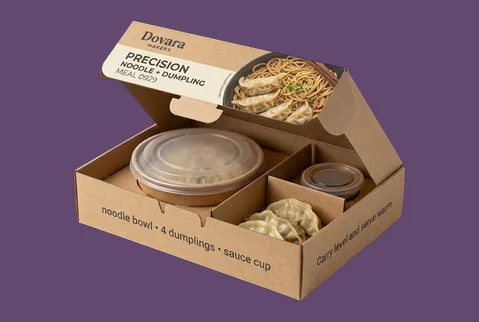
➜
Divided Takeout Sets
Custom inserts or dividers can give separate items a defined place inside one box, supporting clearer arrangement for samplers, meal components, or catering selections.
- Multiple food components
- Paperboard or kraft dividers
- Inside-and-outside branding
- Catering and sampler use
A planned interior helps the customer understand the set without a loose, disconnected first view.
Customize Now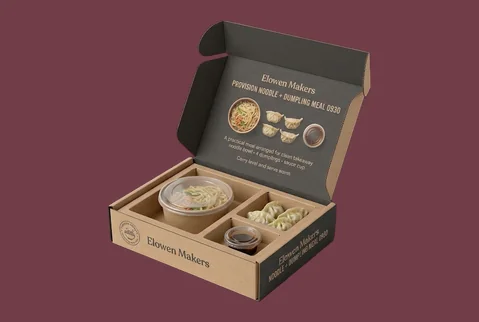
➜
Branded Meal Kit Mailers
A kraft or corrugated mailer-style format can bring several packaged components into one branded kit for local delivery, promotional food sets, or planned meal programs.
- Multi-part kit packing
- Corrugated structure options
- Full-surface brand printing
- Delivery and program handoff
It carries the parent brand across a larger, more coordinated food experience.
Customize NowKRAFT MATERIAL CHARACTER
Make Natural Kraft Feel Deliberate, Not Generic
With kraft takeout packaging, the material is already part of the message. Its natural color and visible paper character can support a casual, craft-led, wholesome, or modern food identity, but the result still depends on the board, structure, and surface specification. A compact single meal, a handled carrier, and a multi-item corrugated kit do not ask the material to perform in the same way. We help you choose the kraft construction around the meal, handling route, and intended impression so the package feels purposeful from pickup through opening.
Match the Board to the Packed Meal

The board should be selected around the filled weight, box size, base style, handle, inner container, and intended arrangement. This creates a specification that feels proportionate to the order instead of choosing material by thickness alone.

Let the Kraft Surface Set the Character

Natural kraft gives the box an honest, tactile base that can suit casual dining, bakery, craft-led, event, and modern food concepts. The aim is to let the visible paper character support the brand rather than leave the package feeling unfinished or generic.
Plan Surface Protection Around the Use

A grease-resistant coating can be considered where the selected food and handling route require it. Tell the team whether food will touch the packaging directly or remain inside a wrap, cup, tray, or liner so the material and structure can be reviewed appropriately.
Carry the Identity Into Larger Food Sets

For meal kits, catering selections, or larger promotional food packs, a supported corrugated kraft construction can add physical presence while preserving useful printed surfaces. These structures are intended for product-focused and presentation-led formats rather than commodity shipping-carton positioning.
MAKE THE MENU RECOGNIZABLE
Turn Every Takeout Box Into a Clear Brand Cue
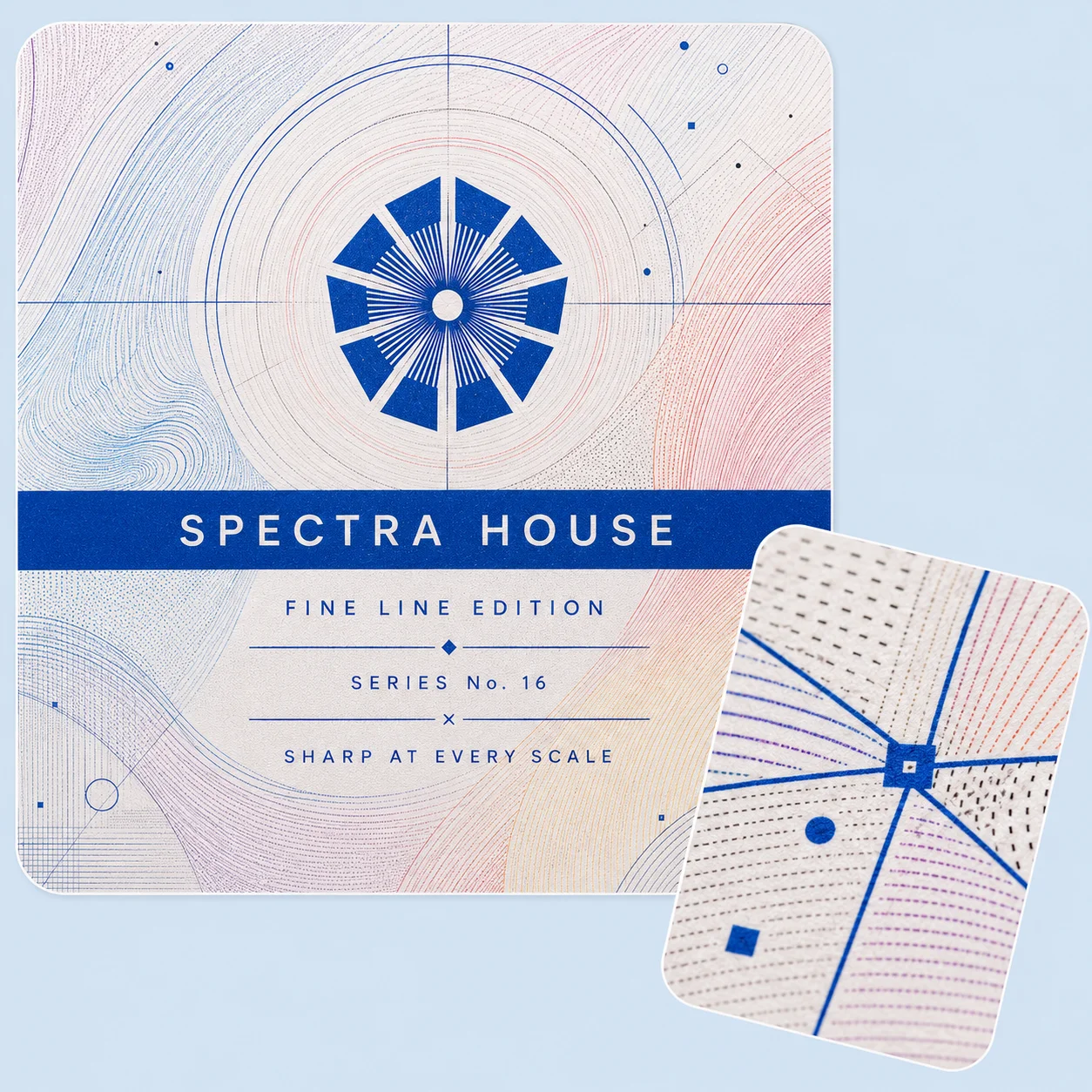
Takeout packaging often appears in fast, practical moments: a counter handoff, a delivery photo, a catering table, or the first look inside an order. Printing can make those moments easier to connect back to your business. Use the box to keep the logo visible, distinguish meal types or seasonal offers, and carry a consistent visual system across sizes and structures. Full-color, CMYK, PMS or spot color, white ink on kraft, and inside printing are available production routes. The value is not more ink; it is a box that communicates the meal and the brand with less guesswork.
- Help customers identify the business
- Separate meal types with clear cues
- Keep colors consistent across formats
- Use white ink for kraft contrast
- Continue selected messaging inside
- Mark catering or seasonal programs
SURFACE CHOICES WITH PURPOSE
Guide Attention Without Overloading the Box
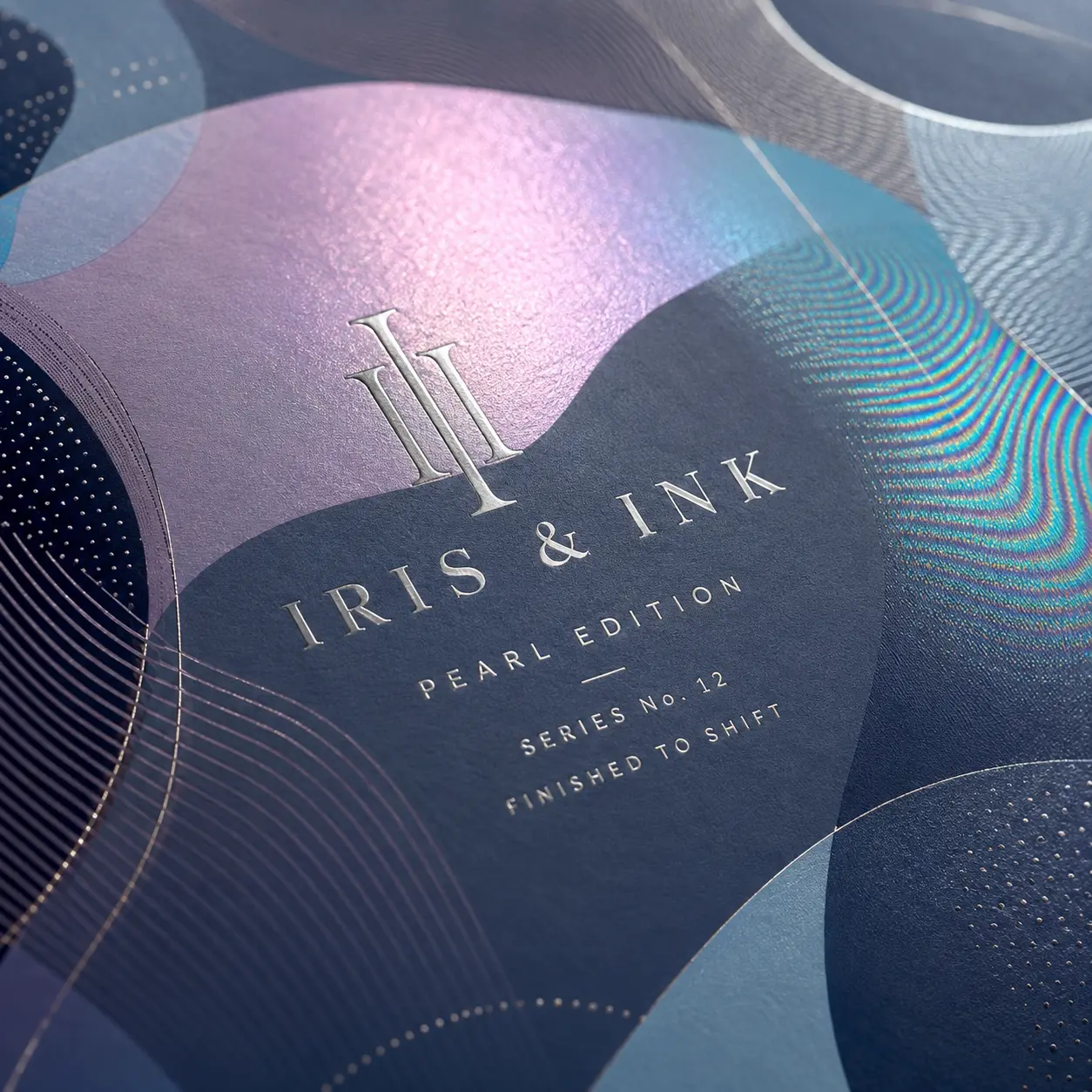
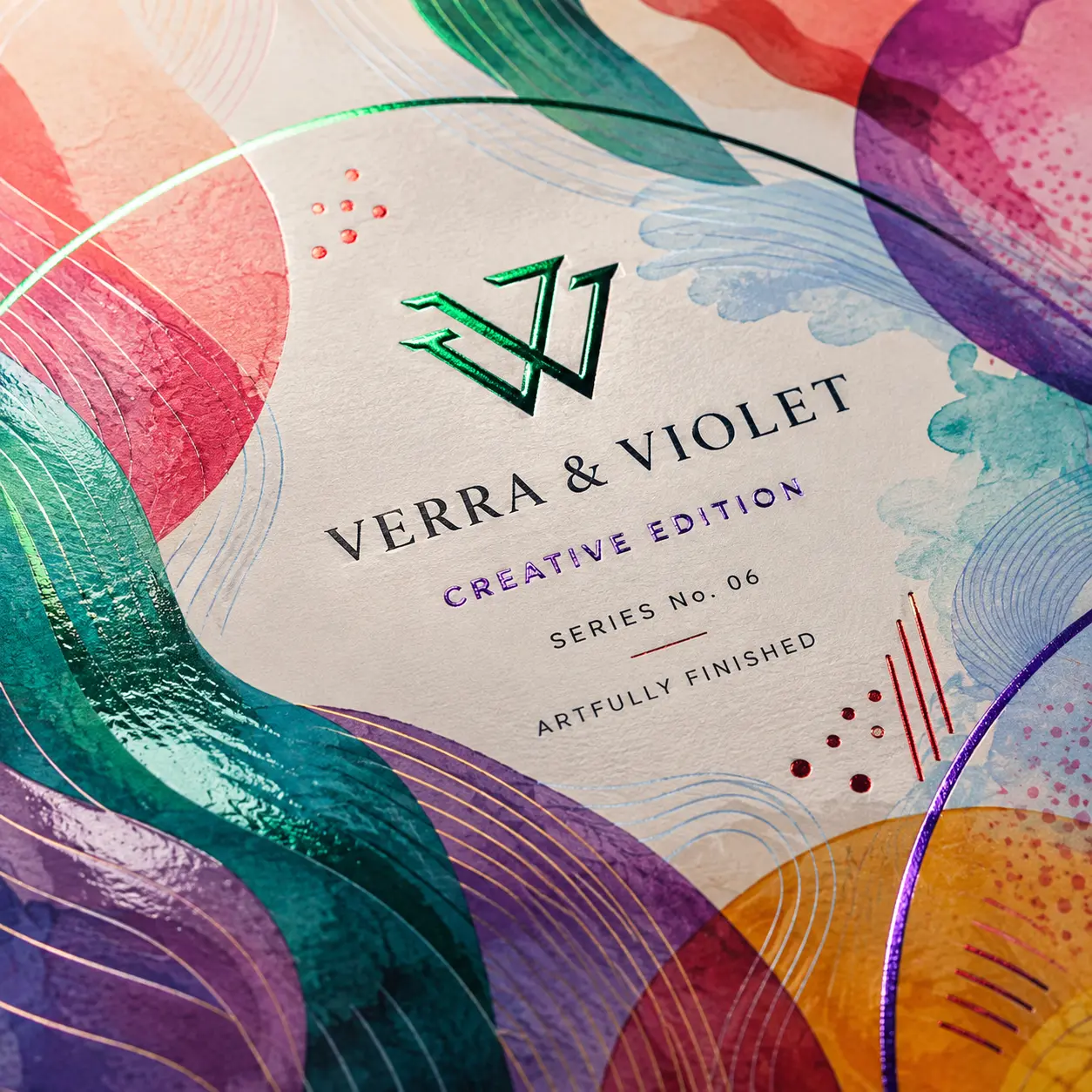
A takeout box needs to communicate quickly, so finishes should clarify the surface rather than compete with the meal or the brand. Matte, gloss, soft-touch, spot UV, foil, embossing, debossing, and aqueous coating are available, but each treatment should earn its place. A finish can quiet a busy design, sharpen a selected color area, give the logo more tactile weight, or distinguish a catering and seasonal line from the everyday range. We help you select effects around the intended impression, the kraft surface, and the approved structure instead of adding decoration by default.
-
 Set the Overall Tone
Matte or soft-touch treatment can give curated catering, gifting, and special food programs a calmer, more considered feel. Gloss can support brighter artwork where color energy and surface clarity are more important to the intended identity.
-
Make the Brand Cue Lead
Spot UV, foil, embossing, debossing, or raised effects can give a logo, meal name, or short message greater visual and tactile priority. Selective use helps guide attention without allowing decoration to dominate every available surface.
-
Distinguish Special Food Programs
Use a controlled finish change to separate holiday menus, event catering, promotional kits, or limited runs while keeping the same parent-brand system visible across the wider packaging range.


PLAN THE FIRST OPENING
Make the Meal Clear From Opening to Selection
A takeout experience can lose coherence when the exterior feels organized but the inside presents a loose mix of containers, sides, and utensils. For meal bundles, samplers, catering sets, and multi-part kits, the interior should help customers see what belongs together and what to access first. Printed internal surfaces can continue the brand voice, while kraft, paperboard, or corrugated inserts and dividers can give individual components a defined place where appropriate. The goal is not theatrical unboxing; it is a clearer first opening that supports recognition, arrangement, and confident product selection.
-
Continue Keep the Brand Present
Carry selected colors, patterns, instructions, or short messages onto inside surfaces so the identity established at handoff does not disappear when the box opens.
-
Guide Organize the Meal Components
Use inserts, dividers, or planned spacing to separate meal parts, packaged condiments, utensils, or sampler items and make the arrangement easier to understand.
-
Reward Shape the First Access
Choose what appears first and how items are lifted or selected, giving catering, gifting, and meal-kit formats a more deliberate path from opening to serving.


EXPERT-GUIDED TAKEOUT PACKAGING
Kraft Takeout Box Customization Made Easy & Fast — Built to Carry, Contain & Present
Our takeout packaging experts, structural designers, print specialists, consultants, and project managers make custom kraft takeout box ordering easy and fast by bringing your food portion size, menu item type, serving weight, pack count, selected takeout style, closure needs, artwork, and natural restaurant brand direction into one production-ready structure. We guide meal, noodle, burger, fries, sandwich, salad, pastry, snack, and catering layouts; compartment spacing; grease-resistant coating options; moisture-resistant coating options; food-contact stock options; vent placement; base strength; stack behavior; kraft stock thickness; closure tabs; kraft print contrast; coating and finish compatibility; logo placement; barcode, QR, item, flavor, date-code, and label-panel spacing; dieline alignment; bleed and safe-zone setup; cost calculation; timeline planning; prepress preparation; and 3D proof review. The result is a custom kraft takeout box that supports food presentation, handling, carry-out use, and production approval with fewer sizing, print, coating, closure, or structure risks.
-
Fast
Specs-to-Quote Alignment
Experts align portion size, menu item type, serving weight, selected kraft takeout style, coating options, stock thickness, print coverage, cost, timeline, prepress setup, and 3D proof early—helping reduce quote delays and approval back-and-forth.
-
Exact
Portion-Fit & Closure Review
We check portion volume, food height, compartment spacing, lid clearance, fold sequence, tab strength, stack behavior, and base depth so the selected kraft takeout box fits and closes more accurately.
-
Carry-Ready
Grease, Vent & Handling Check
Packaging teams review food-contact stock options, grease-resistant coating options, moisture-resistant coating options, vent placement, base strength, side-wall support, and carry handling so the box better supports restaurant pickup, delivery, catering, or event service.
Plan, Approve, and Order With Greater Confidence
Ordering takeout packaging becomes easier when the meal, channel, artwork, and production requirements are decided in the right sequence. Our role is to help you turn those inputs into an approved box specification rather than push you toward a stock solution. The following planning steps show what to prepare, where choices matter, and how the job moves from sizing through proofing and production.
-
Start With the Meal, Not a Generic Box
Share the length, width, and height of the actual product or inner container, along with the filled weight, pack count, arrangement, and any clearance needed to place or remove the meal. For irregular or multi-part orders, explain how each component will sit inside the box. Also tell us whether food will touch the packaging directly or remain inside a wrap, cup, tray, or liner. Those details allow the structure, kraft board, and any grease-resistant coating to be reviewed around the intended use without relying on an unsupported certification claim.
-
Choose for Counter, Delivery, or Catering
Name the main service channel before selecting the structure. A compact tuck-top or auto-bottom carton may suit a counter handoff; a gable carrier can organize a handled meal bundle; a sleeve-and-tray format can support a curated set; and a corrugated mailer-style box can bring packaged components together for a meal kit or promotional food program. Use the format that fits the actual route rather than treating every kraft box as interchangeable. For regional launches or multi-location programs, the same order can also be arranged for shipment to multiple addresses.
-
Plan the Interior Around the Order
List the items that need their own place, including packaged condiments, utensils, side containers, samples, or promotional pieces. Kraft, paperboard, and corrugated inserts or dividers can be die cut around approved sizes and arrangements. A planned interior can make a multi-item order easier to understand and reduce the disconnected look of loose components. It also creates a clear decision about what the customer sees first, what can be lifted out, and where short inside messaging may add useful guidance.
-
Prepare Artwork on the Approved Dieline
Free dieline or template support, artwork checking, resizing, bleed and safe-zone help, and design support are available. Production files can be supplied in AI, PDF, PSD, or EPS format. Use the approved dieline to plan the logo, meal names, handling copy, variant cues, and any inside printing across the correct panels. Full-color, CMYK, PMS or spot color, and white ink on kraft are supported print routes. No die or plate fee is charged for supported custom box orders. Buyers remain responsible for supplying and approving any legally required food, ingredient, allergen, or regulatory information.
-
Review the Proof Before Production
A digital proof is available for every approved order and gives you a clear point to review dimensions, panel orientation, artwork placement, copy, and inside-versus-outside print before production. It is not a physical prototype. A physical prototype may be available for a qualifying bulk or wholesale project, and its cost may be adjusted into the resulting order where approved. Printing should not be treated as authorized until payment, final artwork approval, and structure confirmation are complete.
-
Set Quantity, Price, and Timing
Supported kraft takeout-box orders may start from 50 boxes. That starting quantity does not automatically remove relevant sizing, printing, finish, or insert choices; the approved structure and production specification still govern what is suitable. Per-unit pricing generally improves as quantity increases, with more visible differences often appearing around 500 units, but no fixed saving percentage should be assumed. Production normally takes 4–6 business days after payment, final artwork approval and structure confirmation. Production-ready jobs are generally planned to print and ship within 7 business days. Shipping transit time is separate, while complex multi-design orders may require a separately confirmed schedule. Bring the meal details, channel, quantity, and artwork status to the quote stage. The team can then help resolve the remaining structure and production choices before the order is approved.

KRAFT TAKEOUT BOX QUESTIONS
Answers Before You Size, Print, and Order
Yes. Supported kraft takeout-box orders may start at 50 boxes, giving a smaller food business access to packaging built around its own meal and brand without committing to a very large first run. Relevant custom sizing, exterior or interior printing, finish, window, and insert choices can remain available at that quantity when they suit the approved structure and production specification. This makes the starting order useful for a launch, a menu test, a catering offer, or a seasonal program rather than limiting the business to generic stock packaging.
Start with how the meal is packed, carried, and opened. Tuck-top and auto-bottom cartons can suit compact orders; lock-bottom structures can give substantial arrangements a more deliberate base; gable boxes add a handled carry format; windows reveal selected product areas; and sleeve-and-tray or divided formats can organize curated sets. Share the meal dimensions, filled weight, inner containers, number of components, service channel, and desired first access. The team can then help narrow the choice to a structure that fits both the operation and the customer experience.
Measure the actual packed item or inner container, not only the food portion. Provide its length, width, and height, plus the filled weight, pack count, intended arrangement, and enough clearance for placing and removing each component. For a multi-item order, explain which pieces must sit together and which should remain separate. Also identify any wrap, cup, tray, liner, insert, or divider that will be used. These inputs allow the dieline and structure to be planned around the real packing setup instead of an assumed standard size.
Yes. Full-color, CMYK, PMS or spot color, and white ink on kraft are supported print routes. Artwork can cover the front, back, top, bottom, outside, and inside where the selected structure allows it. White ink can create useful contrast for a logo, meal name, or pattern on the natural kraft surface, while color can help separate menu variants or seasonal programs. The artwork is checked on the approved dieline, and a digital proof is provided before production.
Yes. A grease-resistant coating is available and can be considered as part of the approved box specification. Tell the team whether the food will touch the packaging directly or remain inside a wrap, cup, tray, or liner, because that affects the material and structure review. The company does not claim FDA certification for these boxes, so any legally required food-contact, ingredient, allergen, or local compliance decision must be confirmed by the buyer before artwork and production are approved.
Yes. Kraft, paperboard, and corrugated inserts or dividers can be die cut around approved product sizes, components, and arrangements, while inside printing can continue selected colors, patterns, instructions, or short brand messages. These options are especially useful for meal bundles, sampler sets, catering packs, packaged condiments, utensils, or promotional pieces that need a defined place. The final insert material and layout depend on the box structure, packed items, and intended removal sequence.
You receive a digital proof for every approved order, along with free dieline or template support, artwork checking, resizing, bleed and safe-zone assistance, and design support where needed. AI, PDF, PSD, and EPS production files are accepted. Use the proof to review dimensions, panel orientation, copy, artwork placement, and inside-versus-outside printing. A digital proof is not a physical prototype, and production should not begin until payment, final artwork approval, and structure confirmation are complete.
Production normally takes 4–6 business days after payment, final artwork approval, and structure confirmation. Production-ready jobs are generally planned to print and ship within 7 business days, but that is not a guaranteed seven-day delivery promise. Shipping transit time is separate. Complex multi-design orders may need a separately confirmed schedule, particularly when many low-quantity designs create additional setup work. The timing should be agreed before production so your launch, menu change, or event plan is based on the approved schedule.
CUSTOMER SUCCESS STORIES
Hear What Our Customers Say


As a small business, finding premium finishes in lower quantities was always difficult. Global Custom Packaging gave us the freedom to customize our boxes and create the distinctive, polished look we wanted without committing to a large order. We still work with them today and have expanded into multiple product variants, each with the same impressive presentation.
Jordan Blake
We sell online and in stores while regularly promoting at major events, running influencer campaigns, and launching seasonal collections. Global Custom Packaging has become our dependable source for everything—from premium mailer and product boxes to sturdy influencer kits, rigid packaging, kraft boxes, and limited-edition Christmas designs. Whatever structure, material, or branded look we need, we no longer have to go anywhere else.
Avery Quinn

I never worry about how my packaging will look or whether my artwork contains typos, incorrect bleed areas, or other design errors. Their 3D previews and helpful design support give me confidence before printing. If the team notices a problem, they contact me, correct it quickly, and never charge extra for the assistance.
Cameron Reese
I’m really impressed with Global Custom Packaging’s precise, richly saturated printing and the accuracy of their die-cutting. The boxes were produced in exactly the right size, with a clean, well-formed structure and no fitting or construction issues. The finished packaging looked polished, consistent, and ready to represent our products professionally.
Morgan Taylor
I received my quote within a few hours, and once we agreed on the price, the designer responded quickly, completed the required changes, and prepared my artwork for printing. The 3D proof arrived promptly, allowing me to review everything and place my order that same day. My packaging was delivered on time, exactly as Global Custom Packaging had committed.
Harper Lane
