

-

Low Starting Quantity
-

Digital Proof Included
-

Design Support Available
-
In-House Production
Turn every burger handoff into a more recognizable brand moment with a paper tray shaped around your food, service style, and intended customer impression. A burger can move from counter to customer in seconds, leaving little time for your packaging to explain what makes the meal yours. Custom burger paper trays turn that brief handoff into a visible brand touchpoint through considered sizing, coordinated artwork, and a tray character that suits your menu. Whether the tray appears at a dine-in table, takeaway counter, food event, or catered service, it can help the meal feel deliberate, easier to identify, and consistent with the experience customers expect from your business. We help you build the tray around the way you actually serve. Our team can guide size, board choice, print coverage, surface treatment, and artwork preparation so you can approve a format that supports your burger, your service workflow, and the brand cues customers should notice first. Your concept is supported by custom sizing, paperboard and kraft choices, full-color and spot-color printing, white ink on kraft, relevant inside or outside print, and available coating or finish options. Free dieline and artwork support help you prepare the design, while a digital proof lets you review the approved layout before production. Orders in supported paper-based materials may start from 50 trays, subject to the final structure and production specification.

Get Custom Quote
TRAYS BUILT FOR THE HANDOFF
Choose a Tray Route Around the Meal
The right tray route depends on what the customer receives, how the meal is handed over, and which part of the brand should remain visible while they eat. A compact open tray may keep a single burger central, while a wider or divided layout can organize a burger with selected sides. Kraft can support a casual, craft-led identity, and a tray-and-sleeve route can add more printed surface where the service concept needs it. We help you compare these routes against the actual food arrangement, handling moment, artwork plan, and order requirements before the structure is confirmed.
➜
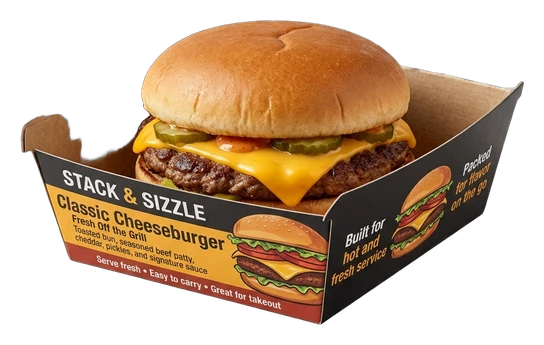
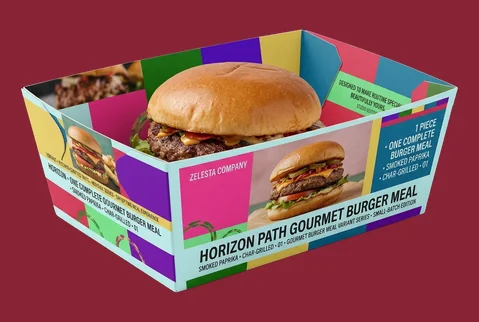
Single Burger Tray
Keep the burger central with an open paper tray sized around the actual build, wrapping, and service method. This route gives the food a clear place while leaving selected surfaces available for recognizable brand artwork.
- Sized around the burger
- Open, immediate meal view
- Exterior brand artwork
- Dine-in or counter handoff
A focused format for serving one burger with a clean, brand-led first view.
Customize Now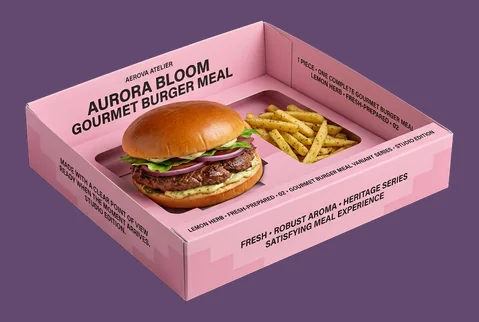
➜
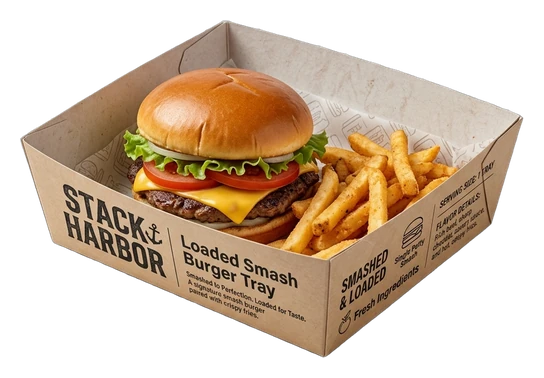
Burger-and-Side Tray
Create one coordinated serving format for a burger with fries, wedges, or another selected side. A wider layout or paperboard divider can help each item feel intentionally arranged rather than placed together without a plan.
- Burger and side configuration
- Optional paperboard divider
- Coordinated visible graphics
- Table or event service
A more organized meal handoff that keeps the menu combination visually connected.
Customize Now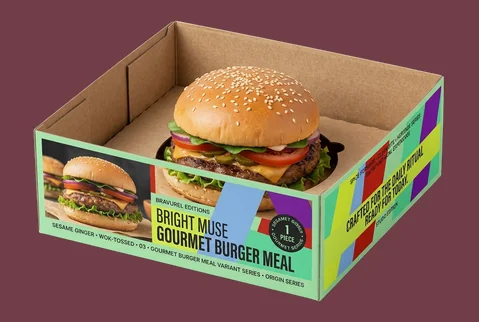
➜
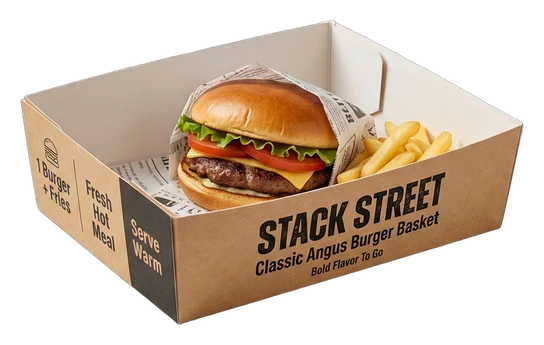
Kraft Burger Tray
Use kraft to give the tray a more natural, casual, or craft-led character. White ink, brand colors, and considered print placement can keep the identity clear without losing the material’s distinctive appearance.
- Natural kraft character
- Custom size and structure
- White or colored printing
- Takeaway or casual dining
A tactile, recognizable tray route for brands that want kraft to remain part of the message.
Customize Now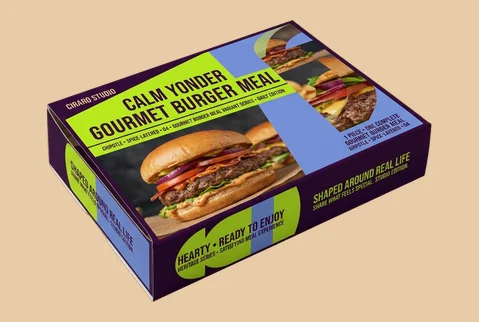
➜
Tray With Paper Sleeve
Pair an open tray with a custom paper sleeve when you need additional printed space or a more controlled handoff. The sleeve can carry key visual cues while the tray supports the meal arrangement inside.
- Tray and sleeve pairing
- Added printable surface
- Connected tray-and-sleeve artwork
- Handoff or takeaway use
A layered format that extends the brand story beyond the tray’s visible panels.
Customize NowMATERIAL THAT SETS THE TONE
Choose the Board by the Brand Experience
The board sets the tray’s character before customers study the artwork. Smooth paperboard can support clean color and detailed graphics for a polished, menu-led identity. Kraft can create a more natural, casual, or craft-focused feel, especially when the material itself should remain visible. Coated or uncoated surfaces can further influence whether the tray feels brighter and cleaner or more tactile and understated. We help you choose by the burger format, direct-contact needs, service setting, printed design, and the impression the tray should carry—not by thickness alone.
cSmooth Paperboard for Clean Definition

Choose smooth paperboard when color clarity, menu photography, detailed graphics, or a crisp restaurant identity should lead the experience. Its more even surface can help the printed design feel controlled and intentional across the tray’s visible panels.

Kraft for a More Natural Character

Choose kraft when the material itself should signal a casual, handmade, or craft-focused food concept. White ink or selected brand colors can create clear contrast while allowing the kraft tone to remain part of the customer-facing design.
Coated or Uncoated for the Right Feel

A coated surface can support a brighter, cleaner visual effect, while an uncoated surface can feel more tactile and understated. We help you compare those impressions with the food-contact needs, handling conditions, and artwork before the board is approved.
MAKE THE MEAL YOURS
Keep Your Brand Visible From Handoff to Table
A burger tray stays visible during the handoff and often remains with the meal while the customer eats, giving printed design more than one chance to communicate. Use that surface to make your restaurant name easy to find, distinguish a signature burger or limited menu, and connect the tray with the colors and visual cues customers already see on menus, counters, or takeaway materials. Full-color printing, spot colors, white ink on kraft, and relevant inside or outside coverage give you the flexibility to build a tray that feels specific to your food concept rather than interchangeable.
- Make the restaurant name easy to find
- Connect tray artwork with the menu
- Give signature burgers distinct visual cues
- Keep the parent brand across variants
- Use kraft as part of the design
- Continue selected brand cues inside
SURFACE CHOICES WITH A JOB
Control What the Customer Notices First
A finish should help the tray communicate more clearly, not simply add decoration. For a casual burger concept, an uncoated or matte surface can keep the look grounded and straightforward. Brighter artwork may benefit from gloss or another suitable coating, while selective contrast can give a logo, campaign mark, or limited-menu cue more importance. Our team helps you choose finishes around the food-service use, the board, the printed design, and the surfaces customers will actually see and handle.
-
 Set the Overall Food-Service Mood
Matte or uncoated surfaces can support a relaxed, craft-led, or straightforward restaurant identity. Gloss, aqueous coating, or another suitable treatment can give brighter colors and high-energy artwork more visual clarity. The choice should reinforce the concept customers already see across the menu and service environment.
-
Give the Brand Mark Priority
Spot UV, foil, embossing, or debossing can add contrast to a selected logo or campaign element on suitable visible surfaces. Used selectively, these effects can guide the eye without making a practical food tray feel overloaded or disconnected from the meal.
-
Make Limited Menus Feel Deliberate
A seasonal burger, collaboration, event, or location-specific release can use a controlled finish change to feel distinct from the core range. Keeping the main colors, logo treatment, or layout consistent helps the special version remain connected to the same restaurant brand.


DESIGN THE FIRST MEAL VIEW
Turn the Handoff Into a Clearer Food Reveal
A burger paper tray is already open, so the customer’s first reveal happens at the counter, table, pickup point, or event station. That makes arrangement especially important: the burger should appear intentional, any side should be easy to distinguish, and the brand should not disappear once the meal is set down. Custom sizing, shaped layouts, paperboard dividers, and relevant printed surfaces can help the tray introduce the meal in a clear sequence. The result is a handoff that feels planned from the first view through the last visible brand cue.
-
Continue Keep the Brand in View
Place the most important brand cue where it remains visible after the burger is set down. Relevant exterior or selected interior printing can keep the restaurant name, menu identity, or campaign present throughout the serving moment instead of limiting it to the first glance.
-
Arrange Give Each Item a Deliberate Place
For burger-and-side combinations, a wider layout, shaped tray, or paperboard divider can help customers understand the meal at a glance. The arrangement should support easy selection without making the tray feel crowded or visually disconnected.
-
Reveal Shape What Customers See First
Decide whether the burger, the restaurant mark, or the signature menu cue should lead the first view. We can plan the sizing, structure, and artwork around that priority so the handoff feels organized and specific to your concept.


EXPERT-GUIDED BURGER TRAY PACKAGING
Burger Paper Tray Customization Made Easy & Fast — Built to Hold, Serve & Brand
Our burger paper tray packaging experts, structural designers, print specialists, consultants, and project managers make custom burger paper tray ordering easy and fast by bringing your burger diameter, bun height, patty size, sauce and topping load, serving style, tray depth, side-wall shape, pack count, selected tray structure, artwork, and brand direction into one production-ready format. We guide tray-fit clearance, base footprint, side-wall height, grease-resistant coating options, moisture-control needs, food-contact stock options, stackability, nesting behavior, dispensing speed, combo-meal layout, board thickness, print coverage, coating compatibility, barcode or QR spacing where used, dieline alignment, bleed and safe-zone setup, cost calculation, timeline planning, prepress preparation, and 3D proof review. The result is a custom burger paper tray that holds the burger more neatly, supports better serving, carries your branding cleanly, and moves to production with fewer sizing, print, structure, or approval risks.
-
Fast
Specs-to-Quote Alignment
Experts align burger size, tray depth, side-wall structure, stock thickness, coating options, artwork, print coverage, cost, timeline, prepress setup, and 3D proof early — helping reduce quote delays and approval back-and-forth.
-
Exact
Burger-Fit & Side-Wall Review
We check bun diameter, burger height, topping load, sauce spread, tray base footprint, side-wall height, corner fold behavior, stacking needs, and nesting tolerance so the tray fits the serving style more accurately.
-
Serve-Ready
Grease, Print & Handling Check
Print and packaging specialists review grease-resistant coating options, moisture-control needs, food-contact stock options, tray stiffness, logo placement, QR spacing, dieline alignment, bleed, safe zones, and coating compatibility so the tray supports serving and prints more cleanly.
Plan Your Burger Tray With Fewer Surprises
A useful burger tray starts with decisions that match the real meal and the real service setting. The points below help you prepare the information our team needs to recommend a structure, material, print plan, and production route without asking you to guess at technical specifications.
-
Start With the Burger You Actually Serve
Share the tray’s job before choosing a shape. We will need the burger’s length, width, and height, plus any wrapping, inner paper, skewer, or other element that changes the space it occupies. Tell us whether the tray will hold the burger alone or include fries, wedges, or another side. The way staff place and remove the food also matters, because a tray that is too tight can make service awkward while one that is too open may weaken the intended visual arrangement. Exact dimensions should come from the physical meal or an approved sample, not a generic burger-tray range. For an irregular or tall burger, include the widest and highest points and allow for the way the product is assembled. Our team can then plan the tray, divider, or sleeve route around the actual configuration and the clearance needed for practical handling.
-
Match the Format to the Service Moment
Decide where the tray will be seen and how long it stays with the customer. A counter handoff may need immediate brand recognition. A dine-in tray may keep artwork visible throughout the meal. An event or catered service may place more emphasis on fast identification across several menu options. A takeaway format may need a sleeve or another approved structural route to add printed space or make the handoff feel more controlled. You do not need every channel to use the same configuration. Tell us which setting is primary and which settings are occasional. We can help keep the parent brand consistent while adjusting size, arrangement, or artwork for a signature burger, combo meal, promotion, or location-specific use.
-
Choose Board and Coating Around the Food
Paperboard and kraft are available for supported burger-tray structures, and food-grade paperboard is available. Grease-resistant coating can also be considered where the food and service conditions call for it. The right choice depends on whether the burger touches the tray directly, whether it is wrapped, how much grease or moisture is expected, and how long the tray is likely to remain in use. We will not describe a tray as FDA-approved, certified, compostable, or biodegradable without approved documentation. Share your direct-contact and performance requirements clearly so the material recommendation can be made around the real application. This keeps the specification useful without relying on broad compliance language that the project cannot support.
-
Prepare Artwork for the Surfaces Customers See
Free dieline and template support are available, along with artwork checking, resizing, and help with bleed and safe zones. AI, PDF, PSD, and EPS files are accepted. If your design is still being prepared, design support is available to help adapt it to the approved tray structure. Plan the hierarchy before filling every panel. Decide which element should be recognized first—such as the restaurant name, burger range, campaign, or location—and where it remains visible after food is placed in the tray. Full-color printing, spot colors, white ink on kraft, and relevant inside or outside printing are available. A digital proof is provided for every approved order so you can review the layout before production begins. No die or plate fee applies.
-
Plan Quantity, Proofing, and Production
Supported paperboard and kraft tray orders may start from 50 units. That starting quantity can still include relevant custom sizing, printing, finish, and structural choices, subject to the approved specification. Per-unit pricing generally improves as quantity increases, with more visible price differences often appearing around 500 units. For a qualifying bulk or wholesale project, a physical prototype may be available, and its cost may be adjusted into the resulting order where approved. This is not an unrestricted free-sample program. Production normally takes 4–6 business days after payment, final artwork approval, and structure confirmation. Production-ready jobs are generally planned to print and ship within 7 business days. Shipping transit time is separate, while complex multi-design orders may require a separately confirmed schedule. Final timing should be agreed before production, especially when one order contains many short-run designs. Bring the burger configuration, intended service setting, target quantity, artwork status, and preferred material character to the quote conversation. We will use those details to help you move from a general idea to an approved tray specification with fewer avoidable revisions.

BURGER TRAY QUESTIONS
Answers Before You Size, Print, and Order
Yes. We can plan the tray around the actual burger, wrapping, and any selected side rather than forcing the meal into a stock dimension. Share the product’s length, width, and height, including the widest and tallest points, plus the intended arrangement and removal clearance. If the tray will hold more than one item, explain which items should remain separate. Our team can then prepare an approved structure and dieline for review without inventing a generic size range.
Yes. Relevant inside and outside printing is available, subject to the approved tray structure and food-contact specification. Full-color printing, spot colors, and white ink on kraft can be used to keep your restaurant name, menu cue, or campaign visible where it matters. We will help you decide which surfaces stay visible after the burger is placed so the design budget supports recognition rather than filling panels customers rarely see.
Smooth paperboard can support cleaner color and detailed graphics, while kraft can give the tray a more natural, casual, or craft-led character. Coated and uncoated surface options can further change how bright, refined, or tactile the tray feels. The best choice also depends on direct food contact, grease or moisture exposure, the tray structure, and the service setting. Share both the intended visual impression and the food-use conditions so our material guidance covers the whole job.
Yes. Paperboard dividers and custom tray layouts are available for supported configurations. Tell us which items the tray must hold, whether they should stay separate, and how staff will place and remove them. We will use the actual arrangement to plan the structure instead of assuming one divider position works for every combo. The result can give each item a clearer place while keeping the meal and the brand visually connected at handoff.
Yes. Food-grade paperboard is available, and direct food contact can be specified for an approved project. Grease-resistant coating is also available where the application calls for it. We do not describe the packaging as FDA-approved or certified without approved documentation, and we do not make unsupported compostable or biodegradable claims. Tell us whether the burger is wrapped, how long it remains in the tray, and what grease or moisture exposure you expect so the material can be reviewed for the real use.
Yes. Supported paperboard and kraft burger-tray orders may start from 50 units, so a smaller restaurant can access packaging built around its own meal and brand without committing to a very large first run. Relevant custom sizing, material choice, printing, finish, and divider options remain available at the starting quantity where they suit the approved structure and production specification. This gives you room to test a launch, location, or limited menu without settling for generic stock packaging.
AI, PDF, PSD, and EPS files are accepted, and free dieline or template support is available. We can also check artwork, resize it for approved dimensions, and help with bleed and safe zones. A digital proof is provided for every approved order, giving you a clear opportunity to review the layout before production begins. Printing does not start before the required payment, artwork approval, and structure confirmation are complete.
Production normally takes 4–6 business days after payment, final artwork approval, and structure confirmation. Production-ready jobs are generally planned to print and ship within 7 business days. Shipping transit time is separate, so this is not a seven-day delivery promise. Orders with many short-run designs or more complex setups may need a separately confirmed schedule, which should be agreed before the job moves into production.
CUSTOMER SUCCESS STORIES
Hear What Our Customers Say


As a small business, finding premium finishes in lower quantities was always difficult. Global Custom Packaging gave us the freedom to customize our boxes and create the distinctive, polished look we wanted without committing to a large order. We still work with them today and have expanded into multiple product variants, each with the same impressive presentation.
Jordan Blake
We sell online and in stores while regularly promoting at major events, running influencer campaigns, and launching seasonal collections. Global Custom Packaging has become our dependable source for everything—from premium mailer and product boxes to sturdy influencer kits, rigid packaging, kraft boxes, and limited-edition Christmas designs. Whatever structure, material, or branded look we need, we no longer have to go anywhere else.
Avery Quinn

I never worry about how my packaging will look or whether my artwork contains typos, incorrect bleed areas, or other design errors. Their 3D previews and helpful design support give me confidence before printing. If the team notices a problem, they contact me, correct it quickly, and never charge extra for the assistance.
Cameron Reese
I’m really impressed with Global Custom Packaging’s precise, richly saturated printing and the accuracy of their die-cutting. The boxes were produced in exactly the right size, with a clean, well-formed structure and no fitting or construction issues. The finished packaging looked polished, consistent, and ready to represent our products professionally.
Morgan Taylor
I received my quote within a few hours, and once we agreed on the price, the designer responded quickly, completed the required changes, and prepared my artwork for printing. The 3D proof arrived promptly, allowing me to review everything and place my order that same day. My packaging was delivered on time, exactly as Global Custom Packaging had committed.
Harper Lane
