

-

Low Starting Quantity
-

Digital Proof Included
-

Design Support Available
-
In-House Production
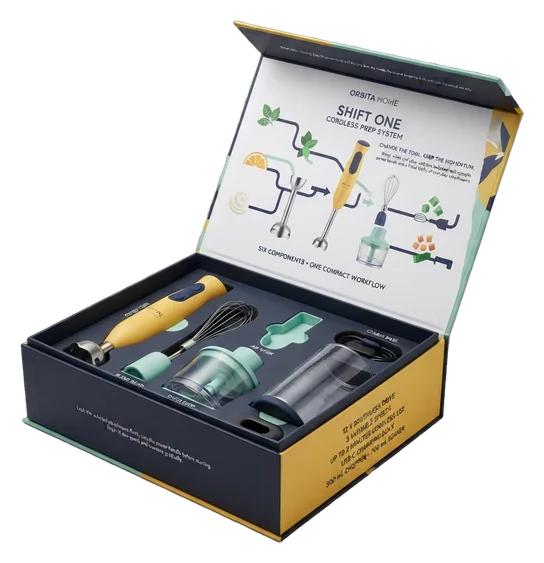
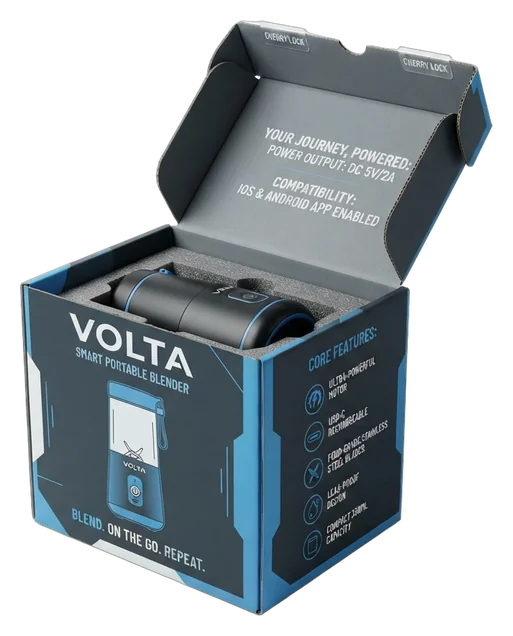
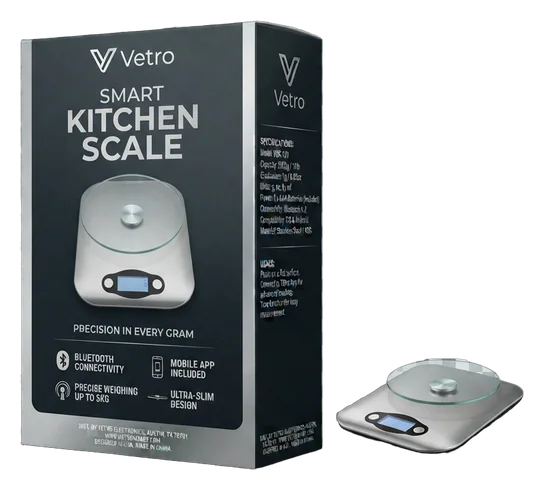
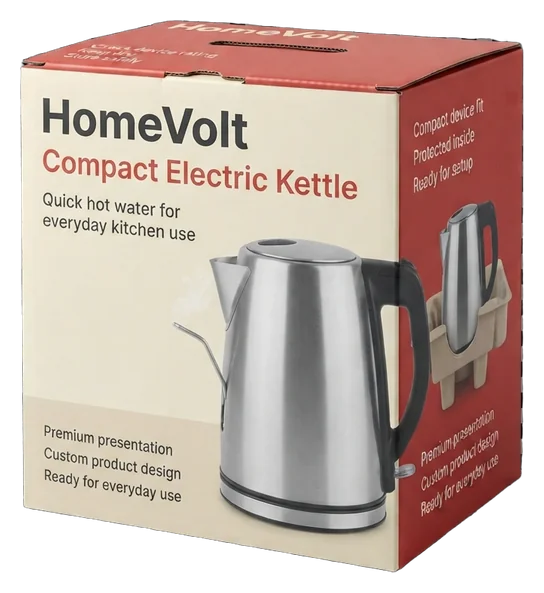
Custom appliance boxes help your products arrive with a clear standard: easy to identify, confidently presented, and thoughtfully arranged from the outer panels to the first lift. Appliance buyers often compare models quickly, whether they meet the box on a retail shelf, receive it from an online order, or open it during a product handoff. Custom sizing, coordinated graphics, purposeful materials, and a planned interior turn an ordinary container into a clear product introduction. The box can make the model, function, included parts, and parent brand easier to understand while giving the product a more deliberate physical presence at sale, delivery, and opening. Our service is built around the result your appliance range needs to communicate. We help shape the structure, artwork, material feel, surface details, and interior sequence so compact devices, home appliances, accessories, or coordinated kits can feel consistent with their price point, channel, and brand character. That outcome is supported by practical production choices rather than surface claims. We can develop paperboard, kraft, supported corrugated, or rigid formats; print exterior and relevant interior panels; add finishes, windows, handles, dividers, trays, or custom-cut foam inserts; and provide dieline, artwork, and digital-proof support before production. The final specification is planned around the appliance dimensions, weight, accessories, sales route, handling needs, and the way you want customers to encounter the product.

Get Custom Quote
APPLIANCE FORMAT ROUTES
Choose a Box Built Around the Product Journey
Different appliances ask different things from their packaging. A compact countertop device may need a clean folding carton, while a heavier product, accessory bundle, gift edition, or direct-to-customer kit may need corrugated support, a fitted insert, or a more controlled reveal. The right route depends on the packed product, its components, the sales channel, and how customers should meet it. We help compare practical structures without forcing every appliance into the same format, so the final box supports recognition, arrangement, handling, and opening in one coordinated design.
➜
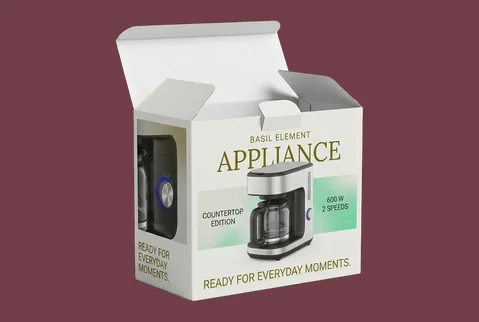
Printed Folding Cartons
Folding cartons give compact appliances and accessories a clean retail face without adding unnecessary bulk. We size the panels around the product, reserve space for model information, and coordinate the exterior with the rest of the range.
- Single appliance or accessory
- Measured fit with inner support
- Full-panel model and brand graphics
- Retail shelf or direct handoff
A practical route for clear model recognition, orderly packing, and a polished shelf or handoff moment.
Customize Now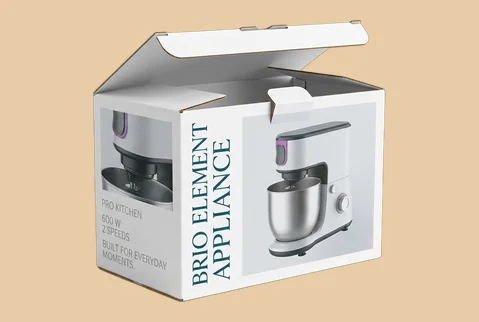
➜
Corrugated Product Boxes
Corrugated product packaging gives appliances more structural substance while preserving a designed, brand-led exterior. It suits products that need more board support than a folding carton without turning the project into a generic shipping-carton exercise.
- Compact or larger appliance packs
- Flute selected around product needs
- High-coverage exterior brand printing
- Retail, delivery, or launch use
The result is a stronger physical package that can still communicate product identity clearly at arrival and opening.
Customize Now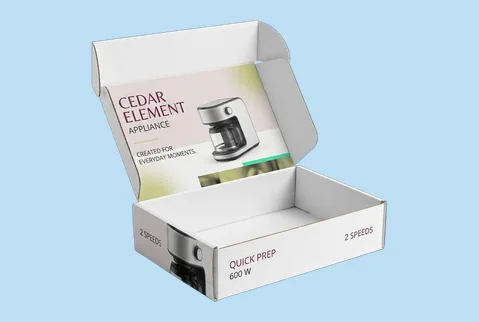
➜
Printed Mailer Boxes
Mailer-style boxes suit compact appliances, replacement components, starter kits, and accessory sets sent directly to customers. Their opening format creates useful room for exterior recognition, inside printing, and a considered first view of the contents.
- Compact appliance or accessory sets
- Roll-end structure with fitted insert
- Inside-and-outside print continuity
- E-commerce receipt and opening
This route connects delivery arrival with a clearer brand handoff and more organized product discovery.
Customize Now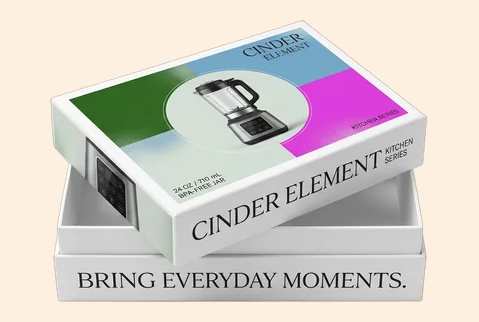
➜
Two-Piece Presentation Boxes
A separate lid and base create a slower, more deliberate introduction for compact appliances, gift editions, launch samples, and coordinated sets. The structure provides broad surfaces for artwork and room for a fitted internal arrangement.
- Compact appliance gift sets
- Lift-off lid with planned reveal
- Strong exterior and interior identity
- Retail, gifting, or PR handoff
A useful choice when the first reveal should communicate care, order, and a higher product standard.
Customize Now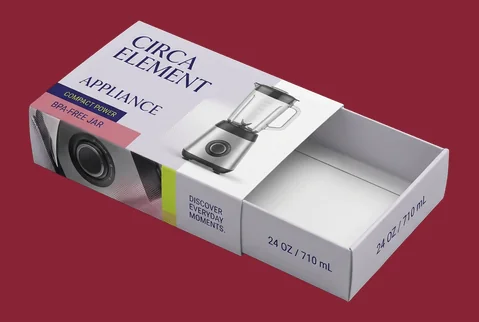
➜
Sleeve-and-Tray Boxes
Sleeve-and-tray formats make the opening movement part of the product introduction. They work well for slim appliances, controls, smart-home devices, and accessory bundles that benefit from a controlled slide-out arrangement.
- Slim devices and accessory bundles
- Sliding tray with fitted arrangement
- Sleeve-led model recognition
- Controlled first product reveal
The sleeve earns recognition first, while the tray introduces the appliance and its components in a clear sequence.
Customize Now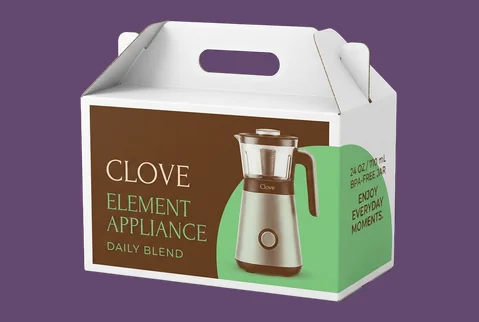
➜
Handle-Carry Appliance Boxes
Integrated handles can support store pickup, event demonstrations, product launches, and hand-carried appliance kits. We plan the carry feature with the packed weight, panel layout, closure, and intended customer handoff in mind.
- Portable appliance or kit
- Fit planned around product load
- Branded panels with carry feature
- Store pickup or event handoff
This format combines easier handoff with a package that remains visibly connected to the appliance brand.
Customize Now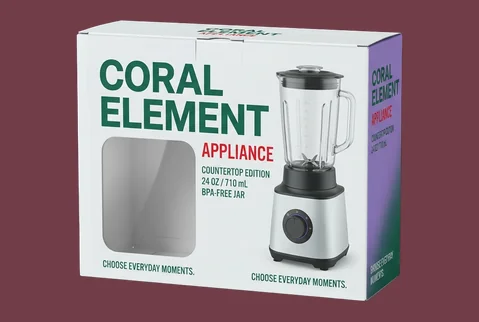
➜
Window Appliance Boxes
A die-cut window can let customers see a compact appliance, control surface, color, or selected component without losing the surrounding brand story. Window shape and placement are developed around the product and required printed information.
- Compact appliance or visible component
- Die-cut window with clear patch
- Product view beside key branding
- Retail comparison and display
The customer sees a useful product detail while the printed box continues to frame its meaning and quality.
Customize Now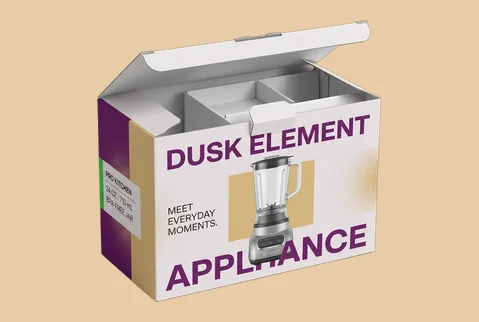
➜
Insert-Led Kit Boxes
Insert-led boxes are designed for appliances supplied with cables, attachments, controls, manuals, replacement parts, or setup accessories. Foam and board-based inserts can be cut around the actual product and component arrangement.
- Appliance with multiple components
- Foam or board compartments
- Printed component and model cues
- Guided setup and product discovery
Every included item receives a deliberate place, making the first opening clearer and the complete set easier to understand.
Customize NowMATERIAL SETS THE STANDARD
Build the Right Physical Character for Each Appliance
The material begins shaping customer expectations before model information or finishes are studied closely. A smooth paperboard carton can make graphics and technical details feel clean and controlled. Kraft can support a practical, honest, or design-conscious identity. Corrugated board can give relevant appliance packs more physical substance while retaining a fully branded exterior. Rigid greyboard can make compact high-value devices, demonstration sets, and gift editions feel more considered. We recommend the material through the product’s weight, channel, handling, desired appearance, and opening format—not through thickness alone.
Smooth Paperboard for Crisp Communication

Paperboard suits compact appliances, accessories, controls, replacement devices, and retail products that need sharp artwork and clearly organized information. Its smooth surface helps model names, feature graphics, instructions, product images, and color systems reproduce with greater definition. Coated, uncoated, matte, or gloss-facing options can be matched to the appliance’s intended character.

Kraft for Honest, Tactile Character

Kraft can give selected appliance ranges a natural, workshop-led, practical, or understated design language. It works particularly well when the brand wants the board character to remain visible rather than hiding it beneath heavy coverage. White ink, dark graphics, or selective color can create strong contrast while keeping the material’s tactile identity present.
Corrugated Board for Branded Substance

Corrugated board supports appliance product boxes, presentation formats, and relevant mailer structures that require more physical substance. The flute, liner, structure, and insert arrangement should follow the actual packed product rather than a generic carton specification. Printed surfaces can carry the same model architecture and brand language used across the rest of the range.
Rigid Greyboard for High-Value Presentation

Rigid greyboard can give compact appliances, smart devices, promotional kits, and gift-focused editions a more substantial hand feel and slower opening rhythm. Overwrap materials, printed papers, linen-style surfaces, magnetic closures, lift-off lids, drawers, and fitted inserts can be coordinated around the intended customer encounter.
MODEL, FUNCTION & BRAND
Make Every Appliance Range Easier to Recognize
An appliance box often has to explain a range before a salesperson or product page can. The model name, product silhouette, color version, key function, included parts, and parent brand should work together instead of competing for attention. Custom printing lets us create a clear visual system across front, side, top, back, and relevant inside panels. Full-color artwork, PMS colors, metallic ink, white ink on kraft, and inside printing are production tools; the useful result is an appliance family that feels connected, lets customers distinguish options more easily, and carries the same identity across retail, online delivery, product launches, or wholesale handoff.
- Give each model a clear visual code
- Keep the parent brand visibly consistent
- Make useful features easier to scan
- Carry artwork across relevant panels
- Continue selected brand cues inside
- Adapt editions without losing recognition
SURFACE CUES WITH A JOB
Control the First Detail Customers Notice
An appliance box can look expensive yet still feel unfocused when every surface asks for attention. We use finishes to set the overall tone, give the model or brand mark the right visual weight, and separate special editions from the core range. Matte, gloss, soft-touch, spot UV, foil, embossing, debossing, and raised effects are selected for the job they perform. The result should be a surface that helps customers read the pack quickly and supports the appliance’s intended quality level when they see or handle it.
-
 Set the Overall Standard
Matte lamination can give technical, home, wellness, or design-led appliances a calmer and more controlled surface. Gloss can strengthen color clarity for energetic retail ranges, while soft-touch can give selected compact devices and gift editions a more tactile, considered feel.
-
Give the Brand or Model Priority
Spot UV, foil, embossing, debossing, or raised effects can direct attention toward the brand name, model line, control feature, or key graphic. The purpose is not to decorate every panel. It is to create a clear order of importance.
-
Mark Launches and Special Editions
Metallic accents, surface contrast, or selective raised details can distinguish launch packs, retail exclusives, collaborations, or gift versions. Core identity elements should remain consistent so the edition feels special without becoming disconnected from the parent appliance range.


ORGANIZE THE FIRST REVEAL
Make Appliance Unboxing Clear From the First Lift
Opening an appliance box should answer practical questions in a natural order: What is the main product? What comes with it? What should be lifted first? Where are the manual, cable, attachment, or control pieces? For compact appliances, kits, accessories, gift editions, and direct-to-customer orders, a planned interior can keep the outside promise moving. We can coordinate printed inside panels with foam, paperboard, kraft, corrugated, or cardboard inserts, then shape compartments around the actual components. The useful outcome is a clearer first reveal, easier component discovery, and a brand experience that does not disappear when the lid opens.
-
Show Customers What Comes First
The appliance should receive the appropriate visual priority when the package opens. Manuals, cards, cables, or accessories can be layered or positioned around that first view so customers are not presented with a loose collection of unrelated parts.
-
Give Every Component a Deliberate Place
Custom-cut foam, paperboard, kraft, cardboard, or corrugated inserts can separate the appliance from attachments and smaller components. Considered spacing helps customers understand what belongs in the set and makes individual pieces easier to identify and remove.
-
Carry Product Confidence Inside
Inside printing can repeat a brand color, short setup cue, product message, or visual pattern introduced on the exterior. The aim is not to fill every internal surface. It is to keep the identity coherent while the customer moves from opening to product discovery.


EXPERT-GUIDED APPLIANCE PACKAGING
Appliance Box Customization Made Easy & Fast — Built to Fit, Protect & Ship
Our appliance packaging experts, structural designers, print specialists, consultants, and project managers make custom appliance box ordering easy and fast by bringing your product dimensions, weight, model count, accessory layout, selected box style, corrugated strength, insert needs, artwork, and brand direction into one production-ready structure. We guide product-fit clearance, handle or cord allowance, manual and warranty-card compartments, foam, molded pulp, paperboard, or corrugated insert tolerance, flute and wall-strength selection, stacking and shipping-label areas, coating and finish compatibility, dieline alignment, bleed and safe-zone setup, barcode, QR, serial, energy-label, and model-variant spacing where needed, cost calculation, timeline planning, prepress preparation, and 3D proof review. The result is a custom appliance box built to fit the product, reduce internal movement, support better shipping or retail handling, carry artwork cleanly, and move to production with fewer sizing, structure, print, or approval risks.
-
Fast
Specs-to-Quote Alignment
Experts align appliance size, weight, selected box style, flute, insert layout, accessory count, artwork, shipping-label space, cost, timeline, prepress setup, and 3D proof early — helping reduce quote delays and approval back-and-forth.
-
Exact
Product-Fit & Accessory Layout Review
We check product length, width, height, weight, handle shape, cord space, accessory count, manual placement, insert tolerance, and closure behavior so the appliance box fits properly and packs more consistently.
-
Protected
Corrugated Strength & Insert Check
Structural teams review flute choice, wall strength, base support, corner protection, foam, molded pulp, corrugated inserts, dividers, and movement control so the appliance is better supported during storage, retail handling, or shipping.
Turn Appliance Packaging Choices Into a Clear Production Plan
A successful appliance box begins with more than an attractive design. The structure has to fit the actual product, accommodate its components, suit the sales channel, provide usable artwork space, and move through proofing and production without avoidable uncertainty. Our team helps turn those connected decisions into one workable specification. The following planning points explain what to prepare, where choices matter, and how we support the project from initial sizing through production approval.
-
Start With the Actual Packed Appliance
Do not choose a box from the appliance name alone. Two products in the same category can have different control surfaces, projecting parts, power cords, attachments, inner wrapping, and removal requirements. We plan the structure from the packed item and its complete component list. Exact internal dimensions, insert cavities, and clearances should be confirmed from approved measurements or a supplied product sample. They should never be guessed from a product photograph or a general appliance category.
-
Match the Structure to the Sales and Handoff Route
A retail carton, e-commerce mailer, product-launch kit, wholesale pack, and gift edition do not perform the same job. Retail packaging may prioritize front-facing model recognition and comparison information. A direct-to-customer format may give more importance to receiving condition, inside printing, and the first opening. A demonstration or launch kit may need reusable access and a more controlled component sequence. We help compare the channel with the product’s weight, size, opening style, and visual requirements. Paperboard may be suitable for compact products, while corrugated or rigid construction may be considered when the appliance, arrangement, or desired physical character calls for a more substantial structure.
-
Plan the Interior Around the Complete Set
The main appliance is only one part of the packing decision. Cables, attachments, filters, remotes, adapters, manuals, warranty cards, and setup pieces can affect the box dimensions and opening sequence. Foam can be cut around detailed shapes and multiple components. Paperboard, kraft, cardboard, or corrugated inserts can create compartments, platforms, dividers, and product supports. The chosen insert should help hold the intended arrangement and make components easier to understand without creating an unnecessarily complicated unpacking process. Before insert development, identify which item customers should see first, which pieces need separate locations, and how each component should be removed. This gives the structural team a clear discovery sequence to work from.
-
Prepare Artwork for Fast Product Understanding
Appliance artwork often carries several kinds of information: the brand, model, product image, main function, included parts, setup direction, barcode area, and buyer-supplied technical or legal copy. These elements need a clear order rather than equal visual weight. Printing can include digital or offset production, CMYK process artwork, PMS spot colors, white ink on kraft, metallic ink, and relevant interior coverage. The selected method follows the design, material, quantity, and production specification.
-
Approve the Dieline and Digital Proof Before Printing
Every approved order includes a digital proof. This lets you review panel placement, orientation, artwork coverage, model information, and other visible details before production begins. A digital proof is not a physical prototype, so the two should not be treated as the same approval step. A physical prototype may be available for a qualifying wholesale or bulk project. Where approved, its cost may be adjusted into the resulting production order. This is different from an unrestricted free sample service. Printing begins only after payment, final artwork approval, and structure confirmation. Buyer-supplied technical, warranty, safety, regulatory, or legally required information remains the buyer’s responsibility.
-
Choose a Starting Quantity That Fits the Project
Paperboard, cardstock, kraft, and supported corrugated appliance boxes may start from 50 units. Supported rigid-box formats may start from 25 units, including relevant rigid structures with fitted inserts. A lower starting quantity does not automatically remove meaningful customization. Subject to the approved structure and production specification, a smaller order can still use custom dimensions, material selection, exterior or interior printing, finishes, and inserts. This gives a developing appliance brand room to prepare a launch, test a model, support a promotion, or introduce a higher-value edition without moving immediately into an unnecessarily large run. Per-unit pricing generally improves as quantity increases. More visible differences may begin around 500 units, but the actual price depends on material, size, structure, print coverage, finishes, inserts, and the number of designs. No fixed saving percentage should be assumed before the specification is reviewed.
-
Schedule Production and Transit Separately
Production normally takes 4–6 business days after payment, final artwork approval and structure confirmation. Production-ready jobs are generally planned to print and ship within 7 business days. Shipping transit time is separate, while complex multi-design orders may require a separately confirmed schedule. A project with several appliance models, numerous short-run artworks, complex inserts, rigid construction, or corrugated production may need additional coordination. Where a different schedule is required, it should be confirmed before the job proceeds rather than presented as an unexpected delay.

DOORBELL BOX QUESTIONS
Answers Before You Size, Brand and Order
Yes. We can develop a connected packaging system for several appliance models while keeping each version easy to distinguish. Shared elements may include the box structure, parent-brand colors, typography, panel order, and finish treatment. Model names, product images, color codes, feature cues, and insert details can then change where needed. Provide the dimensions, components, and quantities for every model. Products with different shapes or accessory arrangements may need separate dielines or inserts even when the exterior branding remains consistent.
The right material depends on the packed product, weight, channel, desired physical character, and opening format. Smooth paperboard can suit compact retail appliances and accessories that need crisp artwork. Kraft can support a more practical or understated identity. Corrugated board can provide greater substance for relevant product boxes and mailers, while rigid greyboard can suit compact high-value devices, gift editions, and presentation kits. Our team can compare these routes after reviewing the appliance measurements, packed weight, components, and expected customer handoff.
Yes. Foam, paperboard, kraft, cardboard, and corrugated inserts can be developed around the appliance and its included components. The arrangement may create separate locations for cables, controls, adapters, manuals, filters, attachments, or replacement pieces. The insert is planned from confirmed product measurements and the intended removal sequence. This helps the complete set feel deliberate when opened and makes individual items easier to identify without promising one generic insert solution for every appliance.
Yes. Relevant artwork can be printed on the front, back, top, bottom, sides, exterior, and inside surfaces of the selected structure. This gives you room to coordinate the parent brand, model name, product images, included-parts information, instructions, and other buyer-supplied copy. Available routes include full-color CMYK, PMS spot colors, digital or offset printing, metallic ink, and white ink on kraft. Final coverage depends on the approved material, structure, artwork, and production specification.
Yes. We can plan the opening around what customers should see, lift, and understand first. The main appliance may receive the first visual position, while cables, manuals, controls, and attachments are arranged in separate compartments or layers. Printed interior panels can continue selected brand cues or provide a short setup message. The useful result is a more understandable first encounter with the complete product set, especially for kits, compact appliances, gift editions, and direct-to-customer orders.
Yes. A smaller appliance business can begin with packaging developed around its own product and intended brand character without committing to an extremely large first run. Paperboard, cardstock, kraft, and supported corrugated formats may start from 50 boxes. Supported rigid formats may start from 25. Relevant custom sizing, exterior or interior printing, material choices, finishes, and inserts can remain available at these starting quantities where they suit the approved structure and production specification.
Yes. Dieline, template, and artwork-preparation support are available. The team can check production files, resize supplied artwork for confirmed dimensions, and help with bleed, safe zones, panel orientation, and basic prepress requirements. Accepted production files include AI, PDF, PSD, and EPS. Artwork should be placed on the final approved dieline before printing. Buyer-supplied warranty, safety, technical, and legally required information should also be checked by the buyer before final approval.
Yes. Every approved order receives a digital proof before printing. You can review artwork placement, panel direction, model information, colors represented in the proof, and visible content before giving final approval. A digital proof is not a physical sample. A physical prototype may be available for a qualifying bulk or wholesale project, and its cost may be adjusted into the resulting order where approved. Unrestricted free samples or one-box production should not be assumed.
Production normally takes 4–6 business days after payment, final artwork approval and structure confirmation. Production-ready jobs are generally planned to print and ship within 7 business days. Shipping transit time is separate. Orders involving numerous short-run designs, complex inserts, rigid construction, or corrugated production may require a separately confirmed schedule. Where additional time is needed, the schedule should be discussed before the job moves into production.
Yes, where the project is a product-specific appliance box and the structure, printing, and commercial requirements support it. Corrugated packaging can be considered for products such as larger home or kitchen appliances when customers need customized sizing, stronger visual branding, and a purpose-built product presentation. The service is not positioned around large commodity shipping cartons. Product dimensions, packed weight, print requirements, destination, and shipping economics must be reviewed before the structure and quotation are confirmed. The customer-facing draft deliberately avoids reviews, environmental certification claims, guaranteed results, unrestricted samples, one-box production, and commodity shipping-carton positioning.
CUSTOMER SUCCESS STORIES
Hear What Our Customers Say

As a small business, finding premium finishes in lower quantities was always difficult. Global Custom Packaging gave us the freedom to customize our boxes and create the distinctive, polished look we wanted without committing to a large order. We still work with them today and have expanded into multiple product variants, each with the same impressive presentation.
Jordan Blake
We sell online and in stores while regularly promoting at major events, running influencer campaigns, and launching seasonal collections. Global Custom Packaging has become our dependable source for everything—from premium mailer and product boxes to sturdy influencer kits, rigid packaging, kraft boxes, and limited-edition Christmas designs. Whatever structure, material, or branded look we need, we no longer have to go anywhere else.
Avery Quinn

I never worry about how my packaging will look or whether my artwork contains typos, incorrect bleed areas, or other design errors. Their 3D previews and helpful design support give me confidence before printing. If the team notices a problem, they contact me, correct it quickly, and never charge extra for the assistance.
Cameron Reese
I’m really impressed with Global Custom Packaging’s precise, richly saturated printing and the accuracy of their die-cutting. The boxes were produced in exactly the right size, with a clean, well-formed structure and no fitting or construction issues. The finished packaging looked polished, consistent, and ready to represent our products professionally.
Morgan Taylor
I received my quote within a few hours, and once we agreed on the price, the designer responded quickly, completed the required changes, and prepared my artwork for printing. The 3D proof arrived promptly, allowing me to review everything and place my order that same day. My packaging was delivered on time, exactly as Global Custom Packaging had committed.
Harper Lane