


-

Low Starting Quantity
-

Digital Proof Included
-

Design Support Available
-
In-House Production
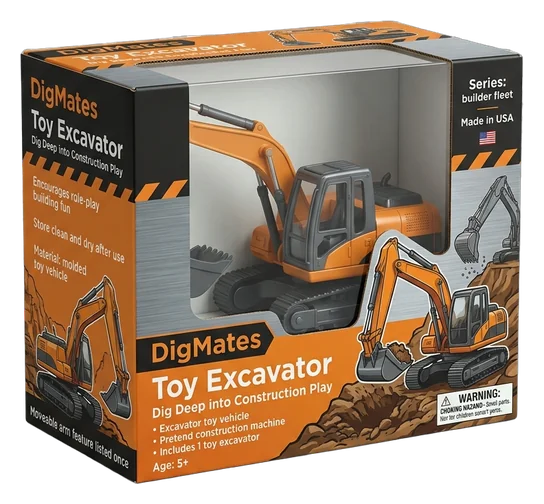
Custom toy excavator boxes give each model a clear, shelf-ready identity while turning delivery, gifting, and opening into a more deliberate brand experience. Toy buyers often compare several vehicles at once, so the box has only moments to clarify the model, show the set’s character, and signal the quality behind the brand. Custom sizing, structured panels, coordinated color, and purposeful print can turn a generic container into a recognizable home for one excavator or a wider construction-toy range. That clarity supports faster product understanding on a retail shelf, in product photography, at gift handoff, or when an online order arrives. We build toy excavator packaging around the product, the parts that travel with it, and the way customers should encounter the brand. The result can feel energetic, technical, playful, collectible, or gift-ready without losing visual order. You gain a box that helps the range look connected, keeps important product cues easy to find, and carries the intended quality from first view through opening. That outcome is supported by coordinated choices rather than a feature checklist. Structure and proportions establish the base; paperboard, kraft, rigid greyboard, or supported corrugated formats shape the physical character; exterior and interior printing connect the model to the parent brand; finishes direct attention; and inserts or dividers can organize components where the pack requires them. Artwork checks, dieline support, and a digital proof help you confirm the plan before production.

Get Custom Quote
FORMAT ROUTES FOR THE RANGE
Choose the Right Structure for Every Excavator
Different toy excavators need different packaging routes because model size, component count, display method, and opening sequence can change the job of the box. A compact retail unit may need quick model recognition and a secure base, while a multi-part set may benefit from an insert, tray, or more guided reveal. A gift-led edition may call for a two-piece or rigid format; an ecommerce pack may need a supported corrugated structure that carries the same brand language through arrival. Choose the format by how the toy is sold, arranged, handled, and discovered—not by style name alone.
➜
Straight Tuck Product Box
A clean folding-carton route for compact toy excavators that need clear front-panel recognition, organized side information, and straightforward access. Custom proportions help the pack feel made for the model rather than adapted from a generic carton.
- Single-model retail packs
- Custom fit and panel layout
- Full exterior brand graphics
- Simple top or bottom access
A practical route for keeping the model easy to identify while giving the brand a consistent retail face.
Customize Now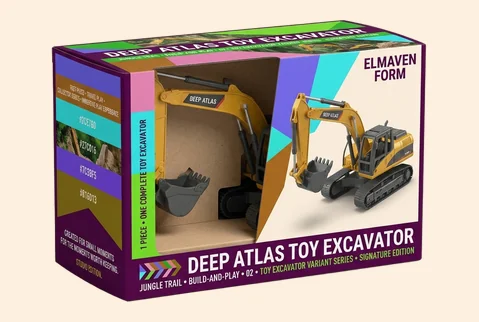
➜
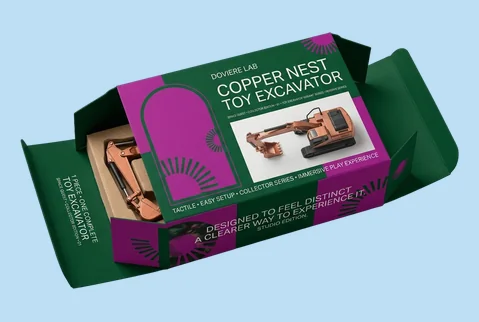
Auto-Bottom Retail Box
An auto-bottom format gives a folding carton a faster setup and a stable base for suitable toy configurations. It supports bold model graphics while keeping the structure familiar for retail display, packing, and handoff.
- Suitable compact toy configurations
- Pre-glued base construction
- Wide branding surfaces
- Retail display and handoff
Choose it when efficient assembly and a confident upright display matter together.
Customize Now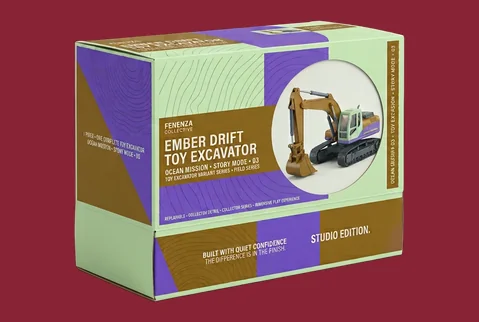
➜
Lock-Bottom Set Box
Lock-bottom construction gives suitable toy excavator sets a more reinforced folding-carton base without moving directly to rigid packaging. It can support a deliberate component layout and keep the exterior focused on model identity and range navigation.
- Excavator plus accessory sets
- Reinforced folding-carton base
- Room for coordinated graphics
- Retail or gift-ready use
A useful middle route when the pack needs more base confidence and stronger visual organization.
Customize Now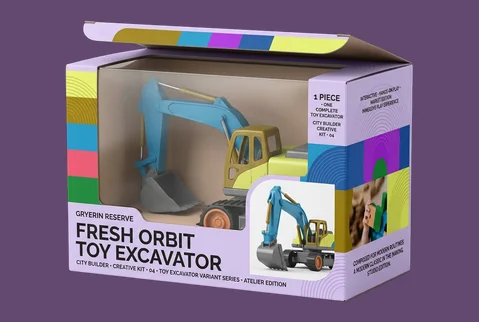
➜
Window Display Box
A die-cut window can let the toy or a selected detail contribute to first-view recognition while printed panels carry the model name, brand cues, and supporting information. Window shape and placement should follow the product and artwork hierarchy.
- Selected product visibility
- Custom window shape and size
- Printed model and brand cues
- Retail comparison at a glance
Use visibility selectively so the product and printed story work together rather than compete.
Customize Now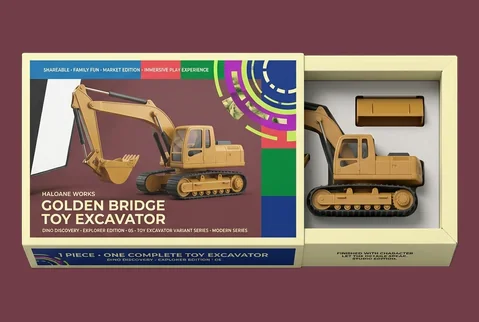
➜
Sleeve and Tray Box
A sleeve-and-tray format separates the outer brand statement from the product reveal. It can create a more considered opening for toy excavator sets, special editions, or gift-led packs while keeping the model positioned within a fitted tray or insert.
- Single models or themed sets
- Tray, insert, or divider
- Full sleeve brand storytelling
- Controlled slide-out reveal
This route connects a strong outer identity with a more deliberate first look at the toy.
Customize Now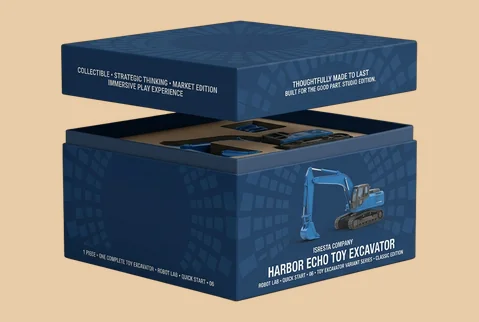
➜
Two-Piece Presentation Box
A lid-and-base box gives the toy excavator a clear presentation stage and a broad surface for artwork. Paperboard, kraft, or rigid construction can be selected according to the intended physical character, set configuration, and budget.
- Single toys or multi-piece sets
- Optional insert-based arrangement
- Broad lid artwork area
- Gift, launch, or collector use
Choose it when the first lift of the lid should feel ordered, complete, and brand-led.
Customize Now
➜
Rigid Magnetic Set Box
A magnetic-closure rigid box can give selected gift, launch, or collector-focused toy excavator sets greater physical presence. Interior printing, overwraps, foam or board inserts, and ribbon pulls may be coordinated where they support the chosen structure.
- Selected gift or collector sets
- Foam or board insert
- Interior and exterior branding
- Magnetic opening with lift-out
This route suits programs where a substantial box and guided reveal are central to the offer.
Customize Now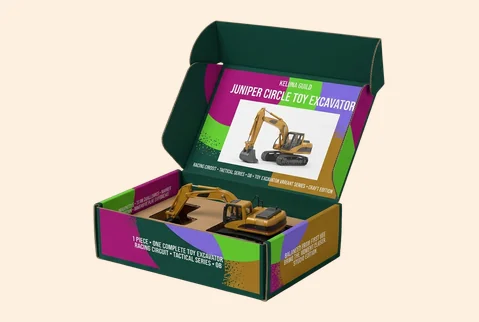
➜
Corrugated Branded Mailer
A supported corrugated mailer can carry toy excavator branding through ecommerce arrival or direct gifting. Custom print and an internal insert or divider can help the outside, opening, and product arrangement feel connected without positioning the box as a commodity shipping carton.
- Ecommerce or direct gifting
- Corrugated fit and support
- Inside and outside printing
- Arrival-to-opening brand continuity
Use it when delivery is part of the customer experience and the branded mailer itself matters.
Customize NowMATERIAL SETS THE TONE
Choose a Box Feel That Fits the Toy Range
The board decides whether a toy excavator box feels bright and graphic, natural and craft-led, substantial and gift-focused, or ready for a branded delivery format. That physical character is noticed before every printed detail is read. Smooth SBS paperboard can support clean color and small model information; kraft can give a rugged, construction-inspired feel; rigid greyboard can add presence to a special set; and supported corrugated material can extend the brand into a mailer or larger product format. Select the substrate by the impression, handling, and opening job it needs to perform.
Clean, Graphic-Led Paperboard

SBS paperboard can give model artwork, color coding, and supporting information a smooth, controlled surface. It suits folding formats that need a bright retail face without making the structure feel heavier than the product offer requires.

Rugged Kraft Character

Kraft can connect naturally with the construction theme while keeping the box grounded and tactile. Full-color artwork or white ink can add clear brand contrast without removing the material’s more natural visual character.
Substantial Rigid Presence

Rigid greyboard can make a gift, launch, or collector-focused set feel more deliberate before the lid opens. Overwraps, interior printing, magnetic closures, and fitted inserts may be coordinated around the selected rigid structure.
Branded Corrugated Arrival

Supported corrugated formats can give ecommerce, direct-gift, or larger product packs more physical structure while carrying custom print outside and inside. The goal is a branded product or mailer format, not a generic commodity shipping carton.
MODEL, RANGE & BRAND
Make Every Excavator Easy to Recognize
A toy excavator range often needs to communicate model identity, set contents, play theme, and parent-brand character in one quick view. Custom printing can turn those cues into a visual system that helps customers distinguish one product from another without making the range feel disconnected. Use exterior panels for the model story, supporting information, and brand hierarchy; use inside printing where the opening should continue the same world. Full-color, CMYK, PMS or spot color, digital, offset, flexographic, and white-on-kraft routes provide the production options. The customer benefit is clearer choice and stronger brand continuity across selected retail, photography, gifting, and delivery moments.
- Give each model a distinct identity
- Keep the construction range connected
- Use panels to explain the set
- Build launch or seasonal editions
- Continue the visual system inside
- Stay recognizable across chosen channels
FINISH WITH A JOB TO DO
Direct Attention Without Overloading the Box
A finish should help the customer read the box, not make every element compete for attention. For toy excavator packaging, surface treatment can set the overall energy, give the model or brand mark more weight, and separate a gift or limited release from the core range. Matte, gloss, soft-touch, foil, embossing, debossing, spot UV, and raised effects are useful only when they support that order. Choose the finish by what customers should notice first and how the box should feel when handled.
-
 Set the Overall Energy
Matte or soft-touch treatment can make a collector or gift-led range feel calmer and more considered. Gloss can support brighter, high-energy graphics when color and visual movement are central to the toy’s identity.
-
Give Key Cues More Weight
Foil, embossing, debossing, spot UV, or raised effects can draw the eye to the model name, brand mark, or selected construction detail. Apply contrast selectively so the information hierarchy remains easy to follow.
-
Mark a Special Release
A launch, gift edition, or seasonal version can use a controlled change in foil, texture, or surface sheen to feel distinct while keeping the same parent-brand structure visible.


DESIGN THE FIRST REVEAL
Guide the Toy From Opening to Play
The outside of a toy excavator box sets an expectation; the inside should help the product and any included parts feel intentionally introduced. For single models, sets, gifts, or direct-delivery packs, opening can continue the same colors and graphic language while giving each item a clear place. Printed interiors, board or foam inserts, dividers, trays, and considered spacing can support a more ordered first reveal. The result is not decoration for its own sake. It is a smoother path from opening the box to understanding what is included and selecting the first item.
-
Continue Keep the Brand Moving
Carry relevant colors, construction graphics, or short messaging inside the box so the identity established outside remains present when the package opens.
-
Guide Give Every Part a Place
Use a board, corrugated, or foam insert where the toy and included components need a deliberate arrangement. Clear spacing can help each item feel related without becoming difficult to distinguish.
-
Reward Shape the First Lift-Out
Plan what appears first, how the main toy is reached, and how accessories are removed. A controlled sequence can make a gift, set, or collector-focused format feel more complete.


EXPERT-GUIDED TOY EXCAVATOR PACKAGING
Toy Excavator Box Customization Made Easy & Fast — Built to Fit, Secure & Display
Our toy excavator packaging experts, structural designers, print specialists, consultants, and project managers make custom toy excavator box ordering easy and fast by bringing your excavator length, cab height, boom and bucket position, wheel or track width, accessory count, selected box style, insert layout, artwork, and brand direction into one production-ready structure. We guide vehicle footprint, movable-arm clearance, bucket cavity depth, track or wheel support, blister or tray tolerance, divider layout, product movement control, board thickness, window placement, handle or hanger-tab strength, display angle, coating and finish compatibility, age or warning-panel spacing where required, barcode or QR placement, dieline alignment, bleed and safe-zone setup, cost calculation, timeline planning, prepress preparation, and 3D proof review. The result is a custom toy excavator box that fits the vehicle, supports better handling, displays key features clearly, and moves to production with fewer sizing, print, structure, or approval risks.
-
Fast
Specs-to-Quote & Excavator Layout Alignment
Experts align excavator size, arm position, selected box style, tray or blister layout, stock thickness, artwork, finishes, cost, timeline, prepress setup, and 3D proof early — helping reduce quote delays and approval back-and-forth.
-
Exact
Arm, Bucket & Vehicle-Fit Review
We check excavator length, cab height, boom angle, bucket clearance, wheel or track width, accessory count, cavity depth, and closure behavior so the box fits properly and keeps the toy better positioned.
-
Retail
Window, Artwork & Label-Panel Check
Print specialists review toy graphics, window placement, product visibility, barcode or QR spacing, age or warning-panel space where required, dieline alignment, coating compatibility, foil, spot UV, embossing, and finish-mask setup so toy excavator packaging prints and displays more cleanly.
Plan a Confident Toy Excavator Box Order
A confident toy excavator box order begins with decisions that match the actual product, sales route, artwork, and schedule. Use the steps below to turn the intended brand experience into a production-ready plan without guessing at dimensions, materials, or timing.
-
Plan the Fit Around the Packed Product
Start with the toy in the exact position it will hold inside the box. Record its length, width, and height, then include any inner wrapping, accessory pack, insert, divider, or tray that belongs in the final configuration. For an irregular shape, measure the widest and tallest packed points rather than relying on the product name alone. Removal clearance also matters: a tight layout may look neat on screen but make the first lift-out awkward. Share the number of items in the set and whether they should appear together or in stages. This lets the structure and insert plan follow the real opening sequence instead of forcing the product into a standard cavity.
-
Match the Structure to the Selling Route
Choose the box by where customers will meet it. A folding carton can support compact retail units that need clear panel communication. A window format can combine selected product visibility with printed brand information. Sleeve-and-tray, two-piece, or supported rigid structures can create a more guided gift, launch, or collector-focused reveal. A supported corrugated mailer can carry the brand through ecommerce arrival without turning the project into a commodity shipping-carton brief. Also consider packing speed, shelf orientation, handoff, and whether the same order will go to more than one address. Multi-address shipping is available, so separate retail, campaign, or distribution destinations can be planned within one program.
-
Confirm Material and Interior Support
Use material to set the physical character before choosing decorative effects. Smooth SBS paperboard can support detailed graphics; kraft can create a more natural, construction-led tone; rigid greyboard can add substantial presence; and corrugated board can suit branded mailer or larger product formats. Paperboard options may be planned within the supported 14–24 pt range where appropriate. For products with multiple pieces, board, corrugated, or foam inserts can be die cut around the approved arrangement. The right choice depends on product weight, component count, reveal sequence, and removal needs. It should make the set easier to understand, not simply add another layer inside the box.
-
Build Artwork on the Approved Dieline
Prepare the visual system after the structure and dimensions are confirmed. Free dieline or template support, artwork checking, resizing, bleed and safe-zone assistance, and design support are available. Accepted production files include AI, PDF, PSD, and EPS. Exterior and interior panels can be printed, and full-color, CMYK, PMS or spot color, digital, offset, flexographic, and white-on-kraft routes are supported where they suit the job. Keep model names, product images, range colors, brand marks, and buyer-supplied information in a clear hierarchy. A digital proof is available for every approved order, giving you a final review point before production. Printing does not begin before the required approval.
-
Choose a Quantity That Fits the Program
Paperboard, cardstock, kraft, and supported corrugated toy excavator boxes may start from 50 units. Supported rigid formats may start from 25. These starting quantities can still include relevant custom sizing, printing, finishes, and inserts where they suit the approved structure and production specification. Per-unit pricing generally improves as quantity increases, with more visible differences often appearing around 500 units. No fixed saving percentage should be assumed before quoting the exact specification. A physical prototype may be available for a qualifying bulk or wholesale project, and its cost may be adjusted into the resulting order where approved. One-box production, unrestricted free samples, and unconditional free prototypes are not offered.
-
Approve the Schedule Before Launch Commitments
Production normally takes 4–6 business days after payment, final artwork approval and structure confirmation. Production-ready jobs are generally planned to print and ship within 7 business days. Shipping transit time is separate, while complex multi-design orders may require a separately confirmed schedule. Build your launch calendar backward from the required arrival date, not only the production window. Allow time for measurement, dieline preparation, artwork review, digital proof approval, and transit. Rigid and corrugated projects should not be assigned a general rush promise. When several designs share one order, confirm the setup and schedule as a complete program before approving customer-facing dates. A useful quote should describe the product, pack count, preferred structure, material direction, print coverage, finishes, insert needs, quantity, destinations, and required date. That detail helps the production plan protect the brand idea instead of simplifying it late in the process.

TOY EXCAVATOR BOX ANSWERS
Answers Before You Size, Print and Order
Yes. The box can be planned around the toy’s actual packed dimensions and the arrangement you intend to sell. Share the product’s length, width, and height in its packed position, plus any inner wrapping, accessory pack, tray, divider, or insert. For an irregular shape, include the widest and tallest points and enough clearance for comfortable removal. No standard size should be assumed from the product name alone. Once the configuration is confirmed, the dieline and structure can be developed around that approved fit.
Folding cartons, sleeve-and-tray boxes, two-piece boxes, supported rigid formats, and branded corrugated mailers can all be considered. The useful choice depends on the number of pieces, their weight, the sales channel, and the opening sequence. Board, corrugated, or foam inserts can be die cut around an approved arrangement, while dividers or trays can help separate accessories from the main toy. The goal is to make the set easy to understand and open, not to add structure that the product does not need.
Yes. Each model can have its own name, color system, product imagery, or construction theme while the parent brand stays consistent across the range. Exterior panels can carry the main model story, and inside printing can continue the same visual language where opening is part of the experience. Full-color, CMYK, PMS or spot color, digital, offset, flexographic, and white-on-kraft printing routes are available where appropriate. A coordinated hierarchy helps customers distinguish models without making the collection feel unrelated.
Yes. Die-cut windows and window patching can be planned in custom shapes and sizes, while paper, plastic, or ribbon handles are available where the structure supports them. Foam, paperboard, kraft, cardboard, or corrugated inserts can also be shaped around the approved product configuration. These choices should serve a clear purpose: show a selected product detail, improve handoff, organize parts, or guide the first reveal. Final suitability depends on the box style, material, dimensions, and packed weight.
Yes. Paperboard, cardstock, kraft, and supported corrugated formats may start from 50 boxes, while supported rigid formats may start from 25. Relevant custom sizing, exterior or interior printing, finishes, and inserts remain available at these starting quantities where they fit the approved structure and production specification. This gives a growing brand room to prepare a launch, retailer test, gift edition, or focused product range without moving straight to a large first run or settling for generic stock packaging.
Yes. Free dieline or template support, artwork checking, resizing, bleed and safe-zone help, and design support are available. AI, PDF, PSD, and EPS files are accepted for production preparation. A digital proof is provided for every approved order so you can review the artwork against the confirmed structure before printing begins. A digital proof is not a physical prototype. A physical prototype may be available for a qualifying bulk or wholesale project, subject to approval and the agreed order terms.
Production normally takes 4–6 business days after payment, final artwork approval and structure confirmation. Production-ready jobs are generally planned to print and ship within 7 business days. Shipping transit time is separate, while complex multi-design orders may require a separately confirmed schedule. Plan additional time for measurement, dieline preparation, artwork review, proof approval, and delivery. Rigid and corrugated projects should not be given a general rush promise, so confirm the complete schedule before committing to a launch or retailer date.
Yes. Buyer-supplied age guidance, warnings, parts information, instructions, and other required copy can be built into the approved artwork and printed on the relevant exterior or interior panels. The layout can help keep product recognition and brand character visible while giving important information a clear place. The buyer remains responsible for the accuracy, legal sufficiency, and market-specific requirements of regulated or legally required content. Packaging production and artwork support should not be treated as a safety certification or compliance approval.
CUSTOMER SUCCESS STORIES
Hear What Our Customers Say

As a small business, finding premium finishes in lower quantities was always difficult. Global Custom Packaging gave us the freedom to customize our boxes and create the distinctive, polished look we wanted without committing to a large order. We still work with them today and have expanded into multiple product variants, each with the same impressive presentation.
Jordan Blake
We sell online and in stores while regularly promoting at major events, running influencer campaigns, and launching seasonal collections. Global Custom Packaging has become our dependable source for everything—from premium mailer and product boxes to sturdy influencer kits, rigid packaging, kraft boxes, and limited-edition Christmas designs. Whatever structure, material, or branded look we need, we no longer have to go anywhere else.
Avery Quinn

I never worry about how my packaging will look or whether my artwork contains typos, incorrect bleed areas, or other design errors. Their 3D previews and helpful design support give me confidence before printing. If the team notices a problem, they contact me, correct it quickly, and never charge extra for the assistance.
Cameron Reese
I’m really impressed with Global Custom Packaging’s precise, richly saturated printing and the accuracy of their die-cutting. The boxes were produced in exactly the right size, with a clean, well-formed structure and no fitting or construction issues. The finished packaging looked polished, consistent, and ready to represent our products professionally.
Morgan Taylor
I received my quote within a few hours, and once we agreed on the price, the designer responded quickly, completed the required changes, and prepared my artwork for printing. The 3D proof arrived promptly, allowing me to review everything and place my order that same day. My packaging was delivered on time, exactly as Global Custom Packaging had committed.
Harper Lane
