




-

Low Starting Quantity
-

Digital Proof Included
-

Design Support Available
-
In-House Production
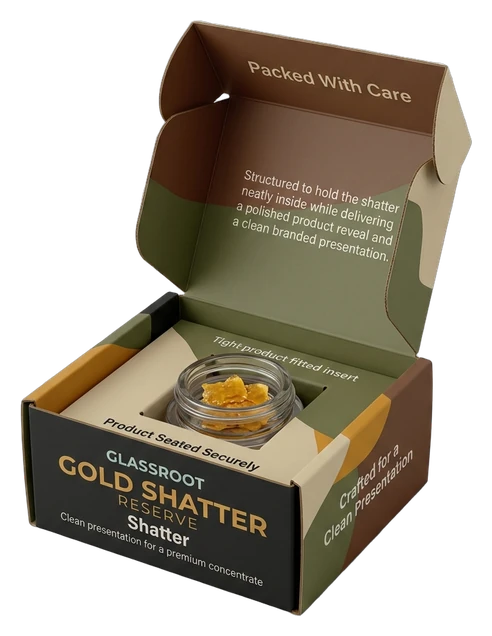
Turn each shatter package into a clear expression of your product and brand, with a structure that supports confident handling, organized presentation and a considered first opening. In a crowded cannabis market, buyers often judge a product before they reach the product itself. Custom shatter boxes help you shape that first reading through coordinated color, typography, information panels, material character and structure. The result is a package that can make the product easier to identify, keep the parent brand visible across variants and carry the same visual standard through retail display, customer handoff, product photography or delivery. We build custom shatter packaging around the impression and use case you need, whether the priority is a clean retail carton, a substantial rigid presentation, a supported certified child-resistant format or a branded mailer for an approved configuration. Every decision is tied back to how the customer sees, handles and opens the pack. That outcome is supported through fit planning, paperboard, kraft, rigid greyboard and relevant corrugated options; printing across exterior and interior surfaces; selective finishes; and foam or paper-based inserts where arrangement matters. Dieline and artwork support help prepare the job, while a digital proof lets you review the approved design before production. Exact materials, structure and child-resistant requirements are confirmed for the selected specification.

Get Custom Quote
STRUCTURES FOR THE JOB
Choose a Box Format That Supports the Sale
Shatter packaging may need to work at retail, during a direct handoff, inside a coordinated product program or as part of a delivery presentation. The right format depends on how the product is contained, how much panel space the artwork and required information need, whether inserts are useful and how the customer should reach the product. A tuck carton creates a different impression and access pattern from a sleeve, two-piece box or rigid setup. Start with the buyer encounter and pack configuration, then select the structure that turns those needs into a clear, brand-consistent experience.

➜
Straight Tuck Cartons
A straight tuck carton creates a clean, familiar presentation with top and bottom closures aligned on the same side. It gives artwork a consistent panel flow when straightforward access and compact brand communication lead the brief.
- Single-product configurations
- Custom fit and proportions
- Exterior and interior print
- Retail and handoff ready
A practical route for a coordinated pack that keeps product identification and brand cues easy to follow.
Customize Now
➜
Reverse Tuck Cartons
A reverse tuck carton places the top and bottom closures on opposite sides. This route can support efficient carton construction while giving the design team clear exterior panels for product naming, brand systems and necessary information.
- Compact product configurations
- Fit planned to contents
- Full-panel printed identity
- Retail access and handling
Choose it when a familiar carton experience and organized communication matter more than a layered reveal.
Customize Now
➜
Auto-Bottom Cartons
An auto-bottom structure gives the carton a pre-glued base that opens into position during setup. It can support a more stable handling experience while preserving useful panels for branding, product identification and approved information.
- Single or grouped contents
- Pre-glued bottom structure
- Outside and inside printing
- Setup and handling support
This format connects efficient setup with a finished pack that still feels deliberate at the customer-facing moment.
Customize Now
➜
Sleeve-and-Tray Boxes
A printed sleeve adds a controlled first layer, while the inner tray creates a separate reveal. The two-part movement gives the brand more room to guide attention and distinguish the product from a standard tuck-carton experience.
- Custom product arrangement
- Tray or insert planning
- Wraparound sleeve artwork
- Sliding reveal experience
A strong choice when the opening sequence should add interest without relying on excessive decoration.
Customize Now
➜
Two-Piece Boxes
A lid-and-base format creates a clear separation between the outer message and the first view inside. Paperboard, kraft and rigid routes can be considered according to the intended physical character and approved specification.
- Single or grouped products
- Lid-and-base fit planning
- Multi-surface brand expression
- Lift-off opening moment
This route gives the product a more deliberate introduction and supports a composed special-edition or coordinated-collection feel.
Customize Now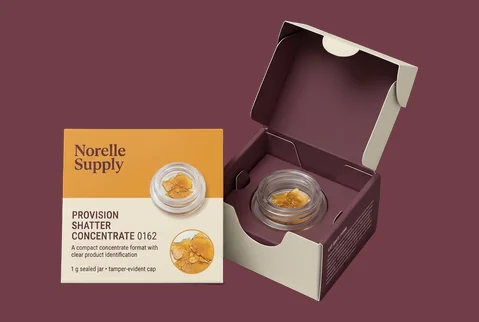
➜
Insert-Fitted Boxes
Foam, paperboard, kraft, corrugated or cardboard inserts can give products and components a defined place inside the box. The arrangement can make the contents easier to understand and reduce a loose, unfinished first impression.
- Custom cavities or divisions
- Fit around selected contents
- Printed surrounding surfaces
- Guided product lift-out
Use inserts when order, separation and a controlled first view contribute directly to the product experience.
Customize Now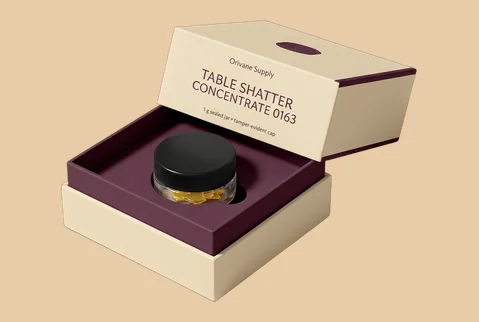
➜
Rigid Presentation Boxes
Rigid greyboard creates a more substantial physical presence for selected shatter presentations. Magnetic closure, lid-and-base and other supported rigid styles can combine a composed exterior with inserts, interior print and a more deliberate opening.
- Selected grouped configurations
- Rigid fit and insert planning
- Wrapped and printed surfaces
- Considered opening sequence
A suitable route when physical substance and a carefully staged reveal carry the intended brand standard.
Customize Now
➜
Certified Child-Resistant Routes
When child resistance is part of the brief, supported certified formats can be considered alongside branding, fit and opening requirements. The final structure must be confirmed for the product, selected specification and applicable customer requirements before production.
- Supported certified formats
- Project-specific structure review
- Custom exterior communication
- Information-panel planning
This controlled route keeps access requirements visible without reducing the package to a purely technical solution.
Customize NowMATERIALS THAT SET THE TONE
Build the Right Physical Character for Shatter
The board you choose determines whether a shatter box feels crisp, natural, substantial or delivery-ready before the customer studies the print. Smooth paperboard can keep detailed graphics and information panels clear. Kraft introduces a warmer, craft-led character and gives white ink a strong visual role. Rigid greyboard can add physical substance to selected presentations, while corrugated material can carry the brand into relevant mailer, kit or presentation formats. Choose the board by the impression, handling needs and channel it must support—not by thickness alone. Exact construction and weight are confirmed through fit and production planning.
Keep Detailed Communication Clean

SBS paperboard gives full-color graphics, fine type and organized information panels a smooth base. It suits shatter boxes that need a crisp retail-facing identity without making the structure feel heavier than the intended use requires.

Build Natural Contrast With Kraft

Kraft creates a warmer, more tactile character for brands that want the board itself to remain visible. White ink can create clear contrast on the natural surface, while additional print and finishes can be used selectively around the main brand and product cues.
Add Substance With Rigid Greyboard

Rigid greyboard gives selected presentations greater physical presence. Wrapped surfaces, magnetic closures, lid-and-base formats, interior printing and inserts can turn that substance into a more composed handoff or opening experience rather than weight for its own sake.
Carry the Brand Into Corrugated Formats

Supported corrugated material can extend the same visual identity into relevant mailer, product, kit or presentation boxes. It is best used where a branded structural format is the goal, rather than as a large commodity shipping-carton solution.
PRINT THAT CLARIFIES
Make Every Shatter Variant Read as Part of One Brand
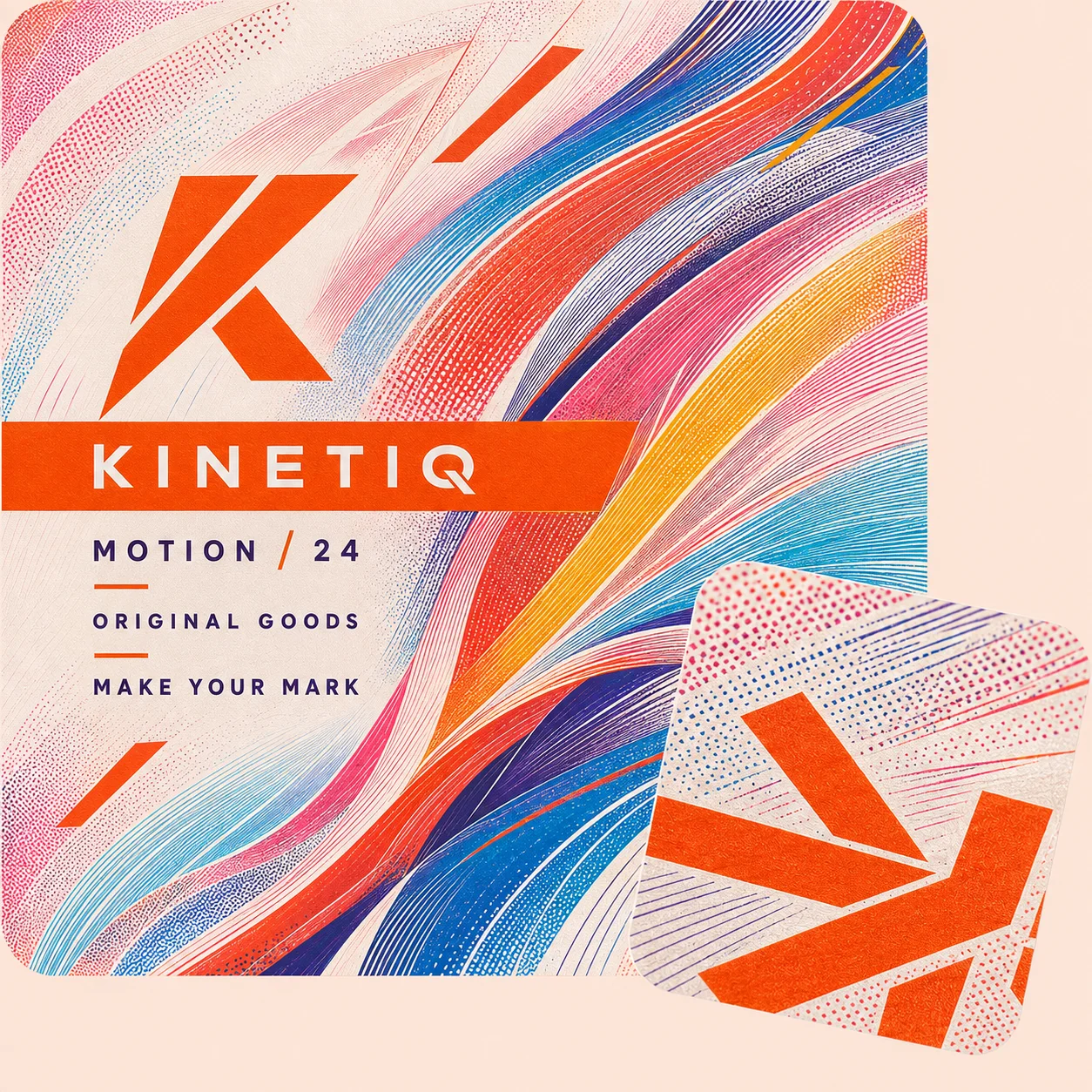
Customers may meet a shatter product through its name, outer graphics and information panels before they reach what is inside. Custom printing can turn those separate details into a connected brand system: give each variant a clear place, keep the parent identity consistent and make important information easier to locate. CMYK, PMS or spot color, digital, offset and flexographic routes are available, together with full-color printing, white ink on kraft and print across exterior or interior surfaces. The goal is not to fill every panel. It is to make the range understandable and recognizable across the channels selected for the product.
- Give each variant a clear role
- Keep parent-brand cues consistent
- Use every relevant panel
- Make information easier to locate
- Continue selected cues inside
- Stay recognizable across chosen channels
FINISHES WITH A CLEAR JOB
Guide Attention Before Adding Decoration
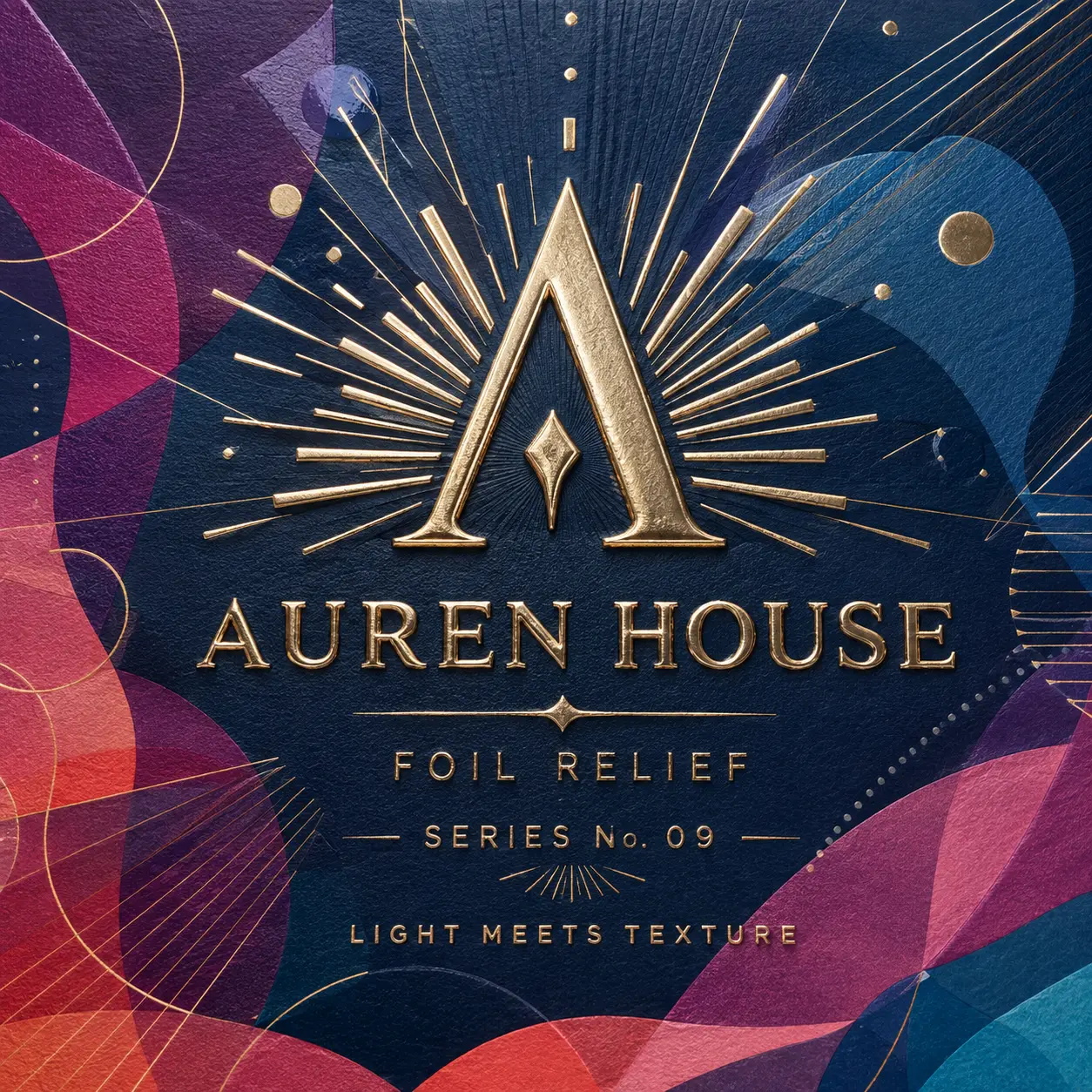
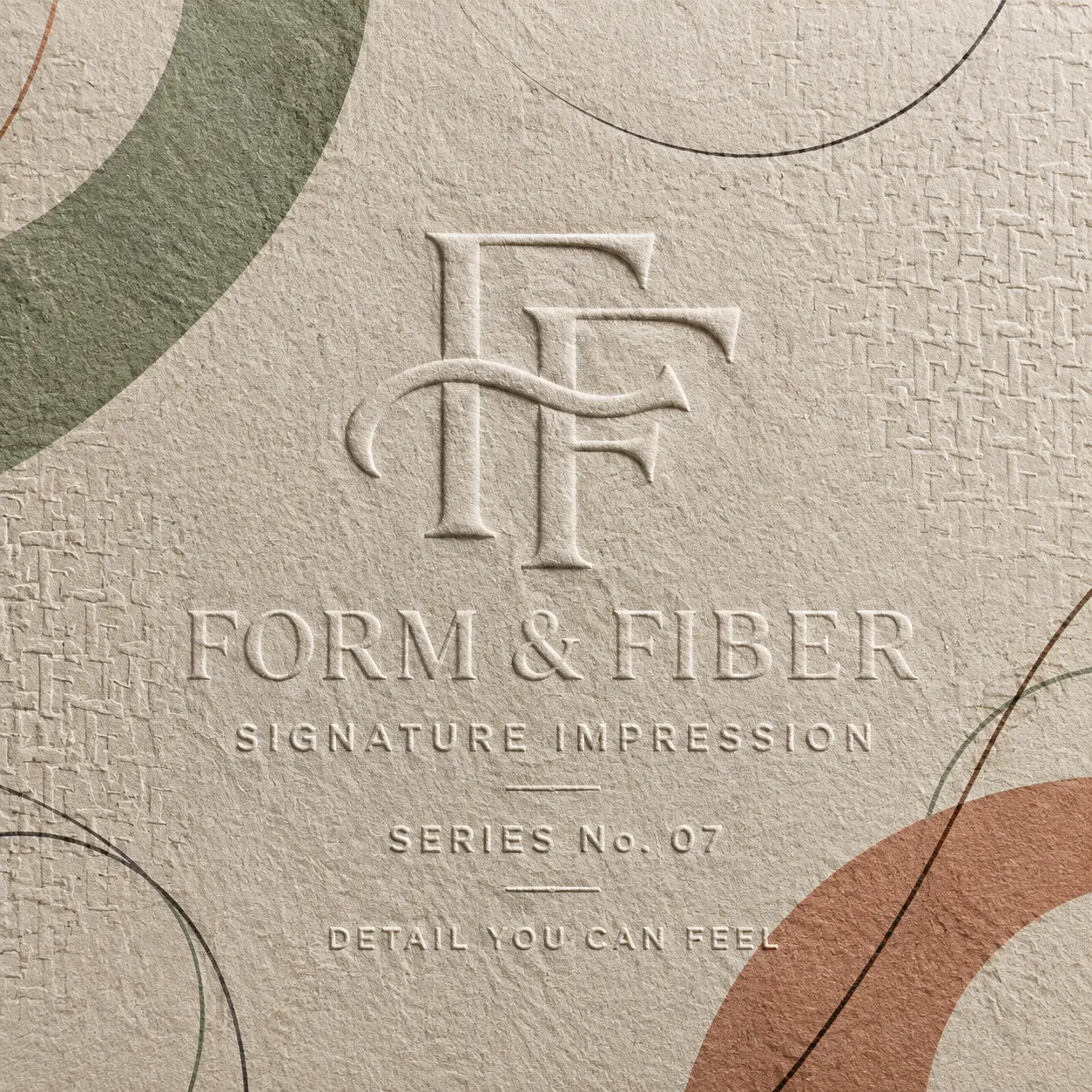
A shatter box can use several finishing techniques and still feel visually unfocused. The better approach is to decide what the customer should notice first, what surface character fits the brand and which editions need a distinct treatment. Matte, gloss and soft-touch laminations can shape the overall feel. Foil, spot UV, embossing, debossing and raised effects can give selected elements more visual or tactile weight. Each finish should earn its place by clarifying the design, not by adding decoration without a purpose.
-
 Set the Overall Surface Character
Matte or soft-touch lamination can create a calmer, more controlled feel, while gloss can support brighter artwork and stronger surface clarity. Select the treatment that fits the intended brand character rather than applying the same finish to every range.
-
Give the Most Important Cue More Weight
Foil, spot UV, embossing, debossing or raised effects can draw attention to a brand mark, product name or selected graphic detail. Used selectively, they help establish a clear reading order across the front and supporting panels.
-
Separate Special Editions Without Losing the Brand
Gold, silver, rose-gold and other supported finish shades can help distinguish a limited, seasonal or special-edition presentation. The core typography, layout or brand cues should remain connected so the new release still belongs to the same range.


BRAND CONTINUITY INSIDE
Make Opening Feel Ordered, Clear and Intentional
A strong exterior sets an expectation, but a loose or visually disconnected interior can end that impression too early. The inside of a shatter box should help the customer understand what has been received, where each item belongs and how to remove it without confusion. Printed interior surfaces can continue selected brand cues, while foam, paperboard, kraft, corrugated or cardboard inserts can create a deliberate arrangement. Where a supported certified child-resistant format is selected, its required access behavior takes priority; the interior branding and product organization should work within that approved structure.
-
Keep the Visual Language Moving
Carry selected colors, artwork or short messaging inside the box so the identity established on the exterior remains present when the package opens. Interior print should continue the story, not compete with the product.
-
Give Every Item a Defined Place
Use inserts, dividers or trays to organize the approved product configuration and any related components. A planned arrangement helps the contents feel intentional and can make different items easier to identify and remove.
-
Shape the First View and Lift-Out
Control what becomes visible first and how the product is reached. A sleeve, two-piece box, rigid format or insert-fitted structure can create a measured reveal without turning every opening into unnecessary theater.


EXPERT-GUIDED SHATTER PACKAGING
Shatter Box Customization Made Easy & Fast — Built to Fit, Support & Identify Clearly
Our cannabis concentrate packaging experts, structural designers, and print specialists make custom shatter box ordering easy and fast by bringing your customer-supplied shatter jars, pucks, parchment-wrapped units, concentrate envelopes, blister packs, inner cartons, sleeves, sample units, finished dimensions, unit counts, selected paper structure, approved artwork, and market-specific information needs into one production-ready outer package. We guide flat-slab allowance, jar or puck fit, parchment-fold clearance, insert tolerance, removal access, packed weight, closure behavior, tamper-evident areas, child-resistant format options where required, warning-panel space, potency and batch fields, storage-notice areas, barcode and QR placement, finish compatibility, dieline alignment, cost, timeline, prepress setup, and 3D proof review. The result is a custom paper shatter box that keeps supplied primary packages fitted, separated, identifiable, and retail-ready while reducing fit, labeling, artwork, insert, and approval risks. Custom Boxes Inc. manufactures paper packaging—not shatter, cannabis, jars, tins, parchment liners, glass, plastic, metal, or direct containers. Direct containment, breakage control, freshness, terpene retention, potency stability, claims, storage, transport, and regional requirements remain the brand’s responsibility.
-
Fast
Shatter Specs-to-Quote Alignment
Experts align supplied primary-package dimensions, unit count, box structure, inserts, approved artwork, warning areas, finishes, cost, timeline, prepress setup, and proofing early—helping reduce revisions.
-
Exact
Slab, Puck & Cavity Review
We check jar diameter, puck height, parchment-fold thickness, envelope profile, label allowance, cavity depth, upright or flat orientation, removal clearance, and packed weight.
-
Information-Ready
Potency, Warning & Artwork Check
Print specialists review customer-provided potency fields, shatter descriptors, batch details, storage notices, warnings, barcodes, QR codes, dieline alignment, finish masks, bleed, and safe zones.
PLAN WITH CONFIDENCE Prepare a Shatter Box for Approval and Production
A successful custom shatter box starts with the real packed product, the customer-facing moment and the information the package must carry. Our service process connects those inputs to structure, materials, print, finishes and production planning, so the final specification supports both the intended brand experience and the practical requirements of the job.
-
Start With the Product as It Will Be Packed
Share the length, width and height of the packed product, including any inner container, wrapping or other component that will remain inside the finished box. For an irregular shape, provide the widest and tallest points. Also confirm the pack count, preferred arrangement, insert needs and enough removal clearance for the customer to reach the contents comfortably. We do not assume a standard shatter-box size. Those inputs are used to prepare the structure and dieline around the actual configuration. This helps avoid a box that looks correct in artwork but feels loose, crowded or difficult to use after production.
-
Match the Structure to the Channel and Opening
A retail carton, direct-handoff box, coordinated presentation and branded mailer solve different problems. Straight or reverse tuck cartons can keep the experience familiar and compact. Auto-bottom cartons can support faster setup. Sleeves, two-piece boxes and rigid formats can create a more layered opening, while inserts can organize the approved contents. Supported corrugated structures are available for relevant mailer, product, kit and presentation boxes. They should be selected where branded structure and product-specific use justify the format, not as a substitute for large commodity shipping cartons. Round and tube boxes are not offered.
-
Plan Information and Child Resistance Early
We can plan dedicated panels for buyer-supplied product details, warnings and other legally required information, and print those panels across the front, back, top, bottom, exterior or interior as the approved layout requires. The buyer remains responsible for the accuracy and legal sufficiency of regulated content. Certified child-resistant packaging is available in supported formats. When it is required, confirm that need before structural work begins so the approved access method, product fit, information panels and brand design are developed together. A child-resistant format does not create a state-specific compliance promise, and no odor-resistance claim is made.
-
Prepare Artwork, Dielines and Approval Files
Free dieline or template support, artwork checking, resizing, bleed and safe-zone assistance, and design support are available. Accepted production files include AI, PDF, PSD and EPS. The team can help adapt supplied artwork to the approved dimensions, but the service should not be treated as a substitute for a complete brand-development engagement. A digital proof is available for every approved order. Review the structure, panel placement, copy, colors and print-ready details before production. Printing does not begin before the required approval and structure confirmation. A digital proof is not a physical prototype.
-
Plan Quantity, Pricing and Production Timing
Paperboard, cardstock, kraft and supported corrugated orders may start from 50 boxes. Supported rigid-box orders may start from 25. A lower starting quantity does not automatically remove relevant material, print, finish, interior or insert choices; the available combination depends on the approved structure and production specification. Per-unit pricing generally improves as quantity increases, with more visible differences often appearing around 500 units. No fixed saving percentage should be assumed. A physical prototype may be available for a qualifying bulk or wholesale project, and its cost may be adjusted into the resulting order where approved. Free samples, unconditional free prototypes and one-box production are not offered. Production normally takes 4–6 business days after payment, final artwork approval and structure confirmation. Production-ready jobs are generally planned to print and ship within 7 business days. Shipping transit time is separate, while complex multi-design orders may require a separately confirmed schedule.

SHATTER BOX QUESTIONS
Answers Before You Size, Print and Order
Yes. A growing brand can start with packaging built around its own product and intended identity without committing to a large first run. Paperboard, cardstock, kraft and supported corrugated orders may start from 50 boxes, while supported rigid formats may start from 25. Relevant custom sizing, exterior or interior printing, materials, finishes and inserts can remain available at those quantities where they suit the approved structure and production specification.
Start with the product exactly as it will be packed. Provide its length, width and height, including any inner container, wrapping or component that stays inside the box. Also confirm the pack count, arrangement, insert needs and enough clearance for comfortable removal. Those inputs are used to prepare a custom dieline and structure. We do not invent a standard size or force the product into an unsupported stock dimension.
Several supported structures are available, including straight tuck, reverse tuck, auto-bottom, sleeve, two-piece, rigid, insert-fitted and relevant mailer formats. The useful choice depends on the packed product, required panel space, channel, intended opening and whether child resistance is part of the brief. The team can compare those needs and recommend a production route. Round and tube boxes are not available.
Yes. Certified child-resistant packaging is available in supported formats, and the exact structure can be reviewed around the product and approved specification. Confirm this requirement at the start so access behavior, fit, print panels and branding are planned together. The available certification does not create a blanket or state-specific compliance promise, so the buyer must confirm the legal requirements that apply to the product and market.
Yes. Approved artwork can be printed on the front, back, top, bottom, exterior and interior, giving you room to organize the brand system, product identification and buyer-supplied required information. CMYK, PMS or spot color, full-color printing and white ink on kraft are available through relevant production routes. The buyer remains responsible for supplying and approving legally required text, warnings and other regulated content.
Yes. Foam, paperboard, kraft, corrugated and cardboard inserts can be die cut around the approved product or component arrangement. Inserts can give each item a defined place, improve the first view and make lift-out more deliberate. Share the packed dimensions, number of items and preferred arrangement early so the insert and outer structure are planned as one system rather than as separate parts.
Paperboard, kraft, rigid greyboard and relevant corrugated routes are available. Paperboard can support crisp printed detail, kraft can create natural contrast, rigid greyboard can add physical substance and corrugated material can support branded mailer or presentation formats. Matte, gloss and soft-touch lamination, foil, spot UV, embossing, debossing and raised effects can then guide attention. The final combination is confirmed against the structure, artwork and intended customer impression.
Yes. A digital proof is available for every approved order, so you can review the dieline, panel placement, artwork and print-ready details before production begins. Dieline or template support, artwork checking, resizing, bleed and safe-zone help are also available, with AI, PDF, PSD and EPS accepted. A physical prototype may be available for a qualifying bulk or wholesale project, with its cost adjusted into the resulting order where approved; it is not an unconditional free sample.
Production normally takes 4–6 business days after payment, final artwork approval and structure confirmation. Production-ready jobs are generally planned to print and ship within 7 business days. Shipping transit time is separate. A complex order with many designs or setup changes may need a separately confirmed schedule, and that timing should be agreed before the job moves into production.
CUSTOMER SUCCESS STORIES
Hear What Our Customers Say

As a small business, finding premium finishes in lower quantities was always difficult. Global Custom Packaging gave us the freedom to customize our boxes and create the distinctive, polished look we wanted without committing to a large order. We still work with them today and have expanded into multiple product variants, each with the same impressive presentation.
Jordan Blake
We sell online and in stores while regularly promoting at major events, running influencer campaigns, and launching seasonal collections. Thunder Packaging has become our dependable source for everything—from premium mailer and product boxes to sturdy influencer kits, rigid packaging, kraft boxes, and limited-edition Christmas designs. Whatever structure, material, or branded look we need, we no longer have to go anywhere else.
Avery Quinn

I never worry about how my packaging will look or whether my artwork contains typos, incorrect bleed areas, or other design errors. Their 3D previews and helpful design support give me confidence before printing. If the team notices a problem, they contact me, correct it quickly, and never charge extra for the assistance.
Cameron Reese
I’m really impressed with Global Custom Packaging’s precise, richly saturated printing and the accuracy of their die-cutting. The boxes were produced in exactly the right size, with a clean, well-formed structure and no fitting or construction issues. The finished packaging looked polished, consistent, and ready to represent our products professionally.
Morgan Taylor
I received my quote within a few hours, and once we agreed on the price, the designer responded quickly, completed the required changes, and prepared my artwork for printing. The 3D proof arrived promptly, allowing me to review everything and place my order that same day. My packaging was delivered on time, exactly as Global Custom Packaging had committed.
Harper Lane