

-

Low Starting Quantity
-

Digital Proof Included
-

Design Support Available
-
In-House Production
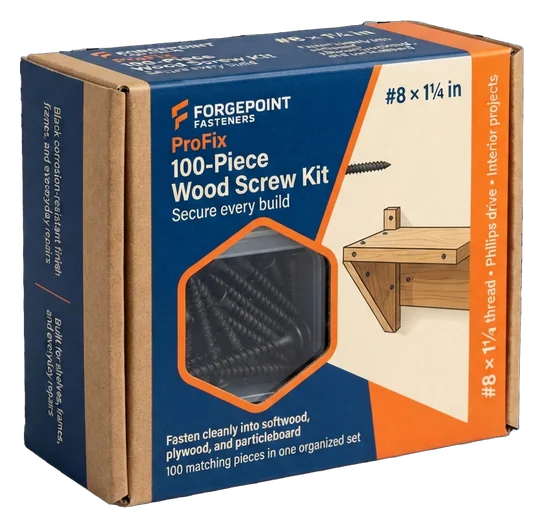
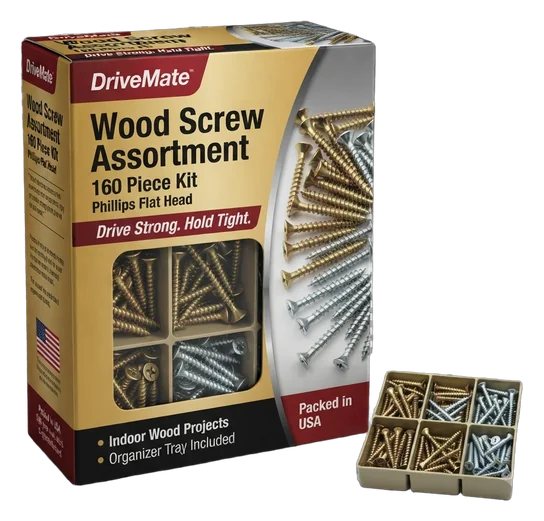
Custom screw boxes give fastener lines a clearer, more organized identity while helping customers recognize the right screw type, size, quantity and use at a glance. Screws often compete in crowded hardware aisles, trade counters, online listings and repair kits where small differences matter. We shape the box around the product count, assortment and handling needs, then use controlled graphics, color coding and clear information panels to separate one fastener range from another. The result is packaging that looks deliberate on shelf, stays recognizable in product photography and gives buyers a more confident first read before they open the pack. Our service is built around the result your screw line needs to create. That may mean a practical retail carton for one SKU, a coordinated family of sizes, a compartmented installer kit or a presentation-led set for distributors and trade customers. We help align structure, board character, printed information and opening order so the packaging supports both product clarity and brand consistency. You can plan custom sizing, paperboard, kraft, rigid or supported corrugated formats, exterior and interior printing, windows, inserts, dividers and selected finishes with one production team. Artwork checking, dieline support and a digital proof help you confirm the structure and information before production. Low starting quantities are available from 50 boxes for paperboard, kraft and supported corrugated formats, while supported rigid boxes may start from 25.

Get Custom Quote
STRUCTURES FOR REAL USE
Choose a Screw Box Around the Way It Works
The right screw box depends on more than the outside dimensions. Product weight, pack count, loose or grouped arrangement, retail display, trade-counter handling and the way customers open and return to the pack all affect the best structure. A single-SKU carton may need fast access and a strong information panel, while an assortment or installer kit may need dividers, a tray or a more controlled reveal. We help compare practical box routes around the product, the channel and the brand impression you want to maintain, so the chosen format supports clear identification without adding unnecessary complexity.
➜
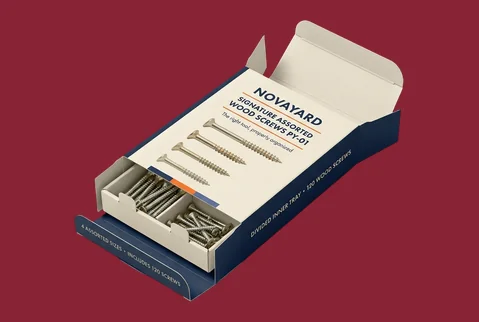
Straight Tuck Carton
Use a clean folding carton for single screw types, smaller pack counts or lightweight fastener lines that need efficient packing, straightforward access and a familiar retail-ready form.
- Single-SKU or size ranges
- Compact folding structure
- Full exterior brand panels
- Suitable for retail display
Build a coordinated range that stays easy to identify, pack and present.
Customize Now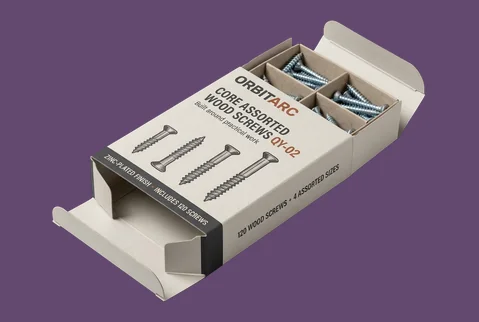
➜
Reverse Tuck Carton
Choose opposite-end tuck flaps when the filling direction, artwork layout or packing process benefits from a practical carton with separate top and bottom access points.
- Flexible filling direction
- Made to product dimensions
- Clear size and use panels
- Good for shelf-ready ranges
Keep essential product details visible while giving each SKU a consistent branded structure.
Customize Now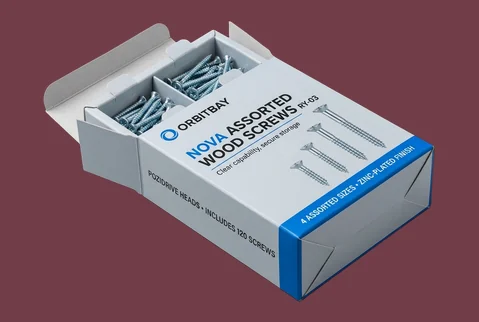
➜
Auto-Bottom Screw Box
Use a pre-glued base for faster setup and added support where screw weight, pack quantity or production speed makes a standard tuck bottom less suitable for the job.
- Faster manual assembly
- More supportive base
- Printable on all panels
- Useful for heavier counts
Create a stronger packing experience without losing the visual consistency of the range.
Customize Now
➜
Lock-Bottom Hardware Box
Select an interlocking base when the pack needs added bottom strength and a secure folding structure for denser screw quantities, mixed hardware components or repeated trade-counter handling.
- Interlocking bottom panels
- Built around pack weight
- Room for instruction graphics
- Trade and retail suitable
Give heavier or more technical packs a structure that feels dependable and clearly organized.
Customize Now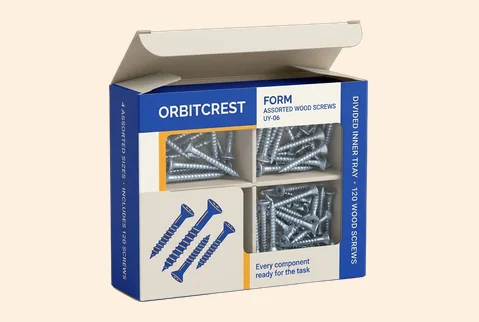
➜
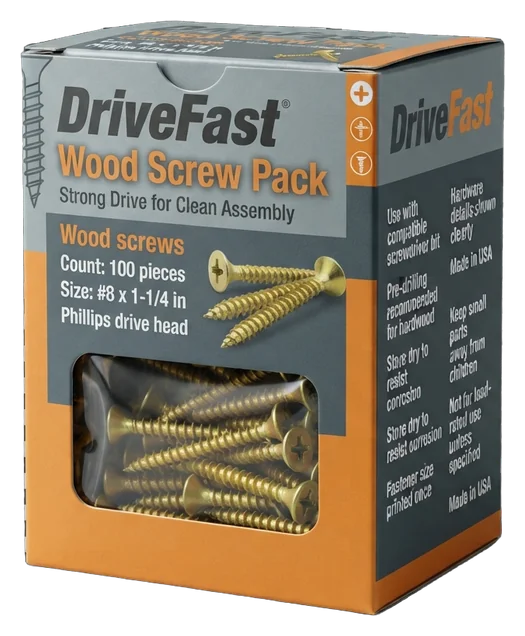
Window Screw Box
Add a die-cut window when seeing the screw finish, head style or assortment helps customers compare the product before opening and supports a faster shelf decision.
- Product visibility before opening
- Custom window shape
- Printed comparison cues
- Retail browsing support
Combine direct product visibility with enough printed structure to keep the brand and specification clear.
Customize Now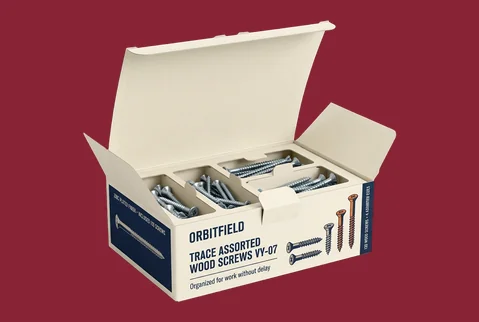
➜
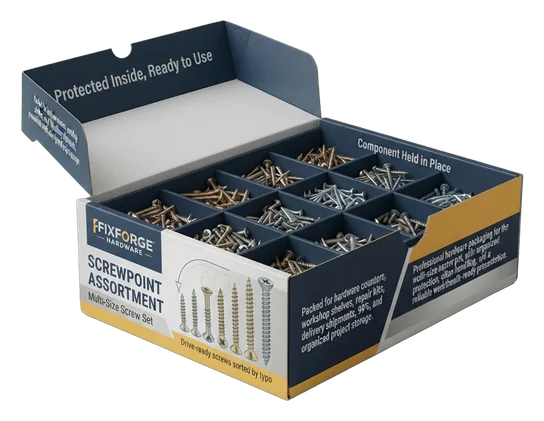
Compartmented Kit Box
Use dividers, paperboard trays or foam inserts to organize multiple screw types, accessories or installation components in one clearly mapped kit for easier selection and return.
- Mixed fastener configurations
- Dividers or custom inserts
- Labeled component positions
- Guided kit discovery
Help customers understand the kit faster and return each component to a deliberate place.
Customize Now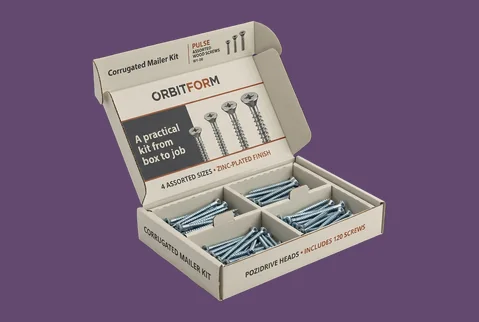
➜
Corrugated Mailer Kit
Choose a supported corrugated mailer for promotional kits, trade samples, subscription-style hardware programs or larger product sets that need more structural presence during delivery and handoff.
- Multi-item product sets
- Supported flute options
- Inside and outside printing
- Delivery and handoff ready
Carry the same brand system from shipment arrival through opening and product selection.
Customize NowMATERIALS WITH PURPOSE
Build the Right Feel for Every Screw Range
The material influences how customers interpret a screw pack before they study its specifications. Smooth paperboard can make detailed graphics, color codes and small information panels feel cleaner and more controlled. Kraft can create a practical, workshop-led character, while supported corrugated board gives larger kits and delivery formats greater physical presence. Rigid grayboard can turn a specialist assortment, distributor sample or presentation kit into a more substantial brand asset. We help choose the board around product weight, pack configuration, channel and intended impression, rather than recommending thickness without considering how the complete box must perform.
Paperboard for Clear Product Navigation

SBS paperboard and cardstock provide a smooth base for precise graphics, diagrams, size references and color-coded SKU systems. They suit retail cartons and coordinated product families where customers need to compare several closely related screw types without losing sight of the parent brand.The material can support bright full-color artwork, controlled spot colors, matte or gloss lamination and additional surface details. The practical outcome is a box range that looks consistent while giving each specification enough visual separation.

Kraft for an Honest Workshop Character

Natural kraft can support trade-led, utility-focused and hardware-store identities that want the packaging to feel direct and grounded. Its visible paper character can become part of the design rather than something that needs to be covered.White ink, dark graphics and carefully selected brand colors can create strong definition against the kraft surface. This makes it possible to retain a practical material character while still giving screw type, quantity and brand ownership a clear visual order.
Corrugated Board for Kits and Delivery Formats

Supported corrugated material is useful for screw assortments, promotional kits, sales samples and multi-component packs that need more structure than a standard folding carton. Different flute routes can be considered according to the approved dimensions, product weight and intended use.Inside and outside printing can carry the brand from delivery arrival into the opened kit. Corrugated recommendations are focused on product, presentation, mailer and kit formats rather than large commodity shipping cartons.
Rigid Grayboard for Specialist Sets

Rigid grayboard gives curated fastener collections, technical samples and distributor presentation sets a more substantial physical presence. It can support magnetic, two-piece, sleeve or other approved rigid constructions, depending on the required access and arrangement.Paper wraps, printed surfaces, linen-style materials, inserts and selected finishes can be coordinated around the project. The result is suited to cases where the screw set must function not only as inventory, but also as a sales, demonstration or long-term reference tool.
MAKE EVERY SKU CLEAR
Turn Product Details Into a Recognizable Range
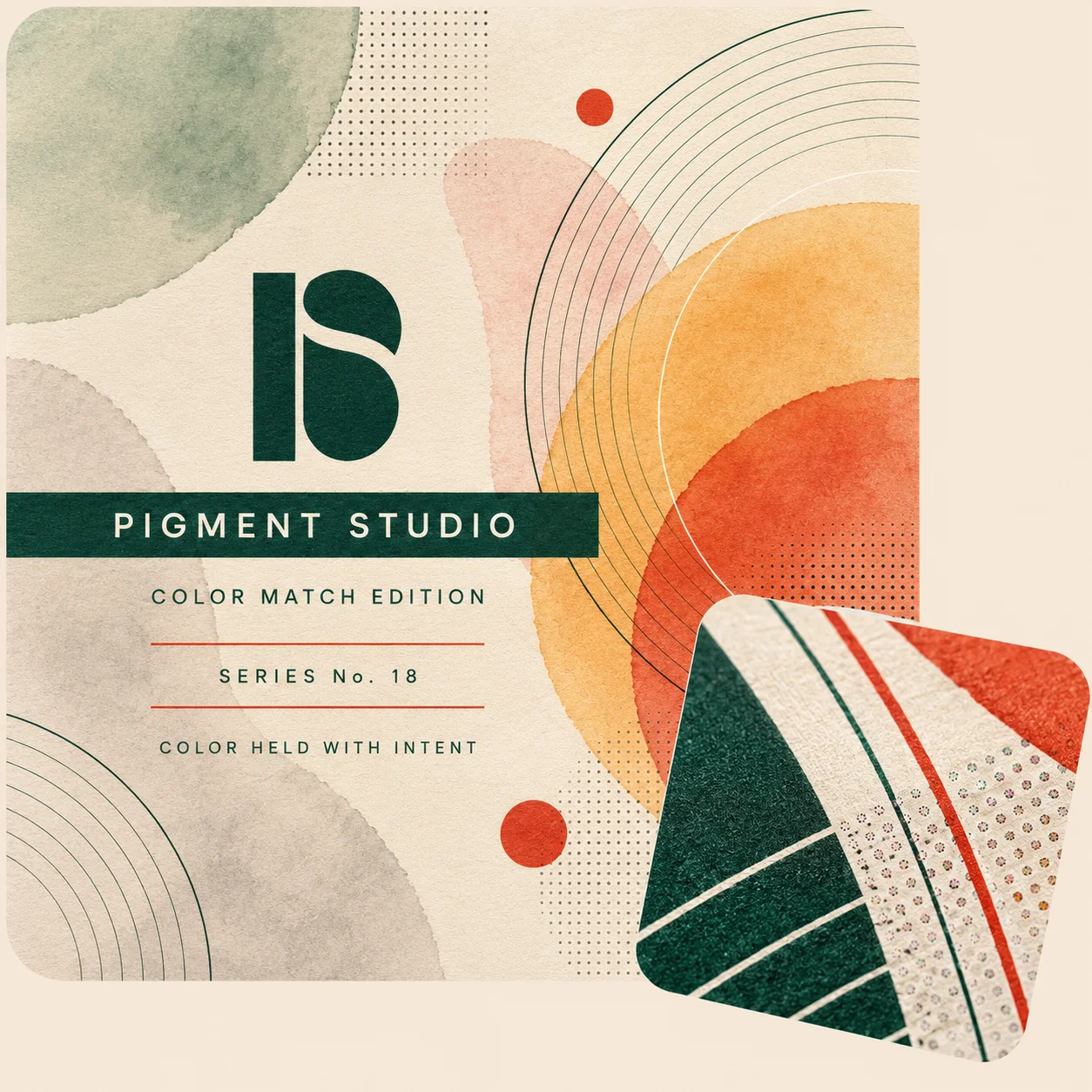
Customers may need to distinguish thread type, head style, drive, finish, quantity or intended application within a few seconds. Custom printing turns those details into an organized product system instead of placing them on the box as competing pieces of information. We can help assign clear roles to the front, sides, top, bottom and inside surfaces, keeping the most useful buying cues easy to find while maintaining a recognizable parent-brand structure. Full-color printing, spot colors, white ink on kraft and inside printing provide the production routes; the useful outcome is a screw range that customers can compare, select and remember more easily across retail, trade and online channels.
- Separate sizes without breaking brand continuity
- Make drive and head styles easier to find
- Give quantity and application cues clear priority
- Keep the parent brand visible across variants
- Use inside printing for kit maps and instructions
- Stay recognizable across shelf, web and trade counters
FINISHES THAT GUIDE ATTENTION
Control What Customers Notice First
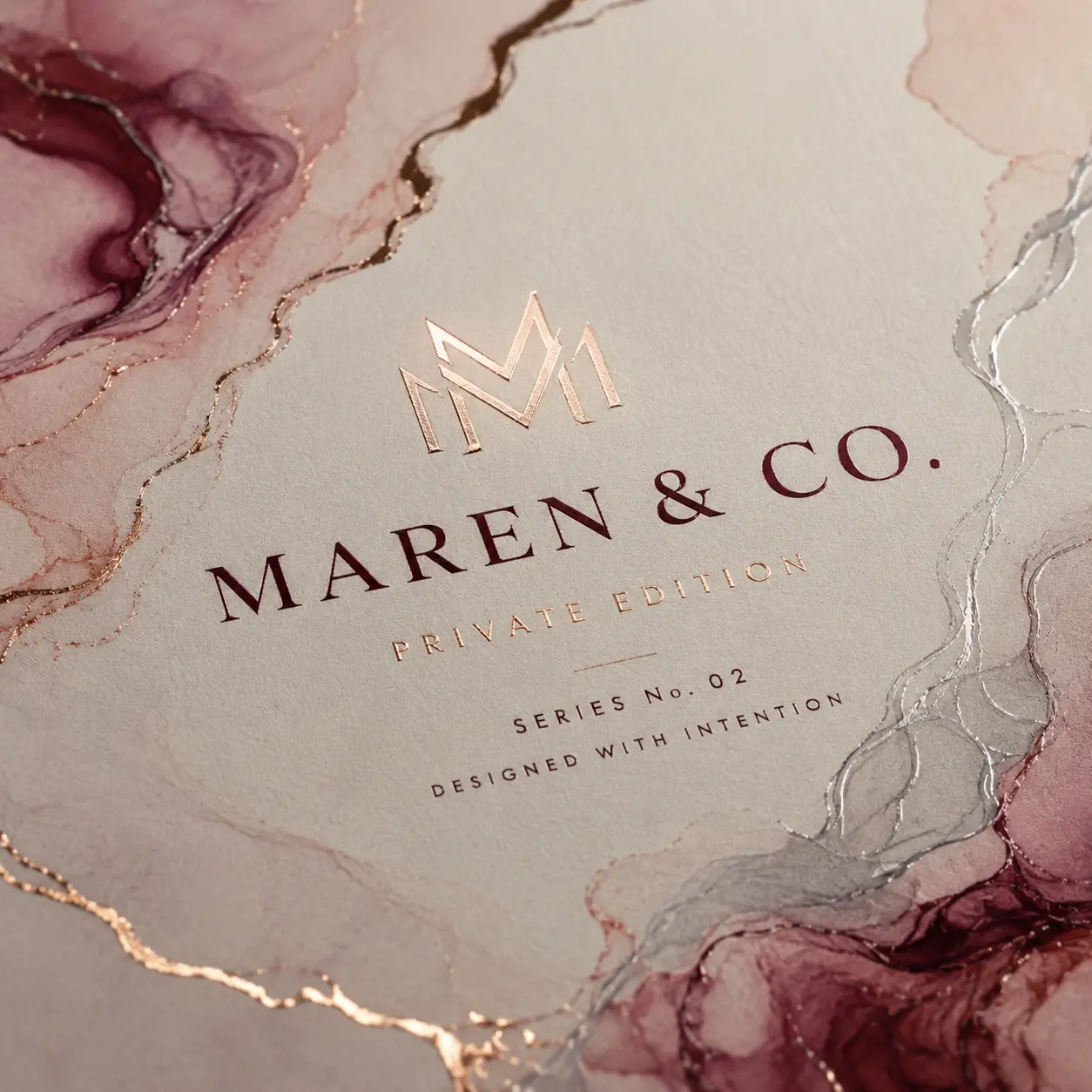
A finish should help customers read the screw box, not compete with the information they need. The right surface treatment can establish the overall character of the range, strengthen the visibility of the brand mark or identify a specialist collection without making the design feel overworked. Matte, gloss, soft-touch, foil, embossing, debossing, spot UV and raised effects are selected according to the job each one must perform. We help use finishes selectively, so product identification remains clear and the surface communicates an intentional level of quality when the box is viewed or handled.
-
 Set the Overall Working Character
Matte lamination can give technical, contractor-focused or professional fastener ranges a more controlled surface. Gloss can bring greater brightness and contrast to bold retail graphics, color-coded categories or high-energy product lines.Soft-touch may suit specialist sets, sales samples or presentation kits where the handling experience carries more importance. The choice should reinforce the intended product character rather than being added simply because it is available.
-
Give Important Elements More Weight
Spot UV, foil, embossing, debossing and raised effects can direct attention toward a brand mark, product family, specialist coating or other priority cue. Used selectively, they create a visible or tactile difference between the information that leads and the information that supports it.This approach keeps decoration from overwhelming sizes, quantities and application details. It also helps the package remain useful when customers compare several related products.
-
Distinguish Specialist and Promotional Sets
A distributor kit, limited collection, trade promotion or product-launch assortment may need to look distinct from the core retail range. Selective foil, surface contrast or an embossed identifier can give the set a clearer purpose while preserving familiar parent-brand elements.The finish then becomes a practical signal that the customer is viewing a particular collection, program or occasion—not an unrelated design.



MAKE OPENING WORK HARDER
Guide Customers From First Access to the Right Screw
A clear exterior can create confidence, but that confidence can fall away when a mixed set opens into an unplanned group of parts. Screw assortments, installation kits, samples and multi-component packs benefit from an interior that explains what is included and helps customers find the correct item. Printed internal surfaces can continue the product system, while dividers, trays and custom inserts can establish a deliberate position for each screw type or accessory. The result is more than a tidy box: it is a guided introduction that carries the brand’s sense of order from the closed package into selection, use and—where the structure supports it—organized return.
-
Continue the Product System Inside
Carry relevant colors, symbols, diagrams or short instructions onto the inside surfaces so the visual system does not stop when the box opens. The interior can reinforce the relationship between product groups, installation stages or included accessories.This is especially useful for assortments and technical kits where exterior space is limited but customers still need a clear map of what they have received.
-
Give Every Component a Defined Place
Paperboard, cardstock, corrugated or foam inserts can separate screw types, accessories and tools according to the approved configuration. Dividers can support grouped quantities, while custom-cut insert positions can give selected components more individual control.Labels or printed references near each position can help customers connect the physical item to its size, use or installation step without searching through a loose assortment.
-
Shape the First Reveal and Later Access
The opening sequence can lead with the brand, a simple kit overview or the most important component before the full set becomes visible. Sleeve-and-tray, rigid and selected mailer structures can create this sequence naturally.For reclosable formats, the same arrangement can also support later product selection and return. This makes the package more useful beyond the first opening without implying repeated use from a structure that was not designed for it.


EXPERT-GUIDED FASTENER PACKAGING
Screw Box Customization Made Easy & Fast — Built to Sort, Secure & Display
Our screw packaging experts, structural designers, print specialists, consultants, and project managers make custom screw box ordering easy and fast by bringing your screw length, diameter, thread type, head style, drive pattern, point profile, coating finish, pack count, anchor or washer pairing, selected box style, divider layout, artwork, and labeling system into one production-ready structure. We guide size sequencing, compartment width, divider height, sharp-point containment, small-part escape reduction, weight distribution, dispenser or tray access, base and side-wall strength, hanger or shelf display format, corrugated or paperboard thickness, coating and finish compatibility, part-number, size, thread, drive type, quantity, barcode, QR, instruction, and warning-panel spacing where required, dieline alignment, cost calculation, timeline planning, prepress setup, and 3D proof review. The result is a custom screw box that organizes fasteners clearly, supports better handling, communicates specifications cleanly, and moves to production with fewer fit, structure, print, or approval risks.

-
Fast
Specs-to-Quote Alignment
Experts align screw type, size range, pack count, total weight, selected structure, divider needs, artwork, labeling, stock, cost, timeline, prepress setup, and 3D proof early—helping reduce quote delays and approval back-and-forth.
-
Exact
Screw Size, Count & Divider Review
We check screw length, diameter, thread type, head style, drive pattern, point profile, anchor or washer pairing, compartment width, divider height, base strength, and closure behavior so the box fits the intended screw load without excessive movement or wasted space.
-
Secure
Sharp-Point, Weight & Label Check
Structural and print specialists review sharp-point containment, small-part escape points, dispenser openings, hanger strength, barcode spacing, size panels, drive-type callouts, dieline alignment, and coating compatibility so the box supports better handling and clearer retail communication.
Plan a Screw Box That Is Ready to Produce
A useful screw-box specification connects the physical product, the selling channel, the artwork and the packing process. Our team helps bring those decisions together before production, reducing the risk of choosing a visually attractive box that does not suit the screw quantity, weight or information requirements.
-
Start With the Product and Fit Inputs
Exact box dimensions should be developed from the actual screw configuration rather than copied from a generic size. Useful inputs include screw length, head diameter, pack count, total packed weight, loose or bagged arrangement, included accessories and any tray, divider or insert.For mixed assortments, identify how many product groups must remain separate and how customers should remove them. Wrapping, inner bags, labels and removal clearance should also be included in the fit plan. Where practical, provide a physical product or complete measurements so the dieline can be developed around the intended packed condition.
-
Match the Structure to the Channel
A small retail SKU may suit a tuck carton with a clear front panel and organized side information. A heavier count may call for an auto-bottom or lock-bottom route. Mixed sets may work better with dividers, trays or inserts, while distributor samples and presentation kits may justify sleeve, rigid or supported corrugated structures.Also consider how the box will be filled, stacked, displayed, handed over or delivered. Corrugated recommendations are available for product boxes, mailers, promotional packs and kits, but the service is not positioned around large commodity shipping cartons.
-
Organize Information Before Final Artwork
List the information customers must see first, such as screw type, size, drive, head style, finish, quantity or intended application. Then assign supporting information to the side, back, bottom or inside panels instead of forcing every detail onto the front.Create a consistent hierarchy for related SKUs. A shared brand position, type system and panel structure can keep the range connected, while color, symbols or product imagery distinguish individual variants. Buyers remain responsible for checking legally required, regulated or technically binding information before approval.
-
Prepare the Dieline and Production Files
Free dieline or template support is available for an approved project. Artwork checking can help identify common issues involving sizing, bleed, safe zones and panel placement. Existing artwork may also be resized for confirmed dimensionsAccepted production-file routes include AI, PDF, PSD and EPS. Design support is available, but the process should begin with your existing brand assets, product information and intended result. A digital proof is provided for every approved order, allowing you to review the artwork and structure before production begins. A digital proof is not a physical prototype.No die or plate fee applies on supported production routes. A physical prototype may be available for a qualifying wholesale or bulk project, and the approved prototype cost may be adjusted into the resulting order. Physical prototypes and unrestricted free samples should not be assumed for standard low-quantity orders.

SCREW BOX ORDER QUESTIONS
Answers Before You Size, Print and Order
Yes. Each box can be sized around the actual screw dimensions, pack count, packed weight and intended arrangement. A single screw type may use a compact folding carton, while a larger quantity or mixed assortment may need a stronger bottom, divider or insert.Provide the screw length, head diameter, quantity per box and details of any inner bag, tray or accessory. The team can then help develop an appropriate structure and dieline without relying on an invented standard size.
The best route depends on the product weight, number of screw types and how customers need to access them. Loose single-SKU packs may suit tuck, auto-bottom or lock-bottom cartons. Mixed sets often benefit from dividers, trays, foam inserts or a compartmented kit structure.The team can compare these options using your packed configuration and channel. This helps avoid paying for a complex presentation structure when a simpler carton will work—or choosing a basic carton that leaves an assortment difficult to understand.
Yes. A die-cut window can show the screw finish, head style or assortment where direct product visibility supports the buying decision. The window shape and placement can be developed around the approved structure, with different PVC thicknesses available where suitable.When a window is unnecessary, printed product imagery, diagrams, color coding and clear specification panels can provide the required recognition. The better choice depends on whether customers need to inspect the physical screw or simply identify the correct product quickly.
Yes. Paperboard, cardstock, corrugated and foam inserts can separate screw types, accessories or installation components within one approved box configuration. Inserts may be die-cut around specific component shapes, while dividers can create practical grouped sections for different sizes or uses.Printed labels, symbols or a kit map can connect each position to its product information. This gives customers a clearer first view of the assortment and, in reclosable formats, a more useful way to return components after selection.
Yes. A smaller fastener business can start with packaging developed around its own product and brand without committing to a very large first run. Paperboard, cardstock, kraft and supported corrugated formats may start from 50 boxes, while supported rigid boxes may start from 25.Relevant custom sizing, exterior or interior printing, materials, finishes and inserts remain available where they suit the selected structure and production specification. This gives a growing brand room to introduce a new SKU, test a coordinated range or prepare a trade promotion without relying on generic stock packaging.
Yes. Printing can be planned across the front, back, sides, top, bottom and relevant inside surfaces. Full-color, spot-color, digital and offset routes are available, along with white ink on kraft and selected metallic effects.The artwork should give each panel a clear job. The front may lead with the product family and primary specification, while side or back panels carry quantities, diagrams, instructions or supporting details. Inside printing can provide kit maps or short guidance where it improves product discovery.
Dieline support, artwork checking and a digital proof are available for every approved order. The team can help with confirmed dimensions, panel placement, bleed, safe zones and resizing existing artwork to a new approved dieline.AI, PDF, PSD and EPS files are accepted production routes. You will review the digital proof before printing begins, but you should also verify product specifications, instructions and any legally required information. A physical prototype may be available for a qualifying bulk or wholesale project under separately approved terms.
Production normally takes 4–6 business days after payment, final artwork approval and structure confirmation. Production-ready jobs are generally planned to print and ship within 7 business days, while shipping transit time remains separate.A project with many artwork versions, complex finishes, rigid construction or additional assembly may need a separately confirmed schedule. The service team reviews those requirements before production so the timing can be communicated clearly rather than presented as guaranteed seven-day delivery.Section 8 remains in paragraph-only format because support for FAQ bullets and numbered lists is still an open backend question in the locked content contract.
CUSTOMER SUCCESS STORIES
Hear What Our Customers Say

As a small business, finding premium finishes in lower quantities was always difficult. Global Custom Packaging gave us the freedom to customize our boxes and create the distinctive, polished look we wanted without committing to a large order. We still work with them today and have expanded into multiple product variants, each with the same impressive presentation.
Jordan Blake
We sell online and in stores while regularly promoting at major events, running influencer campaigns, and launching seasonal collections. Thunder Packaging has become our dependable source for everything—from premium mailer and product boxes to sturdy influencer kits, rigid packaging, kraft boxes, and limited-edition Christmas designs. Whatever structure, material, or branded look we need, we no longer have to go anywhere else.
Avery Quinn

I never worry about how my packaging will look or whether my artwork contains typos, incorrect bleed areas, or other design errors. Their 3D previews and helpful design support give me confidence before printing. If the team notices a problem, they contact me, correct it quickly, and never charge extra for the assistance.
Cameron Reese
I’m really impressed with Global Custom Packaging’s precise, richly saturated printing and the accuracy of their die-cutting. The boxes were produced in exactly the right size, with a clean, well-formed structure and no fitting or construction issues. The finished packaging looked polished, consistent, and ready to represent our products professionally.
Morgan Taylor
I received my quote within a few hours, and once we agreed on the price, the designer responded quickly, completed the required changes, and prepared my artwork for printing. The 3D proof arrived promptly, allowing me to review everything and place my order that same day. My packaging was delivered on time, exactly as Global Custom Packaging had committed.
Harper Lane