

-

Low Starting Quantity
-

Digital Proof Included
-

Design Support Available
-
In-House Production
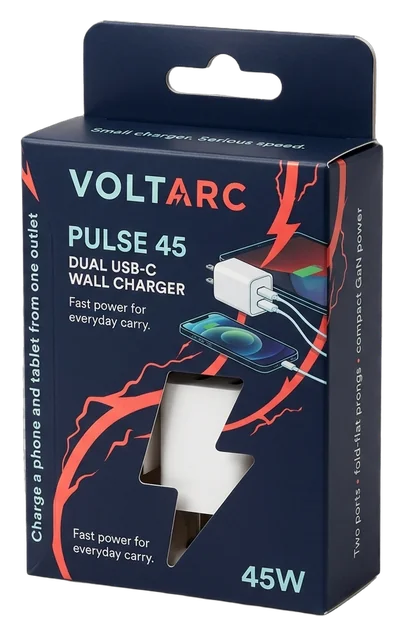
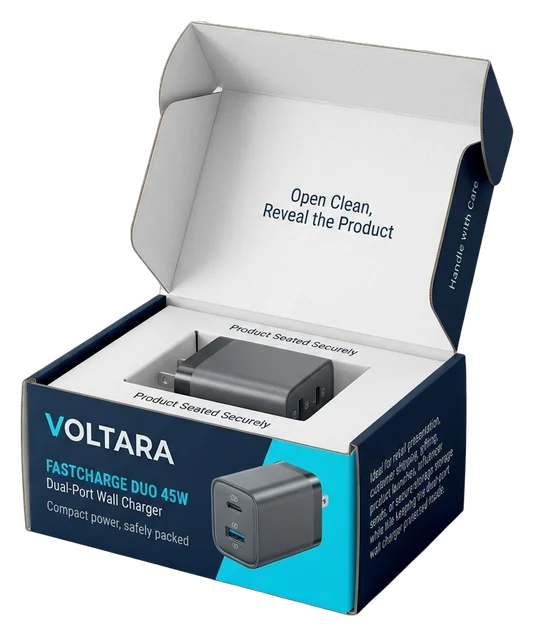
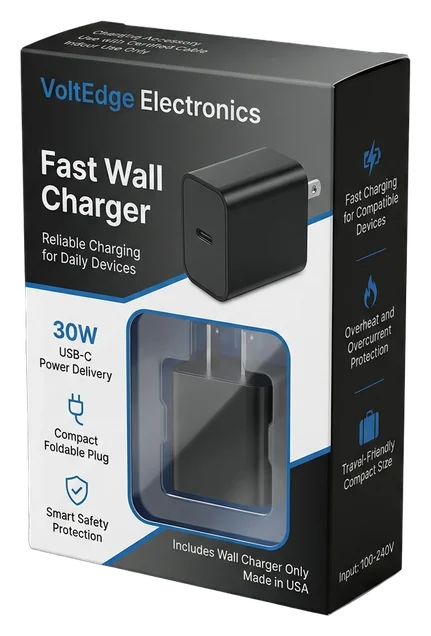
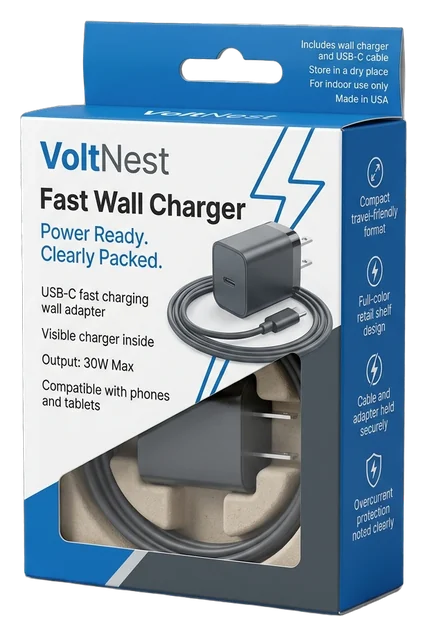
Custom charger boxes turn a necessary accessory into a clear brand touchpoint, giving the charger, cable and supporting information a coordinated, product-ready place. Chargers are often compared in seconds—on a retail shelf, in an online product image or when a customer opens a device bundle. Custom sizing, disciplined panel design and an organized interior can replace a generic accessory pack with a box that clearly identifies the model, connector or supplied set. Consistent colors, typography and brand marks then help customers connect the charger with the company behind it, while a considered lift-out keeps the first product interaction orderly and easy to understand. We build charger packaging around the impression and buying situation you need to support, from compact retail cartons to refined launch boxes and coordinated accessory kits. The aim is a box that feels intentional, communicates the right product tier and carries your identity from first view to opening without making the customer work to understand what is inside. That result is developed through the parts customers can see and feel: proportions suited to the charger and accessories, board character, exterior and interior printing, selective finishes, and inserts that separate or present each component. Our team can support the dieline, artwork setup and proofing process before production, helping you connect the front-panel promise with the side, back and inside surfaces that substantiate it. <\p>

Get Custom Quote
CHARGER BOX FORMAT ROUTES
Choose a Structure That Fits the Buying Moment
Charger packaging may need to provide quick clarity on a retail shelf, look composed inside a device bundle or arrive through e-commerce with the accessory set still organized. The right format depends on the charger body, cable, plug type, booklet, display needs and the way the customer should access each item. A compact tuck carton may suit a single retail charger, while a tray, insert or rigid structure can give multi-piece sets more control and physical presence. These routes are starting points; final dimensions and internal features should be developed around the actual product rather than a stock assumption.
➜
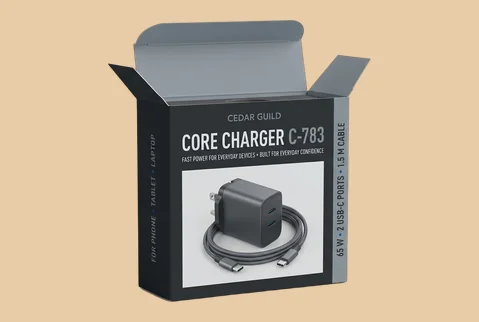
Compact Tuck-End Carton
A straightforward paperboard route for a single charger or compact charger-and-cable set, with useful panel space for model identification, brand cues and buyer-supplied product details.
- Single-accessory configuration
- Custom-fit internal spacing
- Full-panel brand artwork
- Direct retail-box access
A clean choice when product clarity, efficient packing and recognizable retail character need to work together.
Customize Now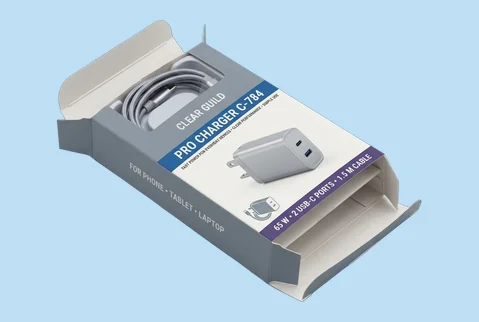
➜
Reverse Tuck Retail Box
Opposing tuck closures can support an efficient compact carton while giving the front, back and side panels distinct roles for brand identity, product differentiation and supporting information.
- Charger and cable packing
- Optional paperboard insert
- Connected panel graphics
- Shelf or peg display
This route suits growing product ranges that need practical packing without losing visual consistency between charger variants.
Customize Now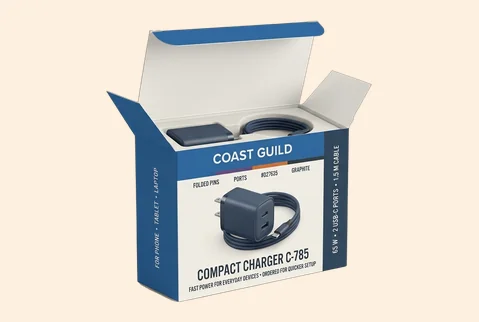
➜
Auto-Bottom Charger Box
A pre-glued automatic base can provide a more substantial paperboard structure for heavier adapters, bundled cables or charger sets that require a quicker packing process.
- Multi-component accessory pack
- Reinforced automatic base
- Clear exterior identification
- Efficient packing workflow
The result combines a stronger pack setup with the surface area needed to communicate a confident product identity.
Customize Now
➜
Sleeve and Tray Box
A sliding sleeve and fitted tray can turn the charger into a more deliberate product reveal while keeping the exterior design clean and the inner arrangement controlled.
- Charger with cable set
- Fitted tray or insert
- Wraparound sleeve artwork
- Controlled slide-out reveal
Use this format when the opening should reinforce a considered product tier without becoming unnecessarily theatrical.
Customize Now
➜
Rigid Magnetic Charger Box
A supported rigid structure with a magnetic closure can give flagship charger sets greater physical presence while allowing inserts to organize the complete accessory arrangement.
- Flagship charger kit
- Foam or board insert
- Wrapped brand surfaces
- Structured opening sequence
Choose this route when material feel, box construction and component placement need to communicate a more considered product level.
Customize Now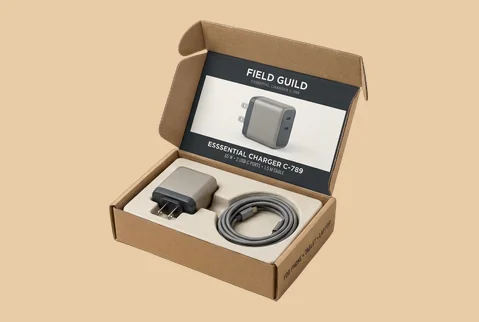
➜
Corrugated Mailer Kit
A printed corrugated mailer can carry a charger, cable and related accessories through direct-to-customer delivery while keeping the brand visible beyond the product carton.
- Multi-item accessory set
- Corrugated internal structure
- Inside-and-outside printing
- Direct delivery suitability
It connects delivery, opening and product discovery without reducing the package to a plain commodity shipping carton.
Customize Now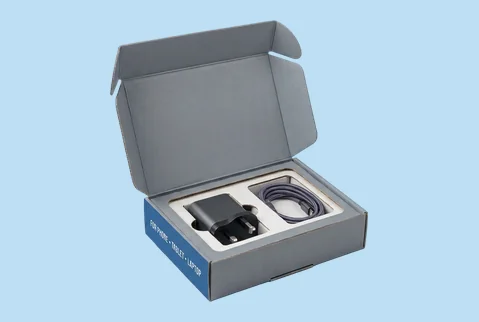
➜
Insert-Led Charger Kit
An insert-led structure can be designed around the individual charger, cable, plug attachments, manuals or setup cards rather than placing every item loosely in one compartment.
- Charger, cable and plugs
- Die-cut component cavities
- Ordered product lift-out
- Bundle or onboarding use
This route helps the customer understand the supplied set while giving every component a deliberate place within the brand experience.
Customize NowMATERIAL-LED TECH CHARACTER
Build the Right Physical Character Around the Charger
The board establishes whether a charger box feels compact and efficient, natural and utility-led, refined and gift-ready, or substantial enough for a complete accessory kit. A smooth paperboard surface can support sharp graphics and organized product information, while kraft gives the pack a more tactile, straightforward character. Rigid greyboard can create greater physical presence for flagship sets, and corrugated material can carry a branded identity into selected mailer and kit formats. The choice should follow the product tier, channel, component weight and intended customer impression—not thickness alone.
SBS Paperboard for Clean Retail Definition

Smooth SBS paperboard gives detailed graphics, controlled brand colors and smaller product identifiers a clear surface. It works well for compact chargers, adapters and charger-and-cable cartons where customers need to recognize the brand and product variant quickly. The material can support tuck, auto-bottom, sleeve and other paperboard structures without making the package feel heavier than the product requires.

Kraft for a Direct, Tactile Identity

Natural kraft can give charger packaging a practical, honest and material-led character. Dark artwork, controlled color and white ink can create strong contrast while allowing the board’s natural tone to remain part of the identity. It suits brands that want their accessory packaging to feel straightforward and distinctive rather than highly polished or visually crowded.
Rigid Greyboard for Flagship Accessory Sets

Rigid greyboard creates a more substantial hand feel for launch kits, higher-tier chargers, partner gifts and coordinated device accessories. Wrapped surfaces can carry detailed exterior artwork, while a fitted interior helps the box open with the same level of intention established on the outside. The material is most useful when physical presence is part of the product positioning.
Corrugated Board for Branded Delivered Kits

Corrugated material can support mailer, product, kit and presentation formats that need more structural depth than a folding carton. Printed outer and inner surfaces can carry the parent brand through delivery and opening, while inserts or partitions help manage multiple components. It is particularly relevant for customized charger kits and direct-to-customer programs rather than large commodity shipping-carton requirements.
MAKE THE PRODUCT EASY TO READ
Turn Charger Information Into a Recognizable Brand System
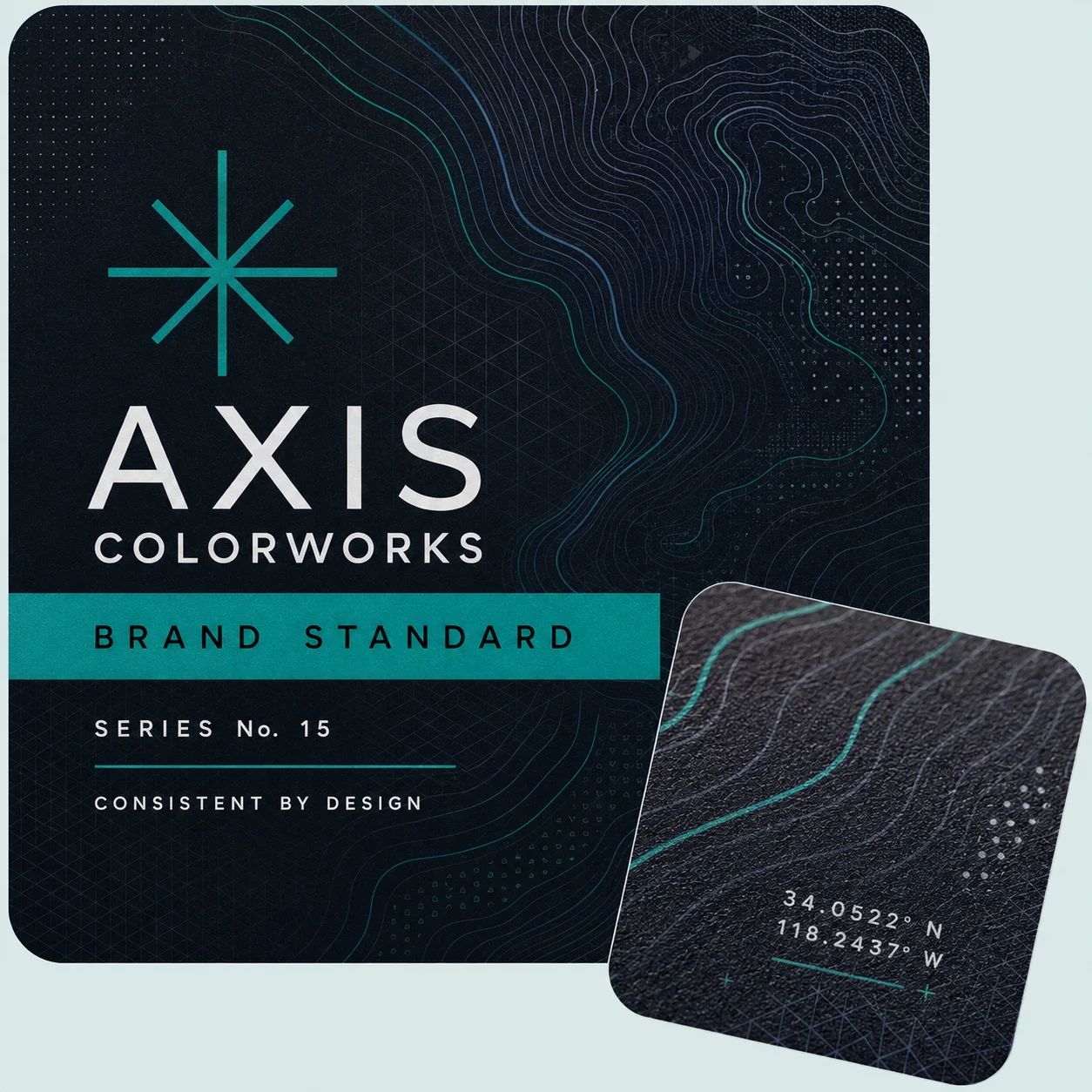
A charger box often needs to communicate several things within a small area: the model family, connector or plug variation, supplied components and the company behind the product. Custom printing can organize those cues into a system customers can understand quickly while keeping different charger variants visibly connected. Use front, side, back, top and inside surfaces deliberately rather than forcing every message onto the main panel. Full-color printing, controlled spot colors, white ink on kraft and relevant interior printing provide the production flexibility; the useful outcome is packaging that identifies the product clearly and remains recognizable across retail, e-commerce imagery, bundles and delivery.
- Make the charger model clear at first view
- Separate variants without losing parent-brand continuity
- Carry brand cues across every visible panel
- Support product photography with consistent pack design
- Use inside printing for setup and welcome cues
- Reserve space for buyer-approved technical information
SURFACE CUES WITH A JOB
Guide Attention Without Overloading the Box
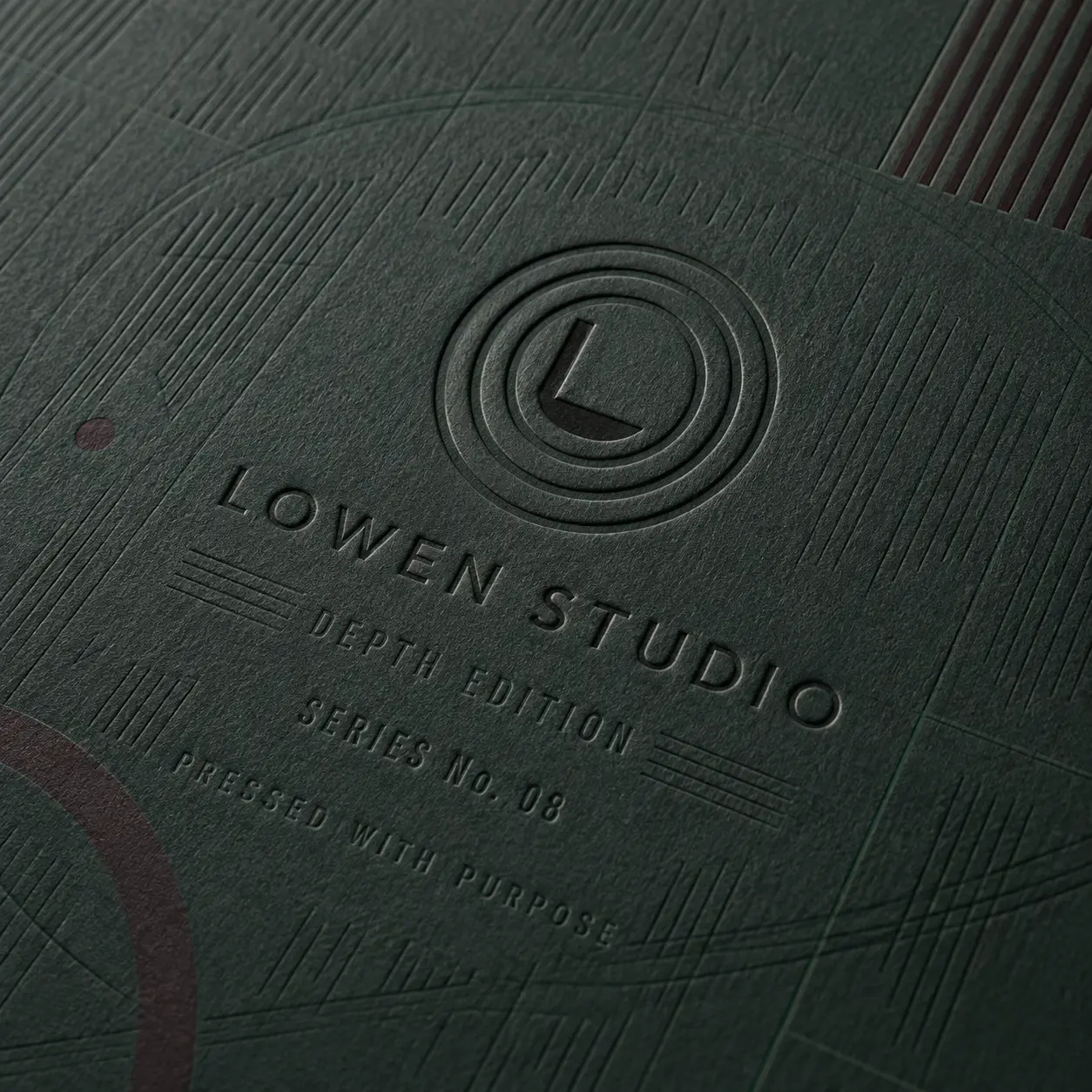
Finishes should help customers understand what matters first rather than compete with the charger information. The overall surface may need to feel calm and technical, energetic and consumer-led, or more considered for a flagship accessory range. Selective contrast can then give the brand name, model family or product tier greater importance. Matte, gloss, soft-touch, foil, embossing, debossing and raised effects are useful only when they strengthen the intended hierarchy. A disciplined finish plan can make the box easier to read, more satisfying to handle and more consistent with the value the charger is meant to represent.
-
 Establish the Overall Product Mood
Matte or soft-touch treatment can give a charger range a controlled, modern surface, especially when the design relies on restrained typography and precise color. Gloss can support brighter consumer-electronics artwork when stronger color and reflected contrast suit the identity. The selected treatment should support the product tier rather than being added simply because it is available.
-
Give Key Brand Cues More Weight
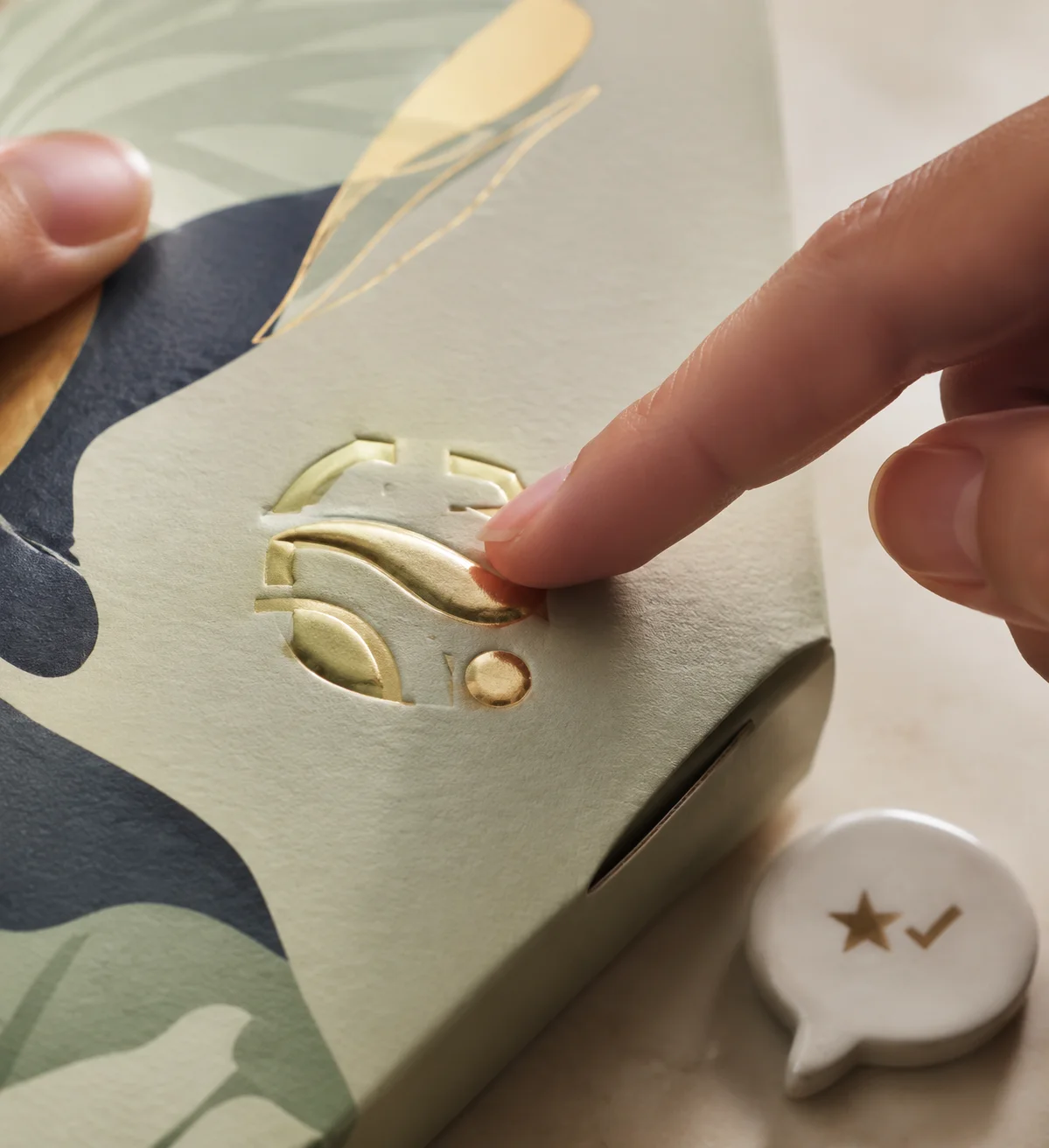
Spot UV, foil, embossing, debossing or raised effects can direct attention toward a logo, model name or selected product cue. The purpose is to create an order of importance across the surface. Keeping these effects selective helps technical information remain readable and prevents the box from feeling visually overworked.
-
Distinguish Launches and Product Tiers
A flagship charger, travel edition, partner bundle or limited release can use a controlled change in foil, texture or surface contrast to feel distinct from the core range. Repeating the parent-brand colors, type system and panel organization keeps the edition connected even when its finish treatment changes.



ORGANIZE THE FIRST ACCESS
Make the Charger Set Clear From the Moment It Opens
A clear exterior creates an expectation about the charger inside, but loose cables, shifting components or disconnected internal graphics can weaken that expectation immediately. The interior should help customers see what has been supplied, understand how the parts relate and remove each item without unnecessary searching. Inserts can separate the charger, cable, plug attachments and printed materials, while interior printing can continue the visual language established outside. The outcome is more than an orderly box: it is a clear first introduction to the product set, from opening through component selection and initial setup.
-
Continue the Identity Inside
Carry selected colors, graphics or short brand messaging onto the inner lid, tray or internal panels. This keeps the identity present when the exterior is no longer the customer’s main view and prevents the opening from feeling like a separate, generic packaging stage.
-
Give Every Component a Place
Use foam, paperboard or corrugated inserts to organize the charger, cable, plug attachments, manuals or setup cards according to the actual product dimensions. Deliberate spacing helps customers distinguish the supplied components and makes the pack feel designed around the set rather than filled after the fact.
-
Control the First Product View
Decide whether the customer should see the charger first, view the complete kit together or move through components in a practical order. A tray, sleeve, lid-and-base format or layered insert can guide that sequence while still keeping access straightforward and appropriate for an electronics accessory.


EXPERT-GUIDED CHARGER PACKAGING
Charger Box Customization Made Easy & Fast — Built to Fit, Organize & Protect
Our charger packaging experts, structural designers, print specialists, consultants, and project managers make custom charger box ordering easy and fast by bringing your charger dimensions, plug and prong profile, port layout, cable or adapter set, packed weight, selected box style, artwork, and brand direction into one production-ready structure. We guide body-fit clearance, folding-plug allowance, port and connector protection, cable channels, accessory compartments, insert tolerance, hanger-tab or window strength, corrugated support, power-rating, model, barcode, QR, and customer-supplied warning-panel spacing, coating and finish compatibility, dieline alignment, bleed and safe-zone setup, cost calculation, timeline planning, prepress preparation, and 3D proof review. The result is a charger box that organizes every component, supports better handling, carries technical information cleanly, and moves to production with fewer sizing, print, structure, or approval risks.

-
Fast
Charger Specs-to-Quote Alignment
Experts align charger dimensions, plug format, cable count, selected structure, insert system, print coverage, material strength, cost, timeline, prepress setup, and 3D proof early—helping reduce quote delays and repeated approval changes.
-
Exact
Body, Plug & Accessory Fit Review
We check the charger body, fixed or folding prongs, USB ports, cable connectors, adapter heads, charging pads, stands, manuals, and accessories so every component receives suitable clearance and a defined pack position.
-
Protected
Port, Prong & Electronics Check
Structural specialists review insert contact points, plug clearance, port protection, cable separation, anti-static material options where appropriate, closure behavior, hanger strength, corrugated support, and movement control for better retail, warehouse, and delivery handling
Plan a Charger Box That Is Ready for Production
A successful charger box starts with accurate product inputs, not a guessed carton size. Our team can help translate the charger, cable set, sales channel, artwork and order requirements into a production-ready packaging specification. The following decisions help prevent avoidable fit, artwork and scheduling problems while keeping the finished box aligned with the intended brand experience.
-
Match the Structure to the Channel and Packing Process
The best structure depends on where the box will be seen, how it will be packed and what the customer receives. A compact tuck carton may be suitable for a single retail charger. An auto-bottom structure can support a heavier adapter or a more efficient packing process. Sleeve-and-tray and two-piece formats provide greater control over the product reveal, while rigid boxes can support flagship kits and special presentations.For direct delivery, a printed corrugated mailer or kit box may combine the transport pack and branded opening experience. Retail projects may also need a suitable display orientation or hang-tab route. Before approving the structure, consider assembly time, product loading, insert placement, shelf direction, opening method and whether one outer format needs to support several compatible product variants.
-
Organize Artwork and Information by Panel
Plan each surface according to the job it needs to perform. The front panel may establish the brand and charger family, while side or back panels can carry buyer-approved compatibility, wattage, connector, barcode, setup or legal information. Inside surfaces may support welcome messaging, setup guidance or a short explanation of the supplied components.The buyer remains responsible for the accuracy and legal suitability of technical, electrical, compatibility and regulatory information supplied for printing. Our artwork support can help with layout preparation, resizing, bleed, safe zones and adapting files to the approved dieline. Accepted production file formats include AI, PDF, PSD and EPS. Exterior and interior printing can be coordinated so the brand system continues beyond the main panel.
-
Approve the Dieline and Digital Proof Carefully
Dieline or template support is available to help position artwork around cuts, folds, glue areas and structural features. Artwork checking can identify common setup issues before production, but the final proof should still be reviewed carefully by the buyer.A digital proof is available for every approved order. Review the charger name, product variant, supplied components, colors, panel direction, barcode, technical information and all required text before approval. Printing does not begin until the necessary payment, artwork approval and structure confirmation are complete.A physical prototype may be available for a qualifying bulk or wholesale project. Where approved, its cost may be adjusted into the resulting order. This is different from a digital proof and should not be treated as an unrestricted free sample. Supported projects may also proceed without a separate die or plate fee.
-
Plan Quantity, Production and Delivery Together
Paperboard, cardstock, kraft and supported corrugated charger-box orders may start from 50 boxes. Supported rigid-box formats may start from 25 boxes. Starting at these quantities does not automatically remove relevant choices in sizing, printing, finishes or inserts, provided the selected structure and production specification support them.Per-unit pricing generally improves as quantity increases, with more visible differences often appearing around 500 units. Separate designs, product variants or complex multi-version programs should be identified early because each setup can affect the schedule and quotation.Production normally takes 4–6 business days after payment, final artwork approval and structure confirmation. Production-ready jobs are generally planned to print and ship within 7 business days. Shipping transit time is separate, while complex multi-design orders may require a separately confirmed schedule.Orders can also be planned for multiple delivery addresses where required. Design firms and white-label partners can coordinate artwork and production workflows with the service team before final approval.

CHARGER BOX QUESTIONS
Answers Before You Size, Print and Order
Yes—when the charger dimensions and component arrangements are sufficiently compatible. A shared outer box may sometimes be combined with variant-specific printing, sleeves or inserts, allowing the product family to remain visually connected while each model is identified correctly. When the charger bodies, plug configurations or accessory sets differ significantly, separate dielines may provide a better fit and a clearer opening experience. Supply the measurements and pack list for every variant so the structure can be reviewed before the artwork system is finalized.
A paperboard tuck carton is often the practical starting point for a compact retail charger, but the best choice depends on weight, display orientation and included accessories. Reverse-tuck and straight-tuck formats support straightforward retail access, while an auto-bottom box may suit a heavier adapter or faster packing requirement. A sleeve-and-tray or two-piece box can provide a more considered reveal for a higher-tier product. Where peg display is required, an appropriate hang-tab structure can also be planned into the design.
Yes. Foam, paperboard, cardstock and corrugated inserts can be die cut around the actual charger, cable coil, plug attachments and supporting materials. Separate cavities can help prevent the components from appearing loose and make it easier for the customer to understand the complete set. The insert should be planned from accurate product dimensions, component weight and the preferred removal sequence. Send the full pack list and measurements so the team can recommend an insert material and arrangement suited to the selected outer box.
Yes. Front, back, side, top, bottom and relevant inside surfaces can carry buyer-supplied product information alongside the brand artwork. The layout can reserve clear areas for wattage, connector type, compatibility details, barcodes, setup instructions and other required content. The buyer is responsible for confirming the accuracy and legal suitability of technical or regulatory statements before proof approval. Artwork support can help organize the information so essential product cues remain readable without making the overall box feel crowded.
Yes. Inside printing can continue selected colors, graphics, welcome messaging or setup guidance after the customer opens the box. It may be applied to internal panels, trays, sleeves or relevant rigid-box surfaces, depending on the structure. The content should have a clear purpose: reinforcing the parent brand, explaining the supplied components or supporting the customer’s first interaction with the charger. Our team can help position the internal artwork within the approved dieline so it works with folds, inserts and the intended opening sequence.
Yes. A growing charger or electronics-accessory brand can begin with packaging built around its own product and identity without committing to an unnecessarily large first run. Paperboard, cardstock, kraft and supported corrugated formats may start from 50 boxes, while supported rigid charger boxes may start from 25. Relevant custom sizing, exterior or interior printing, finishes and inserts remain available at these starting quantities where they suit the approved structure and production specification. This gives smaller brands room to prepare a launch, test a product range or package an early wholesale order without defaulting to generic stock cartons.
Yes. Dieline or template support, artwork checking, resizing, bleed assistance and safe-zone guidance are available for approved charger-box projects. Production files may be supplied in AI, PDF, PSD or EPS format. After the structure and artwork are prepared, a digital proof is provided for review before production. Check every product name, model reference, compatibility statement, barcode, color and panel direction carefully. Approval confirms that the supplied artwork and information are ready to move into the production process.
Production normally takes 4–6 business days after payment, final artwork approval and structure confirmation. Production-ready jobs are generally planned to print and ship within 7 business days. Shipping transit time is separate, so the delivery date also depends on the selected shipping service and destination. Projects containing many charger models, separate designs or complex insert setups may require a separately confirmed schedule. The most reliable way to protect the timeline is to finalize dimensions, structure and artwork before the production clock begins.

CUSTOMER SUCCESS STORIES
Hear What Our Customers Say

As a small business, finding premium finishes in lower quantities was always difficult. Global Custom Packaging gave us the freedom to customize our boxes and create the distinctive, polished look we wanted without committing to a large order. We still work with them today and have expanded into multiple product variants, each with the same impressive presentation.
Jordan Blake
We sell online and in stores while regularly promoting at major events, running influencer campaigns, and launching seasonal collections. Global Custom Packaging has become our dependable source for everything—from premium mailer and product boxes to sturdy influencer kits, rigid packaging, kraft boxes, and limited-edition Christmas designs. Whatever structure, material, or branded look we need, we no longer have to go anywhere else.
Avery Quinn

I never worry about how my packaging will look or whether my artwork contains typos, incorrect bleed areas, or other design errors. Their 3D previews and helpful design support give me confidence before printing. If the team notices a problem, they contact me, correct it quickly, and never charge extra for the assistance.
Cameron Reese
I’m really impressed with Global Custom Packaging’s precise, richly saturated printing and the accuracy of their die-cutting. The boxes were produced in exactly the right size, with a clean, well-formed structure and no fitting or construction issues. The finished packaging looked polished, consistent, and ready to represent our products professionally.
Morgan Taylor
I received my quote within a few hours, and once we agreed on the price, the designer responded quickly, completed the required changes, and prepared my artwork for printing. The 3D proof arrived promptly, allowing me to review everything and place my order that same day. My packaging was delivered on time, exactly as Global Custom Packaging had committed.
Harper Lane