



-

Low Starting Quantity
-

Digital Proof Included
-

Design Support Available
-
In-House Production
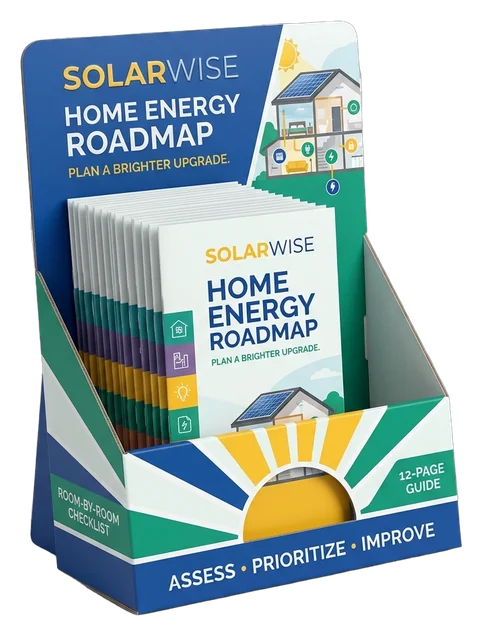
Turn loose brochures into a clear, branded display that helps visitors recognize your organization, find the right information and take it with confidence. On a busy counter, reception desk or event table, people often decide in seconds whether a piece of literature is relevant. A custom brochure holder turns that brief glance into a guided choice by combining an easy-to-read header, organized pockets and a structure shaped around your printed pieces. The result is a more deliberate brand presence when staff unpack and set it up, clearer navigation for visitors at close range and a more professional handoff when someone selects a brochure. We help you build a holder around the way your brochures are actually viewed, loaded and replenished. From a single take-one display to a tiered or divided format, the structure, material and printed hierarchy are coordinated so the finished piece feels intentional rather than improvised. Share your folded brochure size, number of titles, expected load, display setting and brand artwork. Our team can guide pocket depth, viewing angle, counter footprint, material character, panel layout and finishing choices; prepare or adjust the dieline; check production files; and provide a digital proof before an approved order moves forward. Paperboard, kraft and supported corrugated holder orders may start from 50 pieces, while rigid formats may start from 25 where the construction suits the project.

Get Custom Quote
DISPLAY FORMAT OPTIONS
Choose a Holder Built for the Way You Present
Brochure holders should be chosen by how many pieces people need to compare, where the display will sit, how often staff will refill it and what the customer should notice first. A single pocket keeps one campaign focused, while tiered or divided formats help several services, languages or product ranges stay easy to scan. Flat-pack construction can support event and multi-location rollouts when setup and shipping efficiency matter. Each route below can be sized around the supplied brochure and coordinated with the brand artwork, material and viewing angle, so the structure supports the message instead of competing with it.
/p>
➜
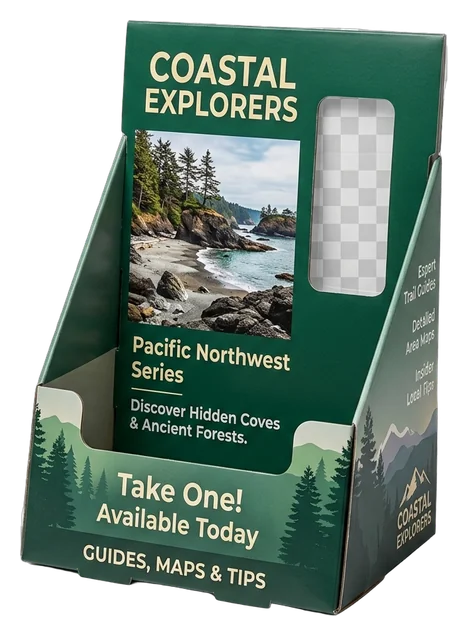
Single-Pocket Counter Holder
Keep one brochure, menu, service guide or campaign leaflet easy to see and take. A generous back panel gives the brand, headline or next step a clear visual home.
- One brochure format
- Custom pocket depth
- Branded header and front
- Counters, desks and receptions
A focused display that turns one important message into an easy, confident customer choice.
Customize Now
➜
Tiered Brochure Display
Present several brochures in a stepped sequence so titles remain visible without spreading literature across the counter. Use each level to guide visitors from broad information to a more specific offer.
- Multiple visible brochure titles
- Stepped brochure arrangement
- Printed category wayfinding
- Showrooms, clinics and lobbies
It helps customers compare related options while keeping the complete range visibly connected to one brand.
Customize Now
➜
Divided Multi-Pocket Holder
Place different services, languages, locations or product families side by side in one coordinated display. Internal dividers keep each stack defined while the outer panels carry one consistent identity.
- Side-by-side brochure groups
- Integrated dividers or partitions
- Shared parent-brand graphics
- Multi-service customer touchpoints
A practical route for broad information sets that still need clear separation and a unified visual standard.
Customize Now
➜
Flat-Pack Event Holder
Create a holder that travels flat, opens into its display form and can be loaded at the venue. It suits campaigns that move between events, branches or temporary sales spaces.
- Compact flat-pack delivery
- Defined folding sequence
- Full-color event graphics
- Pop-ups, launches and roadshows
The setup becomes part of the experience, revealing a branded display that is ready to support the campaign.
Customize NowMATERIAL THAT SETS THE TONE
Give the Display the Right Weight and Character
Before a visitor reads a headline, the material signals whether the holder feels clean and precise, natural and approachable, sturdy and event-ready, or more permanent and considered. The right choice depends on the brochure load, counter space, handling frequency, rollout plan and intended brand character—not thickness alone. Smooth paperboard can keep detailed graphics crisp; kraft can support a more tactile, craft-led voice; corrugated board can add useful structure to larger or mobile formats; and rigid greyboard can give selected long-term displays greater physical presence. We help match that feel to the actual setting and holder construction.
Smooth SBS Paperboard

Smooth paperboard gives logos, small headlines, color blocks and service labels a clean surface, which is useful when the holder must communicate at close range. It works well for compact counter units, single pockets and refined multi-pocket designs where crisp edges and accurate printed hierarchy matter.

Natural Kraft Paperboard

Kraft gives a brochure display a warmer, more tactile character without relying on decorative effects. Dark inks, restrained graphics and high-quality white printing can create useful contrast, helping craft-led, hospitality, community or independent brands communicate a grounded identity at the point of pickup.
Corrugated Display Board

Corrugated board adds structural confidence where the holder carries more literature, travels to events or uses a taller back panel. Selected flutes can support flat-pack display formats while still accepting coordinated exterior graphics, turning a practical event unit into a visible part of the campaign rather than a generic fixture.
Rigid Greyboard

Rigid greyboard can give a reception, showroom or consultation space a more permanent, display-object presence. Wrapped paper, linen textures, foil or embossed details can align the holder with a higher-consideration service, while the stronger body supports repeated brochure loading where the approved construction allows it.
PRINTED WAYFINDING
Make the Brand and Next Step Easy to Read
A brochure holder has to communicate before anyone reaches for the literature. Use printing to make the organization recognizable from a distance, identify the subject of each pocket at close range and keep the next action visible after a brochure is taken. A strong layout connects the back panel, pocket fronts, sides and other relevant surfaces instead of treating them as separate print areas. Full-color artwork, controlled brand colors, spot colors, white ink on kraft and selected inside printing provide production freedom; the useful outcome is a display that helps people understand who is speaking, what information is available and where to begin.
- Lead with one clear brand cue
- Name each brochure category visibly
- Keep campaigns consistent across locations
- Use side panels for recognition
- Continue key colors across visible panels
- Place the next action clearly
FINISHES THAT GUIDE ATTENTION
Control What People Notice Before They Reach In
A brochure holder is often seen among signs, screens, forms and other counter materials, so a finish should help the right element become clear—not add noise. The surface treatment can quiet the overall display, sharpen a campaign image or give the brand name and pocket label more visual weight. Matte, gloss, soft-touch, foil, embossing, debossing, spot UV and raised effects are available where they suit the selected material and construction. We help choose them by the message and handling environment, so each effect has a visible or tactile job.
-
 Set the Display Mood
Matte or soft-touch treatment can give advisory, wellness, hospitality or higher-consideration services a calmer, more measured surface. Gloss can support energetic event graphics, vivid photography or campaign colors when brighter contrast is the better expression of the brand.
-
Make the Header Work Harder
Foil, embossing, debossing, spot UV or a raised effect can give the logo, campaign name or primary action greater visual and tactile weight. The purpose is to establish a clear first reading point, not to decorate every available panel.
-
Mark a Special Campaign
A launch, seasonal program, member offer or event edition can use selective surface contrast to feel distinct from the everyday display. Keeping the core colors, typography and structure consistent preserves recognition while the chosen finish signals that something has changed.


FROM DELIVERY TO DISPLAY
Make Setup Part of a Confident First Reveal
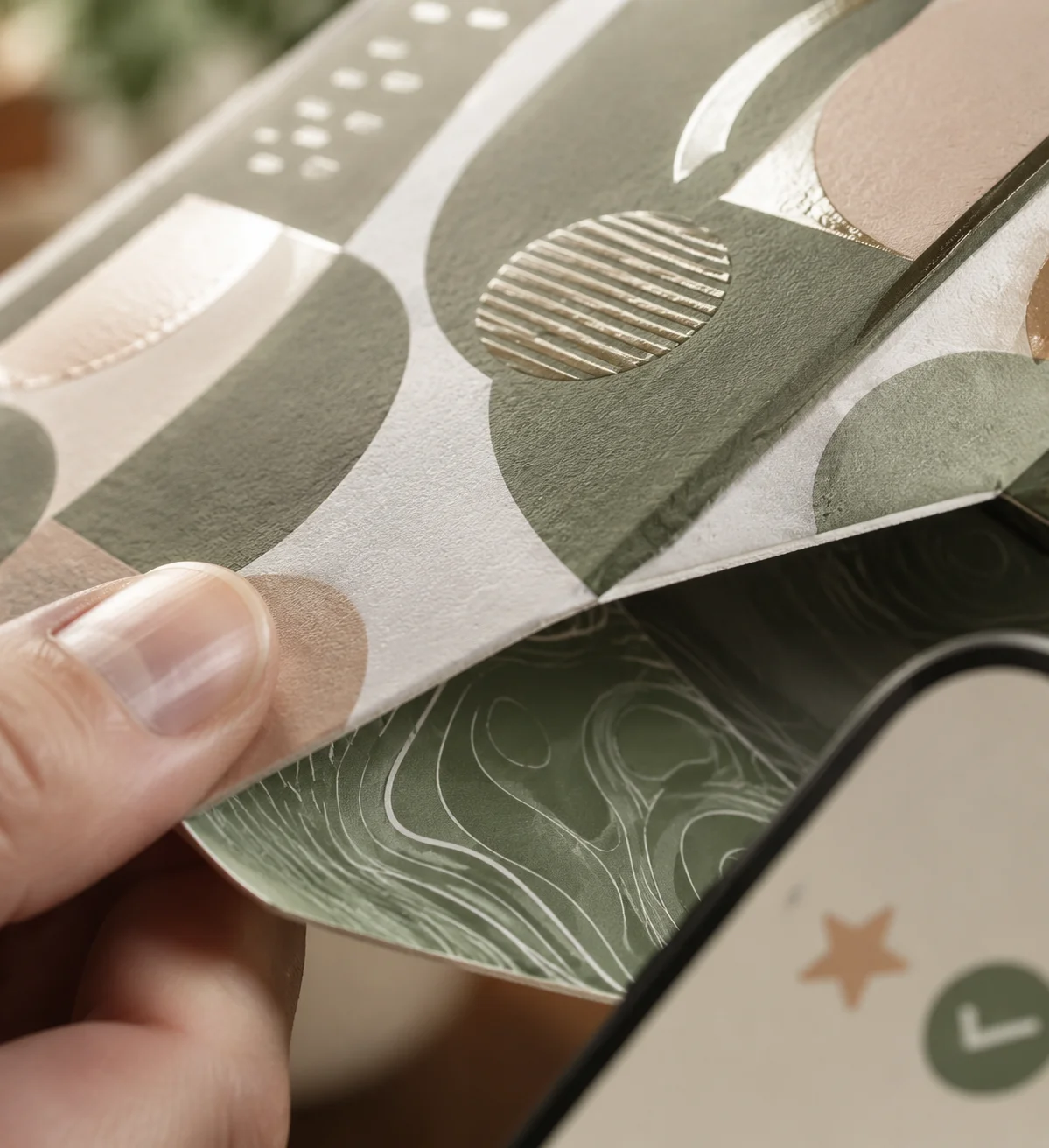
The relevant unboxing moment for a brochure holder is practical: the shipment opens, the structure is revealed or assembled and the first brochures are loaded. A confusing setup or loose arrangement can weaken the care established by the printed exterior. A considered folding sequence where relevant, clear panel relationships and pockets sized for the supplied literature help staff move from delivery to ready presentation with less guesswork. Once loaded, the holder should reveal the brand first, keep brochure titles visible and make removal feel natural. That continuity turns setup, replenishment and customer selection into one connected experience.
-
Let the Brand Appear During Setup
Coordinate the visible panels and folding sequence so the identity becomes clear as the holder takes shape. Relevant inside printing can continue a color, message or useful setup cue where it genuinely helps, rather than leaving the opened structure visually disconnected.
-
Give Every Brochure a Defined Place
Size pockets, dividers and stepped levels around the supplied literature and intended load. A deliberate arrangement helps staff refill the display consistently and keeps different services, languages or campaigns from collapsing into one visual stack.
-
Make the Choice Easy to Complete
Control which title, image or category cue remains visible above each pocket, then plan comfortable access for removal. The customer should be able to recognize the right brochure, take it and still leave the display looking orderly for the next visitor.


EXPERT-GUIDED LITERATURE DISPLAYS
Brochure Holder Customization Made Easy & Fast — Built to Organize, Display & Promote
Our brochure holder packaging and display experts, structural designers, print specialists, consultants, and project managers make custom brochure holder ordering easy and fast by bringing your brochure size, paper count, pocket depth, display location, selected holder style, artwork, branding, and campaign direction into one production-ready structure. We guide pocket sizing, brochure clearance, front-lip height, back-panel support, counter or wall display needs, tier spacing, base stability, folding and assembly behavior, paperboard, corrugated, rigid, or acrylic-look material options, coating and finish compatibility, logo, QR, barcode, offer, instruction, or campaign-panel spacing, dieline alignment, bleed and safe-zone setup, cost calculation, timeline planning, prepress preparation, and 3D proof review. The result is a custom brochure holder that organizes printed materials, supports better counter or retail presentation, carries branded artwork cleanly, and moves to production with fewer sizing, print, structure, or approval risks.

-
Fast
Specs-to-Quote Alignment
Experts align brochure size, pocket count, holder style, material, branding, campaign panels, finishes, cost, timeline, prepress setup, and 3D proof early — helping reduce quote delays and approval back-and-forth.
-
Exact
Pocket, Lip & Stability Review
We check brochure width, height, stack thickness, pocket depth, front-lip height, tier spacing, base width, back-panel support, and assembly behavior so the holder fits your printed materials more accurately.
-
Display-Ready
Brand, QR & Panel Check
Print specialists review logo placement, headline space, QR or barcode spacing, offer panels, call-to-action areas, dieline alignment, bleed, safe zones, coatings, spot UV, foil, and finish-mask setup so the brochure holder is easier to print, display, and approve.
Plan a Brochure Holder That Works Before It Prints
A useful quotation starts with more than an outside width and height. We need to understand the literature, the number of versions, how the display will be viewed and how it will move from production to the final location. The steps below show what to prepare and how our team turns those details into an approved structure, print file and production plan.
-
Start With the Brochure, Not a Guess
Send the finished, folded width and height of every brochure that will go into the holder. Include the paper thickness or a sample stack, the expected loaded quantity, and any tabs, cards, unusual folds or mixed sizes. These details let us plan pocket depth, visible title area, removal access and structural support without inventing dimensions.Also share the available counter footprint and whether visitors will approach standing, seated or from more than one side.
-
Choose the Format Around the Customer Journey
Tell us whether the holder supports self-service browsing, a staff handoff, event lead capture, reception information or a multi-branch campaign. A single pocket keeps one decision focused; tiers help visitors scan related titles; side-by-side divisions separate services or languages; and a flat-pack structure can support temporary or changing locations.Our recommendation balances legibility, refilling, footprint and setup. When an initial idea would hide titles, make loading awkward or use unnecessary counter space, we can propose a clearer route before approving the dieline.
-
Plan Artwork for Distance and Close Reading
Organize artwork by viewing moment. The brand or campaign should read at a distance, each pocket subject should become clear on approach, and the next action should remain easy to find after a brochure is taken. Supply the logo, approved colors, images, copy and call to action.Design support is available to adapt supplied assets, resize artwork and prepare the holder layout. Full-color CMYK, PMS or spot colors for specified brand shades, and high-quality white printing on kraft are available. The final print route is selected around the material, artwork and quantity.
-
Approve the Dieline and Print File
Free dieline or template support is available. A dieline is the flat cutting and folding guide used to position artwork on the holder. We can also check artwork, resize it and help with bleed and safe zones—the extra image area and inner text margin needed for clean cutting. Accepted production files include AI, PDF, PSD and EPS.Review the dieline for brochure fit, title visibility, panel orientation, pocket relationships and setup sequence. Then check the digital proof for copy, graphics and color instructions.A digital proof is available for every approved order, and printing does not begin before payment, final artwork approval and structure confirmation. It is not a physical prototype. A physical prototype may be available for a qualifying bulk or wholesale project, with its cost adjusted into the resulting order where approved. No die or plate fee applies to supported production.
-
Order for the Rollout You Actually Need
Supported paperboard, cardstock, kraft and corrugated brochure-holder orders may start from 50 pieces. Rigid formats may start from 25 where the construction suits the project. These starting quantities do not automatically remove relevant choices such as custom sizing, inside or outside printing, finishes or dividers, although every option remains subject to the approved specification.Per-unit pricing generally improves as quantity increases, with more visible differences often appearing around 500 units. Plan around locations, pieces per location, replenishment and campaign versions rather than a generic price break. One-piece production is not offered, and complex multi-design orders may need a separately confirmed schedule.
-
Coordinate Production and Delivery
Production normally takes 4–6 business days after payment, final artwork approval and structure confirmation. Production-ready jobs are generally planned to print and ship within 7 business days. Shipping transit time is separate, while complex multi-design orders may require a separately confirmed schedule.The same order can be shipped to multiple addresses. Share the destination list and quantity split before production planning so packing and shipping can be confirmed. Design firms and other approved partners may also discuss a white-label workflow for client-facing projects.To begin, send the brochure measurements or a physical reference, the number of pockets, the display setting, quantity, destination details and available artwork. We can then recommend a structure, material direction and the next proof step with fewer assumptions.

BROCHURE HOLDER QUESTIONS
Answers Before You Size, Print and Display
Yes. We can build the holder around the finished size, thickness and intended loaded quantity of your brochures rather than forcing the literature into a stock pocket. Share the folded width and height, the number of brochure versions and an estimate of how many pieces each pocket should carry. Also tell us whether customers need to see a full title, product image or call to action above the pocket. We will use those details to plan the pocket depth, visible area, base and removal access before preparing the cutting and folding template.
Yes. A divided, side-by-side or tiered structure can keep several brochure titles visible while presenting them as one coordinated range. Tell us whether the pieces represent different services, languages, locations or product families, and whether they share the same finished size. We can use separate pockets, partitions, stepped levels and printed category cues where the approved structure allows. The goal is to make comparison easier without letting one brochure hide another or allowing the display to feel visually fragmented.
They can. Paperboard, kraft and corrugated formats can be designed as flat-pack structures when that route suits the holder shape, brochure load and rollout plan. The approved dieline determines the folding and locking sequence, and our team can review the setup route before production. Tell us who will assemble the holders, how many locations will receive them and whether the units will move between events. Rigid formats or unusually complex displays need a separately confirmed packing and setup plan rather than an automatic flat-pack promise.
Branding can extend across all relevant printable surfaces, including the back header, pocket fronts, sides, back, base and selected inside areas. Full-color CMYK, PMS or spot colors for specified brand shades, and white ink on kraft are available, with the final coverage mapped to the approved dieline and material. We can help place the main brand cue where it reads first, category labels where customers compare options and contact details or the next action where they remain visible after a brochure is removed.
The best material depends on the brochure load, display footprint, handling frequency, rollout plan and the character you want the holder to communicate. Smooth paperboard suits clean graphics and compact counter displays; kraft supports a warmer, tactile look; corrugated board can add structure for larger or mobile event formats; and rigid greyboard can suit a more permanent reception or showroom piece. Share the setting and expected use, and our material team can recommend a route without relying on thickness alone.
Yes. Supported paperboard, cardstock, kraft and corrugated brochure-holder orders may start from 50 pieces, while rigid formats may start from 25 where the construction suits the project. Starting at these quantities does not automatically remove relevant choices such as custom sizing, exterior or inside printing, brand colors, finishes or dividers; the final options depend on the approved structure and production specification. This gives a smaller business a practical way to test a location, launch a campaign or equip a first event without using a generic stock display.
Artwork and dieline support are available from setup through approval. We can provide a free dieline or template, check supplied artwork, resize it for approved dimensions and help with bleed and safe zones. AI, PDF, PSD and EPS files are accepted. Every approved order receives a digital proof before production. A digital proof is not a physical prototype; a physical prototype may be available for a qualifying bulk or wholesale project, with its cost adjusted into the resulting order where approved.
Production normally takes 4–6 business days after payment, final artwork approval and structure confirmation. Production-ready jobs are generally planned to print and ship within 7 business days. Shipping transit time is separate, so this is not a seven-day delivery promise. Complex multi-design orders may require a separately confirmed schedule, and we will clarify that timing before the job moves forward. Delays are most often linked to artwork approval, which is why resolving fit and proof questions early is useful.
CUSTOMER SUCCESS STORIES
Hear What Our Customers Say

As a small business, finding premium finishes in lower quantities was always difficult. Global Custom Packaging gave us the freedom to customize our boxes and create the distinctive, polished look we wanted without committing to a large order. We still work with them today and have expanded into multiple product variants, each with the same impressive presentation.
Jordan Blake
We sell online and in stores while regularly promoting at major events, running influencer campaigns, and launching seasonal collections. Thunder Packaging has become our dependable source for everything—from premium mailer and product boxes to sturdy influencer kits, rigid packaging, kraft boxes, and limited-edition Christmas designs. Whatever structure, material, or branded look we need, we no longer have to go anywhere else.
Avery Quinn

I never worry about how my packaging will look or whether my artwork contains typos, incorrect bleed areas, or other design errors. Their 3D previews and helpful design support give me confidence before printing. If the team notices a problem, they contact me, correct it quickly, and never charge extra for the assistance.
Cameron Reese
I’m really impressed with Global Custom Packaging’s precise, richly saturated printing and the accuracy of their die-cutting. The boxes were produced in exactly the right size, with a clean, well-formed structure and no fitting or construction issues. The finished packaging looked polished, consistent, and ready to represent our products professionally.
Morgan Taylor
I received my quote within a few hours, and once we agreed on the price, the designer responded quickly, completed the required changes, and prepared my artwork for printing. The 3D proof arrived promptly, allowing me to review everything and place my order that same day. My packaging was delivered on time, exactly as Global Custom Packaging had committed.
Harper Lane