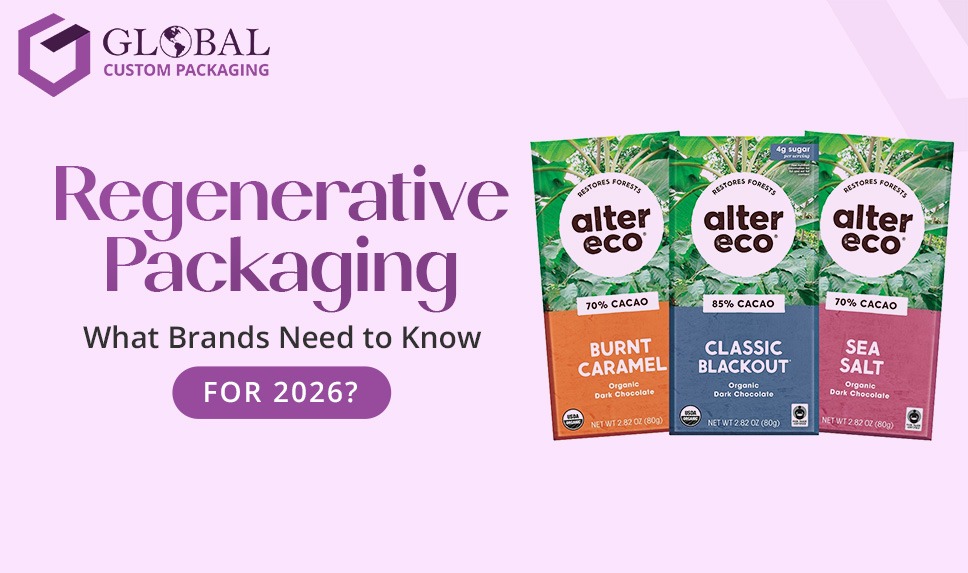
Expectations for sustainability are evolving in markets around the world. Brands are no longer judged solely on the quality of their products. Packaging decisions are now affecting trust, loyalty, and?long-term value. That move is helping define what companies are doing in 2026.
Environmental data points in a clear direction. More than 70% of buyers are loyal to brands that demonstrate real environmental responsibility. Packaging waste also accounts for about 40% of total plastic consumption globally. These figures are leading?brands to rethink materials and systems.
Regenerative packaging is emerging as a response to these constraints. Instead, it’s about restoring natural systems, rather than damaging?them. The idea is more than recycling, and it supports environmental positivity.
For the brands looking to grow in the future, this methodology integrates design, sourcing, and impact. It promotes both the environmental and business resilience priorities. Grasping this now allows brands to stay in line with what the market wants.
Regenerative packaging focuses on systems that replenish the earth. Materials are chosen with consideration of their full life cycles. The intention is for the packaging to be safely returned to the environment or the manufacturing process. It's good for the soil, it's good for resource cycling, and you get less waste. An example of this packaging is Kraft paper boxes.
A fundamental principle is that of circular material flow. Designed to be reused, recycled?, or composted, and still retain quality. This diminishes the reliance on raw?materials and mitigates the pressure on landfills. The adoption of eco-friendly mailer boxes by the brands also tends to bring in more stable supplies over time.
Ecosystem balance is also important. The materials are renewable or sustainably sourced. When managed appropriately, they promote natural healing rather than harm. Examples of compostable fibres and plant-based substrates are countless. For instance, corrugated boxes.
A net positive impact is how this work is defined. Don’t just make packaging neutral, make?it a force for environmental regeneration. Carbon sequestration, biodiversity conservation, and nutrient cycling are all part of it. This whole way of thinking alters the way we define the value of packaging.
Regenerative packaging is based on a marriage of intelligent?material selection and smart system design. Bio-based inputs such as recycled paper, algae blends, and agricultural waste mitigate environmental impact. These can capture carbon and reduce fossil fuel use.
Methods of manufacture are important too. Energy-efficient processing and less water use contribute to production impact mitigation. Companies that employ branded packaging have these options too and certainly don't have to sacrifice all their branding design needs.
Infrastructure is a major factor in this regard, as well. Circularity is predicated on having the right systems for collection, sorting, and processing. Consumers stated that it is working with clear labelling and educating customers to make sure materials go back into the right stream. Even great packaging can fail if it’s not at this stage.
Success?is perseverance. Flexible sourcing and adaptable designs enable brands to comply with changing?regulations. As environmental standards become more stringent, systems designed for regeneration can provide assurances?of compliance and stability over time.
Material innovation is one big trend with growing momentum. New blends of fibres?and compostable films are coming to market. These choices reduce contamination issues and yield better end-of-life results.
There is also a push for transparency and accountability in reporting. Brands have at least to prove they are doing their bit for the environment. Packaging information is included in the annual impact disclosures. This fosters responsibility throughout the supply chain. It can be seen in custom-printed boxes.
Collaboration is also on the rise. Brands are collaborating with suppliers, recyclers, and designers early on in development. Common systems cut costs and increase recovery rates. It also?ensures that the packaging used between-pack is consistent from market to market.
Public education and incentives for changing behaviors are still most important. A simple disposal guideline and an easy message lead to higher user participation. System performance improves organically. When the packaging?function is obvious to consumers, the efficiency of the system is enhanced automatically.
Brands preparing for the future of responsible design turn to Global Custom Packaging. Our team is focused on smart materials, smart design, and reliable suppliers. All of our solutions are purpose-driven and engineered to perform.
As a packaging expert says, “Packaging should protect products and be respectful to the planet.” It's a principle that governs every project we undertake. We work with brands to turn sustainability aspirations into real-world achievements.
So if you’re about to make your next packaging?move, this is the moment. Contact us for more information.
Unlock the retail potential of your product with your one and only reliable packaging partner - Global Custom Packaging. With our packaging knowledge and marketing expertise, we are set to empower your business to the heights of success. A perfect blend of style and durability, our custom packaging creates a distinctive brand identity for businesses of all sizes. So, contact us right now!
Copyright 2026. www.globalcustompackaging.com Project By GCP. All rights reserved.


 Get Quote
 Call Us
 Email Us
 Live Chat
